In This Article
Stand in front of any bathroom cabinet in Britain and you’ll probably find at least two hairbrushes rattling around in there, and there’s a fair chance neither of them is doing the job you actually need. The detangling brush vs paddle brush debate sounds like a small one until you’re stood dripping in the shower, hair full of knots, wondering why your usual brush suddenly feels like it’s trying to pull your scalp off. It’s a genuinely common mix-up, and an expensive one if it leaves you with split ends and a bin full of shed hair.
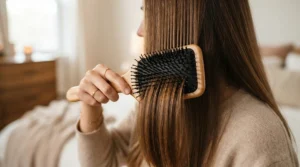
Here’s the short version: a detangling brush uses flexible, widely spaced bristles or teeth designed to glide through knots with minimal tension, while a paddle brush is a flat, wide-headed tool built for smoothing, styling and covering large sections of hair quickly, usually once the tangles are already gone. One is a rescue tool. The other is a finishing tool. Mixing the two up is how a lot of otherwise careful people end up with more hair in the brush than on their head.
This guide pulls apart the difference between detangling and paddle brush designs properly — not just spec sheets, but what those specs actually mean for your particular mane, whether you’re managing tight curls, fine colour-treated strands, or a toddler who screams at the sight of anything resembling a comb. We’ve researched seven real, currently available UK products across the price spectrum, broken down bristle flexibility and hair type suitability in plain English, and flagged exactly where breakage risk creeps in. According to Wikipedia’s overview of hairbrush design, brushes are typically classified by bristle rigidity and head shape — which is precisely the distinction that decides whether you’re detangling gently or just redistributing the damage.
Quick Comparison Table
| Brush Type | Best Used For | Bristle Flexibility | Breakage Risk | Typical Price Range |
|---|---|---|---|---|
| Detangling Brush (e.g. Wet Brush Original Detangler, Tangle Teezer The Original) | Removing knots on wet or freshly washed hair | High — flexible, widely spaced | Low when used correctly | around £10-£14 |
| Paddle Brush (e.g. Denman D3 Original Styling Brush, Kent KS02 Oval Cushion Paddle Brush) | Smoothing, blow-drying, finishing dry hair | Low to medium — firmer, densely packed | Higher on tangled or wet hair | around £6-£30 |
| Hybrid Cushioned Detangler (e.g. Denman D90L Tangle Tamer Ultra) | Bridging both jobs — detangle then smooth | Medium — ball-tipped, cushioned | Low to moderate | around £10-£14 |
Looking at the table above, the clearest takeaway is that flexibility and breakage risk move in opposite directions almost every time: the more rigid the bristle, the more resistance it creates against a snag, and resistance is exactly what tears hair. A hybrid like the Denman D90L Tangle Tamer Ultra exists precisely because most of us don’t want to own two separate brushes, but as we’ll get into, a genuine paddle brush still earns its place once the knots are gone and you’re focused on smoothing and shine.
Found this comparison useful? A quick share helps other frazzled brushers find it too! 😊
Top 7 Detangling & Paddle Brushes: Expert Analysis
We’ve deliberately mixed dedicated detanglers, paddle brushes and one genuine hybrid across budget, mid-range and premium tiers, because the honest answer to “which is best” always depends on your hair and your routine, not just your budget.
1. Wet Brush Original Detangler — best for detangling thick, curly or wet hair
The clue is in the name: this brush was engineered specifically to work on soaking wet hair, which is when strands are at their most fragile and most prone to snapping mid-brush. Its IntelliFlex bristles are noticeably thinner and springier than almost anything else on this list, bending sideways around a knot rather than forcing straight through it, and the ball-tipped ends stop each bristle from catching on a single strand and yanking it.
Based on the spec comparison with firmer paddle designs, the trade-off is that this brush does very little in the way of smoothing or styling afterwards — it’s a specialist, not an all-rounder. It’s aimed squarely at people with thick, curly or chemically treated hair who dread the shower-to-towel transition, and reviewers consistently report a noticeable drop in the amount of hair left in the brush compared with their old bristle brush, particularly on box braids taken down or extensions being groomed.
A common thread in aggregated feedback is that the handle, while comfortable, feels a touch lightweight for very long, dense hair, where some users prefer a firmer grip.
Pros:
- ✅ IntelliFlex bristles flex around knots instead of forcing through
- ✅ Genuinely comfortable on soaking wet, fragile strands
- ✅ Compact size travels well and works for kids too
Cons:
- ❌ Limited styling or smoothing benefit once hair is dry
- ❌ Handle can feel light for very thick, waist-length hair
In the around £10-£14 range, this is one of the best value picks specifically for the wet-hair detangling job, and it earns its keep even if you already own a paddle brush for finishing.
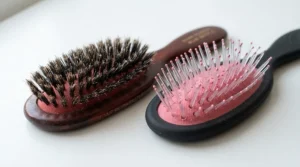
2. Tangle Teezer The Original Detangling Brush — best all-round pick for daily detangling
There’s a reason the handleless, palm-sized Tangle Teezer The Original Detangling Brush became something of a cult object in UK bathrooms: its two-tier teeth, a mix of longer regular-flex teeth and shorter firm-flex teeth, work through both the surface tangles and the ones hiding closer to the scalp in a single pass.
What most buyers overlook about this design is that the compact head is a deliberate choice, not a cost-cutting one — it forces you to work in smaller sections, which is precisely the technique that reduces overall tension on any given clump of hair. It’s suitable for wet or dry brushing and holds up well across straight, wavy and looser curl patterns, though reviewers with very tight coils tend to prefer a design with wider-spaced teeth.
Aggregated review sentiment repeatedly mentions the brush lasting for years of daily use without the teeth splaying or softening, which for a plastic tool at this price point is genuinely a point in its favour.
Pros:
- ✅ Two-tier teeth tackle surface and root-level tangles together
- ✅ Compact head suits daily detangling of straight to wavy hair
- ✅ Durable build holds shape after years of regular use
Cons:
- ❌ Small head means longer hair takes more passes
- ❌ Less effective on very tight, coily curl patterns
At around £10-£13, it’s the brush we’d point most people towards first if they only want to own one detangling tool for daily use.
3. Denman D90L Tangle Tamer Ultra — best cushioned hybrid detangler
This is the brush that quietly answers the detangling brush vs paddle brush question by trying to do a bit of both. Ball-tipped nylon bristles are set into a soft, air-cushioned rubber pad shaped like a small paddle, so it has the flexibility profile of a detangler but the wider head and smoothing action closer to a paddle brush.
On paper, that combination should mean compromise in both directions, but the cushioned base does most of the heavy lifting here: it lets the whole head flex slightly against the scalp, spreading pressure across more bristles rather than concentrating it on one snag point. It suits medium to long hair that’s neither bone-straight nor tightly coiled particularly well, and it’s a popular pick for detangling and grooming wigs or clip-in extensions where you can’t rely on natural scalp give.
What the spec sheet won’t tell you, but reviewers note repeatedly, is that the rubber base can start to loosen from the handle after a year or two of heavy daily use, which matches a known complaint pattern for this style of Denman brush.
Pros:
- ✅ Ball-tipped bristles plus cushioned pad spreads pressure evenly
- ✅ Doubles up nicely for extensions, wigs and thick mid-length hair
- ✅ Wide head speeds up detangling versus smaller brushes
Cons:
- ❌ Handle-to-pad join can loosen with years of heavy use
- ❌ Not as gentle as a dedicated wet-hair detangler on fine strands
Sitting around £10-£14, it’s a sensible middle-ground purchase if you genuinely can’t decide between the two brush types and don’t want to buy both straight away.
4. Denman D3 Original Styling Brush (7 Row) — best classic paddle brush for blow-drying
If you picture a stereotypical paddle brush, you’re probably picturing something close to the Denman D3 Original Styling Brush. Seven rows of rounded-tip nylon pins sit in a firm rubber cushion pad, arranged in a genuinely flat paddle shape rather than the curved or oval heads some competitors use.
The rounded pin tips matter more than they sound: cheaper paddle brushes often use flat-cut bristle ends that catch and fray the hair cuticle, whereas the smooth, ball-like finish here glides once hair is already smooth and tangle-free. This is a styling tool first and a detangling tool a distant second — it’s built for creating volume and control during a blow-dry, and for smoothing frizz on straight to wavy hair after the knots have already been dealt with elsewhere.
Aggregated customer sentiment consistently praises how well it holds up to heat from a hairdryer without the pins softening, though textured or coily hair types often report it pulling and generating static compared with a genuine detangler.
Pros:
- ✅ Rounded nylon pins glide smoothly on already-detangled hair
- ✅ Firm cushion pad gives excellent control during blow-drying
- ✅ Heat-resistant build holds up to regular dryer use
Cons:
- ❌ Not designed for detangling knotted or wet hair first
- ❌ Can generate static and pulling on coily or very curly textures
Typically priced in the £12-£16 range, this is the brush to reach for once your detangling brush has already done the hard work.
5. Amazon Basics Paddle Brush — best budget paddle brush pick
Not every purchase needs to be a statement piece, and the Amazon Basics Paddle Brush exists for exactly that reason. It uses flexible nylon bristles set into a wide, flat paddle head with a soft-touch grip handle — a fairly standard construction, but one that’s executed competently enough to compete with brushes costing two or three times as much.
Here’s what to weigh: the bristles are noticeably softer and more forgiving than the firm nylon pins on premium paddle brushes like the Denman D3, which actually makes it a gentler everyday option for finer hair, even if it lacks some of the styling precision serious blow-dry enthusiasts want.
Reviewers frequently describe it as “good enough” rather than exceptional, which in a budget category stuffed with genuinely poor imitators is a meaningful compliment. It’s a sensible starter brush for teenagers, students, or anyone who wants a functional paddle brush in a bag without worrying about losing an expensive one.
Pros:
- ✅ Flexible bristles are gentler than firmer premium paddle brushes
- ✅ Wide flat head covers hair quickly for daily smoothing
- ✅ Genuinely low price without an obviously flimsy build
Cons:
- ❌ Less precise control for structured blow-dry styling
- ❌ Handle grip wears faster than pricier alternatives
At around £6-£9, it’s the pick for anyone who just wants a reliable paddle brush without overthinking the purchase.

6. FHI Heat UNbrush Detangling Brush — best premium detangler for fine or fragile hair
The FHI Heat UNbrush Detangling Brush takes a noticeably different approach to bristle layout than most detanglers on this list, fanning its DuoFlex anti-static bristles outward in a pattern rather than the straight rows Wet Brush and Tangle Teezer both use. The practical effect is that the brush makes contact with more of the hair’s surface area per stroke, which reduces the total number of passes needed to clear a tangle, and fewer passes generally means less cumulative friction and less breakage.
Its lightweight, vented handle is a deliberate nod to blow-drying, since the vents let warm air pass through more efficiently than a solid paddle back would. This one is aimed at people with fine, colour-treated or chemically relaxed hair, where every unnecessary stroke risks visible shedding, and reviewers frequently highlight a genuine drop in static and flyaways versus older detanglers they’d previously relied on.
On the value side, it costs meaningfully more than the Wet Brush or Tangle Teezer for what is, mechanically, a similar detangling job, so the premium has to be justified by your hair’s specific fragility rather than general daily use.
Pros:
- ✅ Fan-pattern bristles reduce the number of strokes needed
- ✅ Anti-static coating noticeably cuts flyaways and frizz
- ✅ Vented handle design suits use alongside a hairdryer
Cons:
- ❌ Costs considerably more than comparable detanglers
- ❌ Overkill for coarse or low-porosity hair that tangles less
Positioned around £18-£22, this is a worthwhile upgrade specifically for fine or fragile hair types where breakage risk is already elevated.
7. Kent KS02 Finest Quality Oval Cushion Paddle Brush — best premium boar-bristle paddle brush
Kent Brushes has been making bristle brushes in Hertfordshire since 1777, and the Kent KS02 Finest Quality Oval Cushion Paddle Brush leans hard into that heritage with genuine boar bristle tufts set into a rubber cushion pad, all wrapped in a solid wooden-handled oval head. Boar bristle works fundamentally differently to nylon: rather than just moving through the hair, it also picks up and redistributes natural sebum from scalp to ends, which over time can noticeably improve shine and reduce the dryness that makes hair prone to snapping in the first place.
Based on the spec comparison with synthetic paddle brushes, the trade-off is that pure boar bristle is gentler and gives a genuinely different, almost polishing finish, but it’s markedly less effective at working through actual knots than any nylon-bristled tool on this list. It’s best suited to fine to medium, mostly straight or loosely wavy hair that doesn’t tangle heavily to begin with, where the priority is shine, scalp stimulation and reduced frizz rather than rescuing a knotted mess.
Reviewers with thick or curly hair often report it simply doesn’t have the bite to get through anything but the mildest tangles, which matches what you’d expect mechanically from softer bristle material.
Pros:
- ✅ Natural boar bristle redistributes oils for genuine shine
- ✅ Cushioned oval pad is comfortable on the scalp
- ✅ Well-built wooden handle designed to last for years
Cons:
- ❌ Struggles with genuine tangles compared with nylon detanglers
- ❌ Not well suited to thick, curly or heavily matted hair
Priced around £20-£30, this sits firmly in “invest once, keep for years” territory, best bought as a finishing brush alongside — not instead of — a dedicated detangler.
Detangling Brush vs Paddle Brush: What’s the Real Difference?
The confusion between these two categories usually comes down to the fact that both are, technically, hairbrushes, and shops don’t always separate them clearly on the shelf. The core distinction is mechanical: a detangling brush like the Wet Brush Original Detangler or Tangle Teezer The Original uses flexible, widely spaced bristles that bend and give when they meet resistance, letting individual strands slip free rather than getting yanked. A paddle brush like the Denman D3 Original Styling Brush or Kent KS02 Oval Cushion Paddle Brush uses firmer, more densely packed bristles across a wide, flat head, prioritising smoothing coverage and styling control over give.
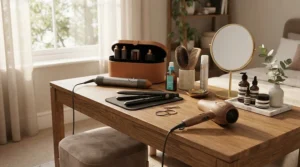
Here’s the useful reframing: think of a detangling brush as a problem-solver and a paddle brush as a finisher. Reaching for a paddle brush on genuinely knotted hair is a bit like trying to iron a crumpled shirt straight out of the washing machine — you’re applying force and heat to a problem that needed untangling first. Reach for the detangler first, clear the knots, then switch to a paddle brush for the smoothing, volume and shine work it’s actually designed for. Buying only one or the other means compromising on whichever job it wasn’t built for, which is exactly why hybrids like the Denman D90L Tangle Tamer Ultra have carved out their own niche in the market.
Practical Usage Guide: How to Detangle Without Breakage
Even the best brush in the world will still tear hair if it’s used the wrong way, so a bit of technique matters as much as the tool itself.
Start every session at the very ends of the hair, never at the roots — brushing from the top down simply pushes every knot below it into one giant tangle, which is the single most common mistake people make with any detangling brush. Work upward in small sections, clearing an inch or two of ends before moving your hand’s grip further up the shaft; holding the hair firmly just above where you’re brushing takes tension off the scalp and stops each stroke pulling at the follicle. If you’re using a detangling brush like the Tangle Teezer The Original on wet hair, apply a leave-in conditioner or detangling spray first — the reduced friction between coated strands means the bristles need to do noticeably less work to glide through. A common mistake in the first 30 days of owning a new detangler is brushing too fast, treating it like a quick morning routine tool rather than the deliberate, section-by-section process it’s meant to be; slowing down by even ten seconds per section makes a measurable difference to how much hair ends up in the brush. Finally, rinse bristles under warm water weekly and pick out trapped hair and product build-up, since clogged bristles lose their flex and start behaving more like a rigid paddle brush than the detangler they’re supposed to be.
✨ Don’t miss the picks that fit your hair type!
🔍 Scroll back up and click any highlighted brush to check current pricing — the right tool really does make wash day easier.
Real-World Scenarios: Which Brush Suits You?
Picture three fairly typical readers. First, a university student with fine, colour-treated hair who showers every morning before a 9am lecture and has zero patience for a ten-minute detangling ritual — for her, the FHI Heat UNbrush Detangling Brush makes sense specifically because its fan-pattern bristles clear knots in fewer strokes, which matters when fragile, processed hair is at stake and time is tight.
Second, a parent managing a curly-haired seven-year-old who treats bath time detangling like a personal insult — here, the Wet Brush Original Detangler‘s soft, ball-tipped bristles and low price mean less tears (from either party) if it eventually gets left on a radiator or lost down the back of the bath.
Third, someone on a tight budget with straight, low-porosity hair that rarely tangles badly but wants smoother, shinier results for work most mornings — the Amazon Basics Paddle Brush covers that daily smoothing job without spending on features a low-tangle hair type will never really use, while the Kent KS02 Oval Cushion Paddle Brush becomes the natural upgrade later if shine and scalp health become the priority.
None of these are hard rules, but they illustrate the point running through this whole guide: match the brush to the actual problem you’re solving, not the one you assume you have.
How to Choose Between a Detangling Brush and a Paddle Brush
- Check how tangled your hair usually is. Frequent, tight knots point firmly towards a dedicated detangling brush; occasional light tangles can be managed with a good paddle brush alone.
- Consider your hair type and porosity. Curly, coily or chemically treated hair generally needs the flexibility of a detangler; fine, straight hair often does fine with a firmer paddle brush.
- Decide whether you’re detangling wet or dry. Wet hair is significantly more fragile, so a wet-specific detangler like the Wet Brush Original Detangler matters more than it might seem.
- Think about your daily routine, not just wash day. If you need one tool for everything, a hybrid like the Denman D90L Tangle Tamer Ultra is a reasonable compromise.
- Factor in styling goals. If shine, volume or blow-dry control matters as much as detangling, budget for a proper paddle brush too, rather than expecting one tool to do both jobs well.
- Set a realistic budget band. Expect to pay roughly £10-£14 for a solid mid-range detangler, and anywhere from £6 to £30 for a paddle brush depending on bristle material and build quality.
- Read aggregated review sentiment for your specific hair type, not just star ratings — a brush loved by people with straight hair can perform very differently on coily hair. According to Expert Reviews’ independent testing of detangling brushes, bristle spacing and firmness genuinely do vary the amount of force needed across hair textures, which is exactly the variable worth checking before you buy.
Bristle Flexibility Explained: Why It Matters More Than You Think
Bristle flexibility is the single biggest predictor of how gentle a brush actually is, and it’s largely determined by three things: the material, the thickness, and the spacing. Nylon bristles used in most detangling brushes bend along their length under pressure, meaning a knot meets give rather than resistance and the strand can slip free before it snaps. Firmer paddle brush pins, by contrast, are built with less lateral flex on purpose, because that rigidity is exactly what produces the smoothing, controlled finish a blow-dry needs. Ball-tipped bristles, found on the Wet Brush Original Detangler and Denman D90L Tangle Tamer Ultra, add a further layer of protection by rounding off the point of contact so it doesn’t dig into a single strand.
Wider bristle spacing matters just as much as material. Tightly packed bristles catch more hair per stroke, which sounds efficient but actually increases the chance that a knot gets gripped from multiple directions at once and pulled rather than eased apart. This is precisely why the two-tier, widely spaced teeth on the Tangle Teezer The Original work so well on both fine and thicker hair — the spacing does as much of the gentle work as the flex itself.
| Brush | Bristle Material | Flexibility Level | Best Hair Density |
|---|---|---|---|
| Wet Brush Original Detangler | IntelliFlex nylon | High | Thick, curly, thin |
| Tangle Teezer The Original | Two-tier nylon teeth | High | Fine to medium |
| FHI Heat UNbrush Detangling Brush | DuoFlex fan-pattern nylon | High | Fine, fragile |
| Denman D3 Original Styling Brush | Firm nylon pins | Low-medium | Medium to thick, low-tangle |
| Kent KS02 Oval Cushion Paddle Brush | Natural boar bristle | Low | Fine, straight |
The pattern in this table is fairly consistent: brushes marketed specifically as “detanglers” cluster at the high end of flexibility, while paddle brushes purposefully sit lower, because their job depends on some structural rigidity. If your hair is dense or prone to matting, prioritise the top three rows of that table; if it’s fine and rarely knots, the bottom two will likely serve you better day to day.
Hair Type Suitability: Matching the Brush to Your Strands
Curly and coily hair types generally benefit most from widely spaced, highly flexible bristles, since the natural bends in the hair shaft create far more opportunity for strands to loop around each other into knots. The Wet Brush Original Detangler and the cushioned Denman D90L Tangle Tamer Ultra both perform well here, particularly when used on wet hair coated in conditioner. Fine, straight hair, on the other hand, tends to tangle less severely but shows breakage and split ends more visibly, which is exactly the profile the FHI Heat UNbrush Detangling Brush‘s reduced-stroke design was built to address. Thick, dense hair that isn’t especially curly often does best with a slightly firmer detangler like the Tangle Teezer The Original, since very soft bristles can struggle to penetrate a dense head of hair fully. Meanwhile, low-porosity or naturally sleek hair that rarely knots at all is a genuinely good match for a straightforward paddle brush like the Amazon Basics Paddle Brush or, for a more premium finish, the boar-bristle Kent KS02 Oval Cushion Paddle Brush, where shine and smoothing matter more than untangling ability. None of these categories are absolute, since two people with “curly hair” can have very different densities and porosities, but they’re a genuinely useful starting point if you’ve never really thought about matching brush to strand before.
Breakage Risk: Common Mistakes That Damage Hair
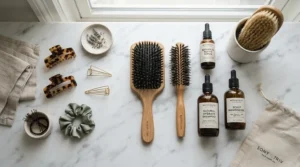
Most hair breakage attributed to “a bad brush” is actually caused by technique, not the tool itself, though the wrong tool certainly makes bad technique worse. Brushing dry, unconditioned hair with a firm paddle brush before any detangling has happened is one of the most common culprits, since the firmer bristles have no give when they meet a genuine knot and end up snapping the weaker of the two — hair or bristle — which is almost always the hair. Starting at the roots rather than the ends is another frequent mistake, effectively concentrating every tangle in the hair into a single mass near the scalp rather than clearing them progressively. Brushing wet hair with any brush that isn’t specifically designed for it is a third major risk factor, since wet hair stretches more before it breaks and offers less structural resistance to a firm bristle. According to NHS hair care guidance from Gloucestershire Hospitals NHS Foundation Trust, hair is at its most fragile when wet, and gentler tools such as fingers or a wide-toothed detangling comb are recommended over stiff bristle brushes in that state — advice that lines up closely with why products like the Wet Brush Original Detangler exist in the first place. Finally, over-brushing — treating a hairbrush as a stress-relief habit rather than a functional grooming step — mechanically abrades the hair cuticle over hundreds of unnecessary extra strokes a week, gradually causing dullness and split ends even with a genuinely gentle brush.
Paddle Brush vs Wet Brush: How Do They Compare?
This is a slightly narrower version of the broader debate, since “Wet Brush” has become something of a generic shorthand in the UK for detangling brushes generally, much like “Hoover” for vacuum cleaners. A genuine paddle brush like the Denman D3 Original Styling Brush has a flat, wide head with firmer bristles built for smoothing and blow-drying, and it performs that job noticeably better than any dedicated detangler. The Wet Brush Original Detangler, by contrast, uses a smaller head and much softer, more flexible IntelliFlex bristles specifically engineered to work on soaking wet, fragile hair without snagging. Reaching for a paddle brush on wet, knotted hair is genuinely one of the more damaging habits covered in this guide, since firm bristles meeting fragile, stretched strands is close to a worst-case combination for breakage. Reaching for a Wet Brush-style detangler once hair is dry and knot-free isn’t damaging, exactly, but it also won’t deliver the smoothing or volume a proper paddle brush provides, since the softer bristles simply don’t have the structural firmness for that job. The sensible approach, and the one this whole guide keeps circling back to, is owning one of each and using them at the right stage of your routine rather than expecting either to multitask.
Brush for Daily Detangling: What to Look For
A brush intended for genuine daily use needs to survive rather more wear than an occasional-use tool, so durability deserves as much attention as gentleness. Look for a head that won’t splay or soften after repeated use — the Tangle Teezer The Original has built a reputation specifically on holding its shape through years of daily brushing, which matters if you’re detangling every single morning rather than only after a wash. Bristles that are easy to clean matter more than people expect for daily brushes, since trapped hair and product residue reduce flex over time and effectively turn a gentle detangler into a stiffer, more damaging tool within a few months of neglect. A comfortable, secure grip also becomes more important the more often you’re using something, particularly if mornings are rushed and a slippery handle risks an awkward drop mid-brush. Finally, for daily use specifically, size the brush to your actual routine: a compact detangler like the Tangle Teezer The Original suits quick daily touch-ups on shorter or fine hair, while a wider head like the Denman D90L Tangle Tamer Ultra saves time on longer, denser hair that needs covering in fewer strokes.
Long-Term Cost & Maintenance
A £10 detangling brush that lasts three years works out at roughly 65 pence a month, which puts most of the products on this list firmly into “genuinely affordable” territory once you look past the upfront price. The real cost differentiator isn’t the brush itself but what happens if the wrong tool causes ongoing breakage — split ends and damaged hair often lead to more frequent trims, more spending on repair treatments and masks, and, for some people, professional deep-conditioning treatments that cost considerably more over a year than any hairbrush ever would. Cushioned or ball-tipped bristles, as used on the Wet Brush Original Detangler and Denman D90L Tangle Tamer Ultra, tend to hold their shape and flex for longer than thin, uncoated nylon, which affects genuine lifespan rather than just initial feel. Natural boar bristle brushes like the Kent KS02 Oval Cushion Paddle Brush sit at the more expensive end but are also the most durable option here by a fair margin, with a solid wooden handle and quality bristle work that easily outlasts cheaper synthetic paddle brushes, making the higher upfront cost a genuinely reasonable trade for anyone planning to keep the same brush for the best part of a decade. Regular cleaning — pulling out trapped hair weekly and giving the bristles an occasional wash in warm water with a little shampoo — extends the working life of any brush on this list noticeably, and it costs nothing beyond a few minutes.
Safety, Hygiene & Haircare Compliance
Hairbrushes aren’t subject to heavy regulation in the UK the way electrical styling tools are, but general product safety rules under UK consumer protection law still apply to materials and build quality, and reputable brands like Denman, Tangle Teezer and Kent publish material safety information on request. From a hygiene standpoint, brushes should be cleaned regularly to avoid a build-up of scalp oils, product residue and bacteria, particularly for brushes shared between family members or used on children. If brushing is genuinely painful, or you notice unusual clumps of hair coming out that go well beyond normal shedding, that’s worth mentioning to a GP or trichologist rather than assuming a different brush will fix it — the NHS’s guidance on hair loss and its treatments is a sensible starting point if breakage or shedding seems more severe than a brushing habit alone would explain. For most people, though, switching to a genuinely appropriate detangling brush and adjusting technique resolves the vast majority of everyday brushing-related hair damage without needing any medical input at all.
Frequently Asked Questions
❓ Is a detangling brush or paddle brush better for curly hair?
❓ Can I use a paddle brush every day?
❓ Do detangling brushes really reduce breakage?
❓ What's the difference between a Wet Brush and a paddle brush?
❓ How often should I replace my detangling brush?
Conclusion
The detangling brush vs paddle brush question rarely has one universal winner, and honestly, that’s a good thing — it means the right answer for your bathroom shelf depends on the actual texture, density and daily habits of your own hair rather than whatever’s trending. If knots are your main frustration, start with a genuine detangler like the Wet Brush Original Detangler or Tangle Teezer The Original, and only bring in a paddle brush like the Denman D3 Original Styling Brush or Kent KS02 Oval Cushion Paddle Brush once the hard work of untangling is already done. Budget doesn’t have to be the deciding factor either, since the Amazon Basics Paddle Brush and mid-range detanglers on this list genuinely hold their own against pricier alternatives for most everyday routines. What matters most is matching bristle flexibility to your hair type and using the right tool at the right stage — get that combination right, and breakage risk drops noticeably without needing to spend a fortune on new products every few months.
Recommended for You
- Top Detangling Brush for Kids: 7 Tear-Free Picks (2026)
- 7 Best Hair Brushes for Fine Hair in 2026: Gentle Picks That Work
- Scalp Massage Brush for Hair Growth: 7 Best Picks (2026)
Disclaimer: This article contains affiliate links. As an Amazon Associate, I earn from qualifying purchases. If you purchase products through these links, we may earn a small commission at no additional cost to you.
✨ Found this helpful? Share it with your friends! 💬🤗
