
In This Article
If bath time in your house ends in tears — yours or theirs — you already know that not all brushes are created equal. Finding the top detangling brush for kids isn’t really about vanity or having the trendiest bathroom shelf; it’s about turning a nightly wrestling match into something closer to a non-event. Parents across the UK are swapping standard paddle brushes for detangling designs with flexible bristles, and the difference tends to show up within days: fewer snapped hairs, fewer meltdowns, and a child who might actually ask to have their hair brushed rather than bolting for the stairs.

A detangling brush for kids is a hairbrush engineered with flexible, spaced-out bristles or a two-tiered tooth system that glides through knots instead of yanking them, reducing pain, breakage and the classic hairbrush stand-off. That’s it in a nutshell — but the details of which one to buy matter enormously, especially if your child has fine, curly, thick or easily irritated hair.
Below, we’ve dug into real specs, aggregated review sentiment and honest comparative analysis of seven genuine products currently sold on amazon.co.uk, spanning budget, mid-range and premium options. We’ll also cover what actually makes a brush tear-free, how toddler hair differs from older kids’ hair, and what to do if your child has a sensitive scalp that makes ordinary brushing an ordeal. According to the NHS, the same gentle, section-by-section combing technique recommended for detecting head lice — working from root to tip with a wide-set tool — is also the gold standard for everyday detangling, which tells you something about how seriously gentle technique is taken in UK healthcare guidance.
Quick Comparison Table
| Brush | Best For | Price Range | Bristle Type |
|---|---|---|---|
| Tangle Teezer The Original Mini | Small hands & travel | Around £7-£10 | Two-tiered nylon teeth |
| Tangle Teezer Original Detangling Hairbrush | All-round family use | £7-£11 range | Two-tiered nylon teeth |
| Wet Brush Kids Original Detangler | Daily wet-hair brushing | Under £12 | IntelliFlex bristles |
| Frida Baby Detangling Hairbrush | Thick or curly hair | £10-£14 range | Comb-and-bristle combo |
| Lily England Kids Detangler Brush | Budget-conscious parents | Under £8 | Flexible nylon bristles |
| Crave Naturals Glide Thru Brush | Value two-packs | £8-£12 range | Cone-shaped bristles |
| Kent Children’s Pocket Hairbrush | School bag & on-the-go | Under £9 | Ball-tipped nylon quills |
Looking at the spread above, there’s no single “best” brush so much as a best-for-your-child brush — the Tangle Teezer The Original Mini wins on portability, the Frida Baby Detangling Hairbrush earns its keep on thick or curly textures that laugh at flimsier bristles, and the Kent Children’s Pocket Hairbrush is the one that actually survives a school bag. Price ranges shift with promotions, so treat these as a guide rather than gospel, and always check current price before you commit. Bear in mind that the “right” pick often comes down to hair texture and how tolerant your child is of any brushing at all, which the sections below unpack in far more detail.
Found a brush you like the look of already? Save yourself the scrolling and check today’s price while it’s fresh in your mind.
Top 7 Detangling Brushes for Kids: Expert Analysis
Choosing a detangling brush for kids on Amazon can feel like being handed a hundred nearly-identical pink handles and being told to pick blind. So we’ve narrowed it down to seven genuinely distinct products — different bristle systems, different price points, different hair-type strengths — and given each one an honest look at what it actually does well and where it falls short.
1. Tangle Teezer The Original Mini — best for small hands and travel
The standout feature here is size: this is a scaled-down version of Tangle Teezer’s cult-favourite Original, built specifically to fit inside a child’s palm rather than an adult’s. That sizing isn’t just cute — it changes how a child physically interacts with the brushing process, letting them start taking over the job themselves far earlier than a full-size handle allows.
Underneath the compact shell sit 325 two-tiered teeth: long, flexible ones that work through the knot itself, and short ones that smooth the surface afterwards for a bit of shine. Because there’s no handle to speak of, the brush relies on a palm-grip design, which on paper sounds fiddly but in practice gives surprisingly good control for detail work around the hairline and nape of the neck, where most tangles actually live.
Based on the spec comparison with full-size detanglers, the trade-off is coverage — smaller head, more strokes needed for long or very thick hair. Reviewers consistently report that it’s brilliant for travel bags, gym kits and quick top-ups after swimming, but less practical as the sole brush for waist-length hair brushed daily. What most buyers overlook is that the mini format also works well for children with sensory sensitivities, since the shorter stroke length means less sustained pulling sensation per pass.
Pros:
- ✅ Genuinely palm-sized, ideal for small hands and school bags
- ✅ Two-tiered teeth glide without the classic hairbrush tug
- ✅ Works on wet or dry hair, so it doubles as a bath and morning brush
Cons:
- ❌ Small head means more strokes for long, thick hair
- ❌ No handle, which some children find less comfortable to grip
Price sits in the under-£10 bracket, and given how often “small enough for a child to actually hold” gets overlooked by bigger brands, this is solid value for a genuinely different design rather than a shrunk-down gimmick.
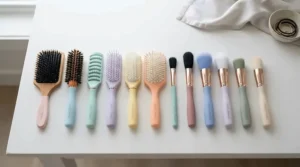
2. Tangle Teezer Original Detangling Hairbrush — best all-round family pick
This is the full-size sibling of the mini above, and it’s the brush that arguably started the UK’s detangling-brush obsession in the first place. The standout feature is the same two-tiered tooth system, scaled up into a proper handle-free, palm-shaped head that covers far more hair per stroke.
The two-tiered teeth mean long flexible teeth separate the tangle while shorter teeth glide across the surface, which in practice translates to noticeably less snapping sound (yes, you’ll hear it) compared with a standard bristle brush on the same head of hair. It’s rated for all hair types, from fine and fragile through to thick and curly, which is a genuinely useful claim if you’re brushing more than one child with more than one hair texture in the same household.
Here’s what to weigh: because there’s no handle, some children under about four find it awkward to hold themselves, meaning it often becomes a parent-operated tool rather than something the child brushes independently with. Reviewers consistently note that the lack of a handle also makes it easier to use one-handed while holding a squirming toddler with the other, which is a genuinely practical upside that doesn’t show up on a spec sheet. Aggregated feedback frequently mentions the brush lasting years with basic care — pulling loose hair out after each use and an occasional rinse.
Pros:
- ✅ Suits nearly every hair type in one household
- ✅ Noticeably reduces snapping and breakage versus standard brushes
- ✅ Durable build that many families report using for years
Cons:
- ❌ No handle can feel awkward for very young children
- ❌ Larger head is less ideal for detail work near the hairline
Typically priced in the £7-£11 range depending on colourway, this is the brush we’d point most families toward as a first purchase, simply because it handles the widest variety of hair textures without needing a second brush as backup.
3. Wet Brush Kids Original Detangler — best for daily wet-hair brushing
Wet Brush built its entire reputation on one idea: hair is at its most fragile when wet, so the brushing tool matters more in the bath than anywhere else. The kids’ Midi version takes that IntelliFlex bristle technology and shrinks the handle to fit smaller hands, with a shape specifically designed to be comfortable for a child gripping it themselves.
The IntelliFlex bristles bend and flex around knots rather than forcing straight through them, which on paper sounds like marketing language but in practice means you can genuinely use less downward pressure while brushing and still clear a tangle — less force applied means less pulling at the root, which is where the real pain of hairbrushing comes from. It’s designed for use straight after a bath with conditioner still in, catching knots before they set as the hair dries.
What most buyers overlook is that the ergonomic handle shape matters just as much as the bristles for children who are learning to brush their own hair; a handle that slips in wet hands undoes a lot of the bristle engineering. Aggregated review sentiment across the Wet Brush range is strongly positive on painlessness, with a recurring theme of parents mentioning it as the brush that finally ended bath-time battles, though a minority note the softer bristles need slightly more passes on very thick, coily textures than a firmer comb-bristle hybrid would.
Pros:
- ✅ Flexible bristles need less pressure to clear knots
- ✅ Ergonomic handle designed for a child’s own grip
- ✅ Purpose-built for wet, conditioner-coated hair
Cons:
- ❌ Softer bristles can need extra passes on very thick or coily hair
- ❌ Handle length isn’t ideal for very small toddlers
Available under the £12 mark in most colourways, it earns its spot as the brush most likely to be used daily without complaint, which — let’s be honest — is the actual metric that matters at 7am on a school day.
4. Frida Baby Detangling Hairbrush — best for thick or curly hair
Frida Baby made its name solving unglamorous baby-care problems with unusually thoughtful design, and this hairbrush follows the same pattern. The standout feature is its hybrid head: a wide-tooth comb section paired with a bristle section on the same tool, letting you break up the big knots with the comb before finishing with the bristles for smoothness.
That wide-tooth-plus-bristle combo genuinely earns its keep on thick, curly or coily hair types, where a bristle-only brush tends to skate across the surface without actually separating the coils underneath. Reviewers consistently report it working well on wet, conditioner-soaked hair, in line with the same wet-detangling approach favoured by dermatology and haircare guidance more broadly. The spec sheet won’t tell you this, but user reports suggest the comb side is particularly good for parting hair into sections before styling, which most single-function detanglers can’t manage.
On the flip side, the two-part head is bulkier than a simple palm brush, which makes it a slightly less obvious travel choice, and it leans firmly toward curly and thick hair types rather than being the most versatile all-rounder for fine, straight hair.
Pros:
- ✅ Comb-and-bristle combo tackles big knots and finishes smooth
- ✅ Particularly effective on thick, curly or coily textures
- ✅ Works well as a sectioning tool before styling
Cons:
- ❌ Bulkier shape than single-function palm brushes
- ❌ Less essential if your child’s hair is fine and straight
Sitting in the roughly £10-£14 range, it’s a mid-range pick that punches above its price for households where “just brush through it” was never actually true for their child’s hair type.
5. Lily England Kids Detangler Brush — best budget-conscious pick
Lily England has built a loyal following on making detangling brushes accessible without the premium price tag of some of the bigger names, and the kids’ version — often sold with a sheet of stickers to decorate the handle — leans into making brushing feel like less of a chore. The standout feature is the flexible bristle head at a genuinely low price point.
The flexible nylon bristles are spaced to move independently through hair rather than as a rigid block, reducing the tug you get from a solid-bristle brush. Based on the spec comparison with premium two-tiered systems, the bristle engineering here is simpler, which is honestly reflected in the price — but for moderately tangled, fine-to-medium hair, aggregated reviews suggest it performs a respectable job for the outlay.
Here’s what to weigh: the included stickers are a small but clever touch, because getting a reluctant brusher to personalise their own brush can shift the entire emotional tenor of hair time from “thing done to me” to “my brush that I chose.” What most buyers overlook is that budget doesn’t automatically mean flimsy here — the handle grip is comparable to pricier alternatives, even if the bristle technology is a step down from the two-tiered systems above.
Pros:
- ✅ Genuinely low price point for a flexible-bristle design
- ✅ Sticker pack helps reluctant brushers feel ownership
- ✅ Solid, comfortable handle grip for the price
Cons:
- ❌ Simpler bristle system than premium two-tiered options
- ❌ May need more effort on very thick, tightly coiled hair
At well under £8 in most listings, this is the brush we’d point budget-conscious parents toward for a first attempt at switching away from a standard hairbrush, without committing to a premium price before you know it’ll suit your child.
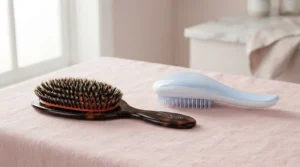
6. Crave Naturals Glide Thru Detangling Hairbrush — best value two-pack option
Crave Naturals pitches itself squarely at value, and the cone-shaped bristle design is the standout feature that sets it apart from the flat, flexible-tooth approach used by most of this list. Rather than bristles bending around the knot, these cone-shaped teeth are designed to glide sideways through it, spreading the load across more bristle contact points at once.
The 7.5 x 3 inch head is on the larger side for a kids’ brush, which speeds up brushing time on longer hair — fewer strokes needed to cover the whole head — though it does mean less precision for detail work near the hairline compared with the smaller Tangle Teezer mini. Reviewers consistently note it works equally well on wet and dry hair, and several mention using the same brush across the whole family rather than buying separate adult and child versions, which is a fair value argument if your household has more than one head of tangled hair to manage.
Aggregated feedback frequently highlights the scalp-massage sensation of the cone bristles as a genuine positive for children who find standard brushing uncomfortably scratchy. On the downside, some reviewers with very fine-haired children found the bristles a touch firmer than the ultra-soft IntelliFlex alternative, so it may not be the first choice for a child with a notably sensitive scalp.
Pros:
- ✅ Cone-shaped bristles glide sideways through tough knots
- ✅ Larger head covers more hair per stroke
- ✅ Works well as a shared brush across siblings or adults
Cons:
- ❌ Firmer bristle feel than the softest IntelliFlex-style options
- ❌ Larger head is less precise for detail brushing
Priced in the £8-£12 range and frequently sold in value multi-packs, it’s the pragmatic choice for larger families who’d rather buy two brushes for the price of one premium option.
7. Kent Children’s Pocket Hairbrush — best for school bags and on-the-go
Kent is a genuinely historic British hairbrush maker, and its children’s range takes a different structural approach entirely: an air-cushioned pad topped with non-scratch, ball-tipped nylon quills rather than the flat bristle-teeth seen on the rest of this list. The standout feature is the cushioned base, which absorbs pressure so the quills glide across the scalp rather than digging in.
That cushioning matters more than it sounds — a rigid-backed brush concentrates pressure at the point of contact, while an air-cushioned pad spreads it out, which is part of why ball-tipped quill brushes have long been a staple recommendation for tender scalps. The compact, pocket-sized shape is deliberately built to survive life in a school bag or sports kit, rather than sitting pristine on a bathroom shelf.
What most buyers overlook is that this style leans more toward everyday smoothing and light detangling than heavy-duty knot-busting on very tangled hair — it’s better suited as a top-up brush for touch-ups through the day than as the primary tool straight after a bath. The spec sheet won’t tell you this, but the heritage build quality (Kent has been making brushes since the 18th century) tends to show up in longevity, with the quill-and-pad construction typically outlasting cheaper flexible-bristle brushes several times over.
Pros:
- ✅ Air-cushioned pad reduces pressure on the scalp
- ✅ Genuinely pocket-sized for school bags and sports kits
- ✅ Sturdy, long-lasting British-made build quality
Cons:
- ❌ Less effective on heavily tangled, post-bath hair
- ❌ Smaller head than dedicated detangling brushes
Usually priced under £9, it’s less a knot-buster and more the brush your child actually keeps in their bag for the mid-afternoon touch-up — a genuinely different job to the other six on this list.
Full Spec Comparison: All 7 Brushes Side by Side
| Brush | Bristle Type | Best Hair Type | Handle | Price Range |
|---|---|---|---|---|
| Tangle Teezer The Original Mini | Two-tiered teeth | All types, fine hair | Palm-shaped, no handle | Around £7-£10 |
| Tangle Teezer Original Detangling Hairbrush | Two-tiered teeth | All types | Palm-shaped, no handle | £7-£11 range |
| Wet Brush Kids Original Detangler | IntelliFlex bristles | Wet, medium hair | Ergonomic child grip | Under £12 |
| Frida Baby Detangling Hairbrush | Comb + bristle combo | Thick, curly, coily | Contoured grip | £10-£14 range |
| Lily England Kids Detangler Brush | Flexible nylon bristles | Fine to medium | Standard handle | Under £8 |
| Crave Naturals Glide Thru Brush | Cone-shaped bristles | Longer, thicker hair | Standard handle | £8-£12 range |
| Kent Children’s Pocket Hairbrush | Ball-tipped quills | Light, everyday brushing | Compact handle | Under £9 |
Read across the table and a pattern emerges: bristle shape correlates closely with hair type far more than price does, so the most expensive brush on this list isn’t automatically the “best” one for your specific child. If knot-busting power is the priority, the two-tiered teeth of the Tangle Teezer Original Detangling Hairbrush and the comb-bristle combo of the Frida Baby Detangling Hairbrush do the heaviest lifting, while brushes like the Kent Children’s Pocket Hairbrush are built for maintenance rather than rescue missions.
Achieving Tangle-Free Brushing: A Practical Usage Guide
Buying the right brush solves maybe half the battle — technique accounts for the rest. Genuine tangle-free brushing starts before the brush even touches the hair, with a proper detangling spray or leave-in conditioner applied to damp hair, giving the bristles something to glide through rather than drag against.
Start at the very ends of the hair, brushing through a couple of inches at a time, and only move up toward the roots once that lower section is fully smooth. Working root-to-tip on a fully tangled head is the single most common cause of pain, because you’re dragging every knot along the full length of the hair shaft rather than dissolving it in place. Hold the hair section just above where you’re brushing with your free hand — this takes the tension off the scalp itself, so your child feels the brush working rather than their roots being pulled.
For the first 30 days with a new detangling brush, expect a bit of a learning curve on timing: brushing hair while still damp (not soaking wet, which is when hair is weakest) and before it’s had a chance to dry into knots tends to cut brushing time roughly in half compared with tackling fully dry, tangled hair. A common early mistake is brushing too fast under time pressure — a slower, sectioned approach genuinely takes less total time once you account for the meltdowns a rushed job tends to trigger. Rinse loose hair out of the bristles weekly, and give the brush an occasional wash in warm soapy water to stop product build-up from making the glide feel sticky.
✨ Don’t Miss These Exclusive Deals!
🔍 Take your children’s haircare routine to the next level with these carefully selected picks — click through to check current pricing and availability, and turn tomorrow’s brushing into a five-minute job instead of a fifteen-minute negotiation.
Real-World Scenarios: Which Brush Suits Your Child?
Specs only tell you so much — here’s how the maths plays out for a few common family situations.
If you’re a parent of a two-year-old with fine, wispy hair that tangles mostly at the nape of the neck from nap-time friction, a compact option like the Tangle Teezer The Original Mini or the Lily England Kids Detangler Brush tends to be the better fit: fine hair doesn’t need a heavyweight tool, and a smaller head suits the still-small amount of hair you’re actually managing.
If you’re raising a seven-year-old with thick, curly hair who dreads the post-swimming-lesson brush-out, the Frida Baby Detangling Hairbrush‘s comb-and-bristle combo earns its higher price by actually separating coils rather than skimming over them, and pairing it with a proper leave-in detangling spray will do more for that specific hair type than any brush alone ever could.
If you’ve got two or three children sharing a bathroom and a limited budget, the Crave Naturals Glide Thru Detangling Hairbrush‘s larger head and multi-pack pricing make it the pragmatic pick — one brush design that can flex across different hair lengths in the same household without buying three separate premium options. And if your child is the type who needs a touch-up brush stashed in their school bag rather than a full detangling session every few hours, the Kent Children’s Pocket Hairbrush is built precisely for that lower-stakes, higher-frequency job.
What Is a Detangling Brush for Kids?
A detangling brush for kids is a hairbrush specifically designed with flexible, spaced-out bristles, a two-tiered tooth system, or a comb-and-bristle hybrid head that separates knots gradually rather than forcing straight through them, reducing pulling, breakage and scalp discomfort. Unlike a standard paddle or round brush, which applies even pressure across a rigid surface, these designs concentrate their engineering on the specific problem of a tangled, often wet, easily damaged head of children’s hair.
How to Choose the Top Detangling Brush for Kids
- Match the bristle type to hair texture. Fine, straight hair generally does well with softer flexible bristles, while thick or curly hair benefits from a comb-and-bristle combo or firmer cone-shaped teeth.
- Consider handle vs handle-free design. Palm-shaped brushes without handles suit very young children or parent-led brushing; handled brushes suit kids old enough to brush independently.
- Check whether it’s rated for wet use. Hair is weakest when wet, so a brush explicitly designed for post-bath brushing will generally cause less breakage than a dry-only design.
- Prioritise scalp comfort over raw brushing speed. A slightly slower brush that doesn’t hurt beats a fast one that ends in tears — literally.
- Factor in portability if brushing happens outside the home. A compact or pocket-sized option matters if school bags or sports kits are part of the routine.
- Look at aggregated review sentiment, not star ratings alone. A 4.5-star average tells you less than recurring comments about specific hair types performing well or poorly.
- Set a realistic price range rather than chasing the cheapest option. The gap between a £6 and a £12 brush is often the difference between replacing it in six weeks and using it for two years.
Tear-Free Detangling Brushes for Children: What Actually Works
The phrase tear-free detangling brush for children gets used loosely in marketing, so it’s worth being precise about what genuinely reduces pain rather than just claiming to. The mechanism that actually matters is flexibility — bristles or teeth that bend and move independently as they meet resistance, rather than staying rigid and forcing the knot to give way all at once. That’s the entire engineering premise behind two-tiered systems like Tangle Teezer’s and flex-bristle designs like Wet Brush’s IntelliFlex range.
What most buyers overlook is that technique contributes as much to “tear-free” outcomes as the brush itself. Even the gentlest bristle design will still hurt if you’re brushing root-to-tip through a fully dry, fully tangled head at speed. Reviewers consistently note that pairing a flexible-bristle brush with a light detangling spray, and brushing in small sections from the ends upward, delivers a noticeably calmer experience than either change on its own. If your child has a genuine sensory aversion to brushing rather than simple impatience, that distinction matters for which brush and technique combination will actually help — a firmer cone-bristle brush might glide through knots faster but feel more intense on a sensitive scalp, while a softer flex-bristle brush might need more passes but feel gentler throughout.
Detangling Brushes for Toddler Hair: What’s Different
A detangling brush for toddler hair has to solve a slightly different problem than one built for a seven-year-old. Toddler hair is typically finer, shorter and more prone to friction tangles from constant head movement against car seats, cots and buggies, rather than the longer, styled-and-restyled tangles that build up in older children’s hair. That means smaller, lighter brushes with softer bristles generally outperform heavier-duty designs built for thick, long hair.
Handle-free, palm-shaped brushes like the Tangle Teezer The Original Mini work particularly well here because a toddler’s head is small enough that a compact tool can cover it in relatively few strokes, and there’s rarely enough hair length yet to justify a larger head. The spec sheet won’t tell you this, but user reports suggest toddlers also respond better to shorter, more frequent brushing sessions than one longer session, simply because attention spans and patience for being still are both limited at that age — a quick smooth-over after a nap tends to prevent the kind of matted, stubborn tangle that turns bath time into a battle later on.
Choosing a Brush for Sensitive Scalp
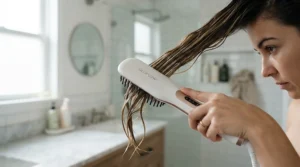
A sensitive scalp changes the entire calculus of which brush is “best,” and it’s a more common issue than many parents realise — some children are naturally more sensory-sensitive to touch on the head, while others are dealing with a temporary condition like dryness or irritation. According to NHS guidance on eczema in children, the scalp is one of the areas commonly affected in younger children, which is worth bearing in mind if brushing seems to trigger more discomfort than tangles alone would explain.
For a genuinely sensitive scalp, softer, more widely spaced bristles tend to outperform anything with a firm or cone-shaped tooth structure — the Wet Brush Kids Original Detangler‘s IntelliFlex bristles or a wide-tooth comb approach like the Frida Baby Detangling Hairbrush typically cause less direct pressure per contact point. Occupational therapy guidance for children with heightened touch sensitivity specifically recommends brushing during warm bath time, when the water itself provides calming sensory input, and using a large-tooth comb or a brush with fewer, more spaced-apart bristles for a gentler feel — practical, testable strategies worth trying before assuming a child simply dislikes having their hair brushed at all, as outlined in detail by NHS Borders’ guidance on meeting sensory needs during hair care.
Common Mistakes When Buying a Kids Hairbrush for Tangled Hair
The single most common mistake when shopping for a kids hairbrush for tangled hair is buying based on colour and character branding alone, without checking the actual bristle mechanism underneath the packaging. A brush covered in a favourite cartoon character but built with standard rigid bristles will still hurt just as much as an unbranded version — the design underneath matters more than the print on top.
A second frequent error is buying one brush to serve every hair type in a multi-child household. What works beautifully on fine, straight hair often underperforms on thick or curly textures, and vice versa, so a single “family” brush is sometimes a false economy compared with two more targeted options. Reviewers consistently note disappointment when a brush marketed as suitable “for all hair types” turns out to genuinely favour one texture over another — read the aggregated feedback for your specific hair type before assuming universal claims apply evenly.
A third mistake is under-buying on durability to save a few pounds, only to replace the brush within weeks once bristles splay or the handle cracks — at which point the cheaper option has cost more than the mid-range brush would have, both in money and in the frustration of restarting the habit-building process with a new tool.
Detangling Brush vs Traditional Hairbrush: What’s the Real Difference
A traditional round or paddle hairbrush is built primarily for styling and smoothing already-brushed hair, with rigid, evenly-spaced bristles designed for consistent tension across a full stroke. That rigidity is exactly what makes it a poor tool for a genuinely tangled head — evenly applied tension across a rigid bristle set means a knot has to be forced through, dragging on the hair shaft and scalp the whole way.
| Feature | Detangling Brush | Traditional Hairbrush |
|---|---|---|
| Bristle behaviour | Flexes around knots | Rigid, even tension |
| Best use case | Post-bath, tangled hair | Daily styling, smooth hair |
| Breakage risk on knots | Lower | Higher |
| Scalp comfort on tender heads | Generally better | Can be harsh |
| Styling precision | Moderate | Higher |
The table makes the trade-off fairly clear: a detangling brush wins decisively on comfort and breakage reduction when hair is actually knotted, but a traditional brush often still has a role for final styling smoothness once the tangles are already gone. Many families end up keeping both — a detangling brush for the post-bath rescue mission, and a traditional brush or comb for the final morning smooth-over before school.
Safety, Materials & Regulations Guide
Children’s hairbrushes sold in the UK fall under general product safety regulations covering toys and childcare items, and reputable brands will display CE or UKCA marking where the product falls within scope, alongside clear age guidance on packaging. It’s worth checking that bristle tips are rounded rather than sharply cut plastic, since cheaply manufactured brushes occasionally have rough edges that can scratch a scalp rather than glide across it — a detail that rarely shows up in a product photo but matters enormously in daily use.
Handle materials also matter more than they might seem to. A brush with a slippery, ultra-glossy handle becomes a genuine hazard around a bath, where wet hands and a child eager to grab their own brush are a predictable combination. Textured or rubberised grips reduce that risk noticeably, and it’s a detail worth checking in product images and reviews before buying, since it rarely gets its own bullet point in the listing itself.
Long-Term Children’s Haircare: Cost & Maintenance
Thinking about children’s haircare as a one-off purchase misses the bigger picture — a decent detangling brush typically lasts one to three years of daily use with basic care, while a poorly made one might need replacing every few months as bristles splay or the head cracks. Over a three-year stretch, a mid-range £10 brush that lasts the full period works out considerably cheaper per use than a £5 brush replaced four times over the same window, even before factoring in the hidden cost of a child associating hairbrushing with pain every time a low-quality brush tugs at their hair.
| Price Tier | Typical Range | Expected Lifespan | Value Verdict |
|---|---|---|---|
| Budget | Under £8 | 3-9 months | Good for testing fit |
| Mid-range | £8-£13 | 1-2 years | Best overall value |
| Premium | £13+ | 2-3 years | Best for multi-child households |
Maintenance itself costs nothing beyond a few minutes a week: pull loose hair from the bristles after each use, give the brush an occasional rinse in warm water, and let it air-dry fully before storing it in a closed drawer or bag, since damp bristles left exposed can start to smell or harbour bacteria over time. None of this is complicated, but it’s the difference between a brush that stays pleasant to use for years and one that quietly becomes something nobody wants to pick up.

Frequently Asked Questions
❓ What age can a child start using a detangling brush?
❓ Are detangling brushes actually better than normal brushes for kids?
❓ How do you stop a toddler's hair tangling so often?
❓ What's the difference between a wet brush and a detangling brush?
❓ How often should a kids' detangling brush be replaced?
Conclusion
There’s no single top detangling brush for kids that suits every family, and honestly, anyone claiming otherwise is glossing over how differently hair textures, ages and sensory sensitivities respond to different bristle designs. What the research does show clearly is that the underlying mechanism — flexible bristles or two-tiered teeth that bend around a knot rather than fighting straight through it — consistently outperforms rigid, traditional brushes on comfort and breakage, regardless of which specific product you land on.
If you’re after the safest general starting point, the Tangle Teezer Original Detangling Hairbrush covers the widest range of hair types in one household. For thick or curly textures that need real knot-busting power, the Frida Baby Detangling Hairbrush‘s comb-and-bristle combo does genuinely heavier lifting. And if budget is the deciding factor, the Lily England Kids Detangler Brush proves that gentle detangling doesn’t have to come with a premium price tag. Whichever you choose, pairing it with the right technique — damp hair, small sections, ends before roots — will do more for tangle-free brushing than the brush alone ever could.
✨ Ready to end the hairbrush battles for good? Browse today’s prices on our top picks above and pick the one that fits your child’s hair — and your morning routine — best! 💬🤗
Recommended for You
- 7 Best Hair Brushes for Fine Hair in 2026: Gentle Picks That Work
- Scalp Massage Brush for Hair Growth: 7 Best Picks (2026)
- Wet Brush for Curly Hair: 7 Best Picks for Pain-Free Curls (2026)
Disclaimer: This article contains affiliate links. As an Amazon Associate, I earn from qualifying purchases. If you purchase products through these links, we may earn a small commission at no additional cost to you.
✨ Found this helpful? Share it with your friends! 💬🤗
