
In This Article
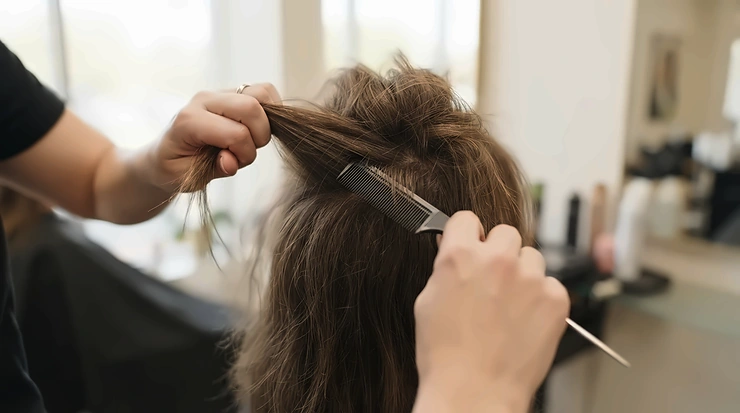
There’s a particular kind of heartbreak reserved for hairdressers and home stylists alike: reaching for your trusty parting comb mid-blow-dry, only to watch the tail snap clean off in your hand. If you’ve been there, you already understand why the metal tail comb exists, and why so many people are finally ditching plastic. A metal tail comb is a two-part styling tool — fine comb teeth at one end, a slender rigid pin at the other — used by stylists and home users to part, section, tease and colour hair with precision that a standard comb simply can’t match. What most buyers overlook is that the “metal” part isn’t just about looking professional on a shelf; it’s the difference between a tool that survives a decade of blow-dryer heat and one that warps after a fortnight.

Whether you’re colouring your own roots at the kitchen sink or running a full salon column on a Saturday, the right pin tail comb changes how cleanly you can section hair, how much heat you can throw at it, and — frankly — how much money you spend replacing snapped plastic imitations. Below, we’ve dug into seven genuinely good metal tail comb options sold in the UK, spanning budget carbon-fibre hybrids right up to Japanese-engineered salon staples, and unpacked exactly what separates a stainless steel tail comb worth buying from one that’s all shine and no substance.
Quick Comparison Table
| Product | Material | Best For |
|---|---|---|
| Sularpek Carbon Fibre Tail Comb | Carbon fibre body, metal pin | Budget-conscious beginners |
| MOZEAT LENS Metal Rat Tail Comb | Stainless steel comb + tail | Everyday home colouring |
| Denman DC06 Carbon Pin-Tail Comb | Carbon composite, fine metal tail | Reliable mid-range sectioning |
| Kent 8T Rat Tail Comb | Handmade acetate, metal pin | Fine hair, gentle daily use |
| Y.S. Park 102 Pin Tail Comb | Heat-resistant resin, stainless tail | Colour and foil work |
| Y.S. Park 116 Fine Tooth Pin Tail Comb | Heat-resistant resin, stainless tail | Precision cutting and parting |
| All Stainless Steel Metal Rat Tail Comb | Solid stainless steel | Maximum durability, heavy daily use |
Looking at the spread above, there’s a clear pattern: the cheaper options save weight and cost by using a metal pin welded to a plastic or carbon-fibre body, while the premium picks either go fully stainless steel or pair a genuinely heat-tolerant resin body with a proper steel tail. If you’re colouring hair professionally or teasing hair daily near a hot dryer, that distinction matters more than the price tag suggests — a wobbly pin junction is usually the first thing to fail. Buyers doing occasional home parting jobs can comfortably sit in the budget-to-mid range without missing much.
Found the right shortlist already? Save this comparison and come back to it before you check out — a five-minute read now beats a snapped comb in six months.
Top 7 Metal Tail Combs: Expert Analysis
1. Sularpek Carbon Fibre Tail Comb — best three-piece budget set
The Sularpek Carbon Fibre Tail Comb set bundles a fine-tooth comb, a wide-tooth comb and a teasing comb, giving new stylists a full toolkit without three separate purchases. The carbon-fibre body is noticeably lighter than solid metal, which matters if you’re sectioning hair for an hour-long colour appointment and don’t want wrist fatigue by the end of it. Anti-static construction also helps on dry British winter days, when static flyaways can undo an otherwise clean parting.
Based on the spec comparison, this set suits beginners, students on hairdressing courses, or anyone who wants a comb for occasional home use rather than eight-hour salon shifts — the carbon-fibre body is tough, but it isn’t built to the same abuse tolerance as a full metal pin tail comb. Reviewers consistently report that the tail holds its shape well for sectioning and teasing, though a handful note the fine-tooth comb can feel a touch flexible on thick, coarse hair compared with rigid all-metal alternatives.
Pros:
- ✅ Three tools cover parting, teasing and detangling in one set
- ✅ Lightweight carbon-fibre build reduces hand fatigue
- ✅ Anti-static coating helps control frizz and flyaways
Cons:
- ❌ Less rigid than solid stainless steel under heavy backcombing
- ❌ Fine teeth can feel delicate on very thick or coarse hair
Typically priced in the £5-£10 range on Amazon UK, this set represents strong value for anyone testing the waters before committing to a premium single comb — check current price for the latest stock and bundle deals.

2. MOZEAT LENS Metal Rat Tail Comb — best full stainless steel for everyday colouring
The MOZEAT LENS Metal Rat Tail Comb goes all-in on stainless steel, with both the comb teeth and the parting tip made from the same corrosion-resistant material. That matters more than it sounds: chromium content forms a protective layer that resists rust, so a comb like this one shrugs off repeated contact with wet hair, developer and colour products in a way plastic-bodied combs eventually can’t. The narrow parting tip is specifically shaped for clean root sections during highlighting or balayage work.
What the spec sheet won’t tell you, but reviewers note, is how this comb behaves under repeated contact with bleach and toner: because it’s stainless throughout rather than metal-tipped plastic, there’s no seam where product can seep in and corrode the joint over months of use. That single design choice is why colourists tend to reach for full-metal combs over hybrid ones once they’re doing colour work regularly, not just the occasional home dye job.
Pros:
- ✅ Fully stainless steel construction resists rust and staining
- ✅ Narrow tip ideal for precise root sectioning
- ✅ No plastic-to-metal seam that can weaken over time
Cons:
- ❌ Heavier in hand than carbon-fibre alternatives
- ❌ Metal teeth can feel cold against the scalp initially
Priced in the £5-£12 range depending on seller, the MOZEAT LENS Metal Rat Tail Comb is a genuinely durable rat tail comb for anyone doing regular colour work at home or in a small salon setting.
3. Denman DC06 Carbon Pin-Tail Comb — best trusted UK brand for sectioning
Denman is one of the more recognisable names on British salon shelves, and the Denman DC06 Carbon Pin-Tail Comb reflects decades of the brand refining exactly this shape of tool. The fine tail and fine teeth are built for precision styling, sectioning and creating sleek finishes rather than heavy-duty backcombing, and the carbon construction gives it useful flex without feeling flimsy.
Here’s what to weigh: Denman’s carbon combs sit in an interesting middle ground between fully rigid stainless steel and lighter plastic-bodied combs. The 216mm length gives enough reach for full sectioning across a head of hair, and the anti-static carbon build genuinely reduces frizz during dry sectioning — a common complaint in user reviews of cheaper plastic tail combs is exactly this kind of static cling. For UK buyers who want a household name behind the product, this is a safe, well-tested choice.
Pros:
- ✅ Established UK brand with decades of salon trust
- ✅ Fine tail and teeth suit precision sectioning work
- ✅ Anti-static carbon build reduces flyaway frizz
Cons:
- ❌ Less aggressive teasing power than fully rigid metal combs
- ❌ Limited size options compared with the wider Denman range
Expect to pay in the £5-£9 range for this comb — solidly mid-range, and a sensible pick for anyone who values brand reliability over raw spec-sheet numbers.
4. Kent 8T Rat Tail Comb — best for fine hair and gentle daily use
Few British brands carry the heritage of Kent, a brush and comb maker whose craftsmanship has been recognised for generations. The Kent 8T Rat Tail Comb is hand-sawn from cellulose acetate with a metal pin tail, and its rounded, saw-cut teeth are specifically designed not to snag hair or scratch the scalp — a genuinely different priority to combs built purely for speed and rigidity.
Based on the spec comparison, this is the comb to reach for on fine or fragile hair, where an aggressively rigid all-metal comb can cause more breakage than it prevents. Reviewers consistently report that the saw-cut, hand-polished teeth glide more smoothly than moulded plastic alternatives, and the metal tail still gives the precision sectioning that a purely acetate comb lacks. What most buyers overlook is that a gentler comb isn’t a lesser comb — for fine hair specifically, it’s the more sensible choice.
Pros:
- ✅ Handmade, saw-cut teeth reduce snagging on fine hair
- ✅ Heritage British brand with a strong quality reputation
- ✅ Metal tail retains precision for parting and sectioning
Cons:
- ❌ Acetate body is less heat-tolerant than resin-bodied rivals
- ❌ Premium hand-finishing pushes the price above basic plastic combs
Typically found in the £8-£15 range, the Kent 8T Rat Tail Comb is a worthwhile investment for anyone whose hair type calls for gentler handling.
5. Y.S. Park 102 Pin Tail Comb — best for colour, foiling and tinting work
Y.S. Park combs have a cult following among colourists worldwide, and the Y.S. Park 102 Pin Tail Comb explains why. The body uses a heat- and chemical-resistant resin engineered specifically for repeated contact with tint, bleach and heat styling tools, paired with a genuine stainless steel tail for sectioning. The comb’s Gradual Decreasing Pitch design — where the spacing between each tooth narrows by fractions of a millimetre along the comb — creates even tension through a single stroke, which is precisely what you want when foiling.
On paper this means faster, cleaner root sections during colour services; in practice, reviewers consistently note the shortened first tooth makes grabbing small colour sections noticeably quicker than with standard-pitch combs. This is one of the best selling professional tail combs for foil work specifically, and the stainless steel tail holds its shape even after years of daily salon use.
Pros:
- ✅ Gradual Decreasing Pitch teeth create even foiling tension
- ✅ Genuinely heat and chemical resistant resin body
- ✅ Stainless steel tail stays rigid after years of daily use
Cons:
- ❌ Premium pricing compared with generic pin tail combs
- ❌ Overkill for buyers who only need occasional home use
Expect a price range in the £10-£18 bracket — a fair ask for a tool built specifically around the demands of professional colour work.

6. Y.S. Park 116 Fine Tooth Pin Tail Comb — best for precision cutting and parting
Where the 102 leans toward colour work, the Y.S. Park 116 Fine Tooth Pin Tail Comb is built with a thicker tail and finer teeth better suited to cutting-adjacent sectioning and detailed parting. It shares the same heat-resistant resin body, rated to withstand significantly higher temperatures than standard plastic, along with the same gradually narrowing tooth spacing for consistent tension across a stroke.
Reviewers consistently note the thicker tail makes it easier to separate hair quickly and cleanly compared with the standard 102 tail width, particularly useful when a stylist needs to grab and release sections rapidly through a cut. Here’s what to weigh: if your work leans more toward cutting and styling than colour services specifically, the 116’s tooth spacing and tail thickness are the more relevant spec than the 102’s foiling-optimised design.
Pros:
- ✅ Thicker tail speeds up separating and grabbing hair sections
- ✅ Fine teeth suit detailed parting during cuts and styling
- ✅ Resin body resists heat from dryers and straighteners nearby
Cons:
- ❌ Similar price point to the 102 despite a narrower use case
- ❌ Fine teeth are less suited to very thick, coarse hair
Pricing generally sits in the £10-£18 range, in the mid-£10s for most UK sellers stocking genuine Y.S. Park stock — worth checking current price given occasional import cost fluctuations.
7. All Stainless Steel Metal Rat Tail Comb — best for maximum durability under heavy use
For stylists who’ve been burned (sometimes literally) by combs that warp near heat tools, the All Stainless Steel Metal Rat Tail Comb removes the weak point entirely by making the whole comb, teeth included, from high-strength steel. This is the option to reach for when a comb needs to survive being left too close to a hot dryer, dropped repeatedly, or used for aggressive backcombing session after session.
What most buyers overlook about fully metal designs is the trade-off: chromium content forms a passive film that resists rust and, crucially, that same molecular structure gives the comb far more rigidity than any plastic or carbon hybrid. Reviewers consistently note this style holds a straight edge for years without the gradual bend that plastic-tipped combs develop from being levered against thick hair. The trade-off is weight and, for some users, a less ergonomic grip than shaped plastic handles offer.
Pros:
- ✅ Entirely metal build eliminates weak plastic-metal joints
- ✅ Extremely heat tolerant — safe near dryers and straighteners
- ✅ Holds shape under heavy backcombing for years of use
Cons:
- ❌ Noticeably heavier than carbon-fibre or plastic-bodied combs
- ❌ Bare metal handle can feel slippery with wet or oily hands
Typically priced in the £6-£14 range, this is arguably the most genuinely durable rat tail comb on this list for buyers who prioritise longevity above all else.
Practical Usage Guide: Getting the Most from Your Metal Tail Comb
Buying a well-built comb is only half the job — how you use and store it determines whether it lasts two years or twenty. Start by rinsing product residue (colour, gel, hairspray) off the comb immediately after use rather than letting it dry on; residue left to harden is what eventually pits even a decent stainless steel tail comb over time. Dry it fully before storing, since trapped moisture between the teeth is where corrosion typically starts on lower-grade metal blends.
A common first-30-days mistake is using the pin end to backcomb aggressively before the hair has been properly detangled — this is what bends cheaper tails out of true. Instead, detangle with the wide-tooth side first, then switch to the pin for sectioning. If you’re using the comb professionally, proper sterilisation between clients isn’t optional: guidance on running a salon safely in the UK stresses cleaning and sterilising instruments such as combs between every use to limit the spread of infection, which is worth reading in full if you’re setting up a home-based styling business. Finally, store your comb flat or hanging rather than tail-down in a jar, since a jar full of brushes is exactly how tails get bent against the container’s edge.

Real-World Scenarios: Matching the Comb to the User
Consider Priya, a home hair colourist who dyes her own roots every six weeks and occasionally helps her sister with foils. She doesn’t need Y.S. Park-level engineering; the MOZEAT LENS Metal Rat Tail Comb or the Sularpek Carbon Fibre Tail Comb set covers her needs without overspending on a tool that will sit in a drawer most of the year.
Now consider Marcus, a mobile barber who’s on his feet eight hours a day, sectioning and backcombing across a dozen different clients weekly. For him, the All Stainless Steel Metal Rat Tail Comb or a Y.S. Park option justifies its higher price tag through sheer resistance to daily wear — a snapped comb mid-appointment costs him more in lost time than the price difference ever would. Finally, picture Aisha, who has fine, easily-damaged hair and wants a gentler daily detangling and parting tool: the Kent 8T Rat Tail Comb‘s rounded, hand-polished teeth are the better match here, even though it’s not the most rigid option on this list.
Problem → Solution: Common Metal Tail Comb Headaches
Problem: the tail keeps bending out of shape. This usually happens with hybrid combs where a thin metal pin is glued or pressed into a plastic body rather than forged as one piece. Solution: switch to a genuinely solid design like the All Stainless Steel Metal Rat Tail Comb, or avoid using the tail to lever apart thick, tangled sections — detangle first.
Problem: the comb feels uncomfortably hot after use near a dryer. Cheaper metal-plastic hybrids can develop soft spots where the plastic meets the metal under sustained heat. Solution: opt for a resin body specifically rated as heat resistant, such as the Y.S. Park 102 Pin Tail Comb or Y.S. Park 116, both engineered around exactly this scenario.
Problem: skin irritation on the hand or fingers after prolonged use. This is occasionally linked to nickel content in lower-grade metal alloys; nickel is one of the most common causes of allergic contact dermatitis, and prolonged skin contact with nickel-releasing metal is a recognised trigger. Solution: choose a comb explicitly labelled as full stainless steel, which typically contains far less free nickel than cheap chrome-plated alternatives, or opt for a carbon-fibre bodied comb with only a small metal tip.
Problem: teeth snapping on thick or coarse hair. Fine-tooth combs like the Kent 8T are gentle but not designed for very thick hair. Solution: reach for a wider-spaced, more rigid design such as the Denman DC06 or a fully metal comb for coarse or curly hair types.
How to Choose a Metal Tail Comb
- Decide how often you’ll use it. Occasional home use tolerates a hybrid carbon or plastic-metal design; daily professional use justifies paying more for a solid metal build.
- Check the tail material specifically. Look for “stainless steel tail” in the listing rather than just “metal,” since some cheaper combs use lower-grade alloys prone to bending.
- Match tooth spacing to your hair type. Fine teeth suit fine or thin hair; wider spacing handles thick or coarse hair without snagging.
- Consider heat exposure. If the comb will regularly sit near a hot dryer or straightener, prioritise a genuinely heat-resistant body rather than standard plastic.
- Think about grip and weight. Fully metal combs are more durable but heavier; carbon-fibre hybrids trade a little rigidity for comfort during long sessions.
- Factor in your budget realistically. A £6 comb replaced every year can cost more over five years than one £15 comb that lasts the whole period.
- Read aggregated review sentiment, not just star ratings. Look specifically for repeated mentions of bending, rusting or snapping — a single bad review matters less than a recurring pattern.
Common Mistakes When Buying a Metal Tail Comb
The single most common mistake is assuming “metal comb” means the whole tool is metal — many listings use the word loosely to describe a plastic-bodied comb with only a thin metal pin. Read the full product description, not just the title, to confirm what’s actually stainless steel versus what’s simply metal-coated or metal-tipped.
A second mistake is ignoring skin sensitivity. If you or your clients have a known metal allergy, cheaper chrome-plated combs can release more nickel than genuine stainless steel; guidance from allergy specialists notes that items in only brief, transient contact with skin are far less likely to trigger reactions than those in prolonged contact, which is relevant if you’re gripping a comb for hours at a time. A third mistake is buying purely on price for professional use — a comb that saves £5 upfront but needs replacing three times a year isn’t actually cheaper. Finally, buyers regularly skip checking the comb’s overall length against their actual needs; a short comb designed for detail sectioning is frustrating for full-head parting, and vice versa.

Metal Tail Comb vs Acetate & Plastic Tail Combs
| Factor | Metal Tail Comb | Acetate/Plastic Tail Comb |
|---|---|---|
| Durability | Resists bending and snapping | Prone to warping near heat |
| Heat tolerance | High (especially resin-bodied metal-tail hybrids) | Variable, often lower |
| Best For | Colourists, barbers, daily professional use | Gentle detangling, budget home use |
| Weight | Heavier | Lighter |
| Cost over time | Lower long-term cost per use | Cheaper upfront, replaced more often |
The written comparison matters more than the table alone: a plastic tail comb genuinely wins on comfort and initial price, and for someone parting hair once a week, that’s a perfectly reasonable trade-off. Where metal pulls ahead decisively is anywhere heat, chemical exposure, or repeated force enters the picture — a plastic tail simply degrades faster under those conditions, whereas a genuine stainless steel tail comb barely notices. If your usage sits somewhere in the middle, a hybrid like the Denman DC06 Carbon Pin-Tail Comb offers a reasonable compromise between the two extremes.
Heat Resistance: What the Numbers Actually Mean
“Heat resistant” gets thrown around loosely in comb listings, so it’s worth being specific about what it should mean in practice. A genuinely heat resistant metal comb should tolerate direct or near-direct contact with a hairdryer or straightener without softening, discolouring or warping — this is different from simply “not catching fire,” which is a much lower bar. Resin bodies used in combs like the Y.S. Park 102 and 116 are engineered specifically to withstand sustained heat exposure that would deform standard plastic within weeks.
Reviewers consistently report that fully stainless steel combs handle heat exposure the best of all, for the straightforward reason that steel simply doesn’t soften at hairdryer temperatures the way any plastic does. That said, metal conducts heat, so a comb left resting directly against a hot styling tool can itself become uncomfortably hot to hold — heat resistance in the body doesn’t mean the whole tool stays cool. If heat exposure is a daily reality in your styling routine, prioritise this spec explicitly rather than assuming any comb labelled “metal” automatically handles it well.
Long-Term Cost & Maintenance: What Durability Actually Saves You
Metal comb durability isn’t just a marketing phrase — it has a genuine pound-and-pence value once you run the numbers. A £6 hybrid comb that needs replacing every eight to ten months works out to roughly £7-9 a year including the odd re-order delay; a £15 fully stainless steel comb that lasts five years or more works out closer to £3 a year. For anyone using a comb professionally, that gap widens further once you factor in the cost of a snapped comb mid-client, which is an inconvenience a home user rarely has to weigh.
Maintenance is simple but easy to skip: rinse product build-up off promptly, dry thoroughly before storage, and avoid soaking combs with any plastic components in strong disinfectant solutions for longer than the manufacturer specifies, since prolonged chemical soaking is a known way to degrade cheaper plastics over time. A fully stainless steel comb tolerates more aggressive disinfection routines than a hybrid, which is one more reason salons tend to favour solid metal for shared tools between clients.
Salon-Grade Tools: Professionals vs Home Users
There’s a meaningful difference between what a working stylist needs from salon-grade tools and what a home user genuinely benefits from — and it isn’t simply “professionals need the expensive one.” A stylist doing back-to-back appointments needs a comb that survives repeated sterilisation cycles, resists chemical exposure from multiple colour services daily, and won’t bend under the kind of repeated force a home user rarely applies. This is where fully stainless steel options and Y.S. Park’s resin-and-steel hybrids earn their higher price tags.
A home user doing their own hair every few weeks is optimising for a different set of priorities: comfort in hand, a gentle touch on their own scalp, and a price point that doesn’t feel wasteful for occasional use. There’s genuinely no shame in a carbon-fibre or acetate-bodied comb here — the Kent 8T or Sularpek set will comfortably outlast the frequency with which most home users reach for them. The mistake is buying salon-grade tools for occasional use and paying a premium you’ll never actually benefit from, or conversely, buying a flimsy comb for daily professional use and replacing it every few months.
Frequently Asked Questions
❓ Is a metal tail comb better than a plastic one?
❓ Can a metal tail comb cause hair damage?
❓ How do you clean a stainless steel tail comb?
❓ Are metal combs safe for coloured or bleached hair?
❓ What is the best heat resistant metal comb for salon use?
Conclusion
Choosing between these seven options really comes down to being honest about how you’ll actually use the comb. If you’re colouring your own hair every few weeks, the MOZEAT LENS Metal Rat Tail Comb or the Sularpek Carbon Fibre Tail Comb set will serve you well without overspending. If you’re working professionally and putting a comb through daily wear, chemical exposure and repeated sterilisation, the All Stainless Steel Metal Rat Tail Comb or either Y.S. Park option earns its higher price through genuine longevity rather than branding alone.
What ties every recommendation on this list together is a simple principle: durability and heat resistance aren’t just nice-to-have specs, they’re the difference between a tool you buy once and one you keep replacing. Whichever pick suits your hair type, budget and frequency of use, checking current prices before buying is always worthwhile, since availability and stock levels shift regularly across UK sellers.
✨ Ready to upgrade your kit? Take a moment to compare your shortlist against the table above, click through to check current availability, and pick the metal tail comb that actually matches how you’ll use it every single day. 🪮
Recommended for You
- Comb For Wig Application: 7 Best Picks For Flawless Edges (2026)
- Wide Tooth Comb vs Detangling Brush: 7 Best UK Picks (2026)
- Afro Pick For Natural Hair: 7 Best Picks For Curls (2026)
Disclaimer: This article contains affiliate links. As an Amazon Associate, I earn from qualifying purchases. If you purchase products through these links, we may earn a small commission at no additional cost to you.
✨ Found this helpful? Share it with your friends! 💬🤗
