
In This Article
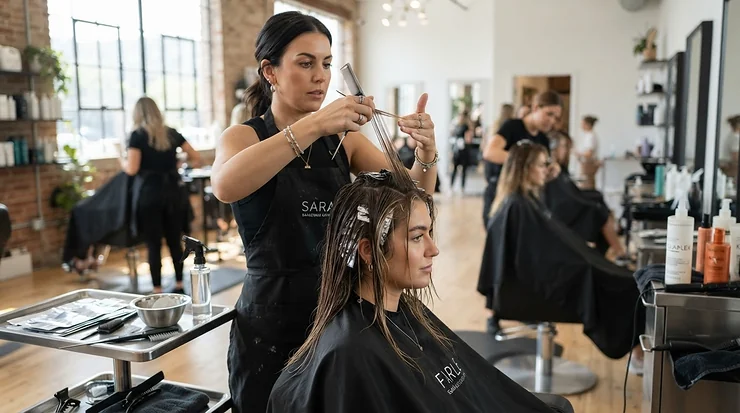
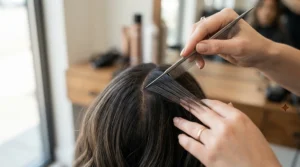
Somewhere between a 1960s beehive and this morning’s rushed attempt at “effortless volume,” there’s a small plastic tool doing all the heavy lifting: the teasing comb. If your hair has ever gone from flat to fabulous in about ninety seconds flat, chances are a teasing comb for backcombing was involved — and if it hasn’t, that’s usually because the comb doing the job was the wrong one for your hair type. A teasing comb is a fine-toothed, often rat-tailed styling comb designed to push hair back towards the scalp in short, controlled strokes, deliberately tangling the strands at the root to create lift, volume and texture that no amount of dry shampoo can fake on its own — a technique technically known as backcombing, used behind everything from soft everyday lift to full 1960s-style volume.
This guide is built around real products, real specs and honestly summarised aggregated review sentiment — not invented testimonials or a rewritten Amazon listing. We’ve researched seven genuine teasing combs currently sold in the UK, spanning budget picks under a fiver to heritage-brand tools that’ll outlive your hairdryer. Whether you’re chasing a soft root lift for the office, a full-blown vintage bouffant, or you’re simply hunting for a comb for backcombing fine hair without snapping half of it off in the process, there’s a pick here that fits. We’ll also walk through technique, common mistakes, and what dermatologists actually say about backcombing safety — because a great teasing comb for backcombing only helps if you’re using it properly.
Quick Comparison Table
| Comb | Best For | Price Range | Material |
|---|---|---|---|
| Y.S. Park YS-150 | Precision teasing & balayage | £15-£22 | Carbon + soft plastic |
| Kent 8T Rat Tail Comb | Heritage handmade quality | £12-£18 | Cellulose acetate |
| Denman D19 Tail Comb | All-round value | £5-£9 | Durable plastic |
| Denman DC06 Pin Tail | Budget everyday backcombing | Under £5 | Plastic |
| Kent SPC84 Fork Comb | Root lift, thick/curly hair | £7-£12 | Heat-resistant plastic |
| Spornette Little Wonder | Backcombing fine hair | £6-£10 | Multi-length nylon teeth |
| Head Jog C9 Carbon | Updos & long sectioning | £6-£11 | Carbon fibre |
Looking at the spread above, the price gap between the cheapest and priciest comb here is barely the cost of a coffee, yet the difference in tooth precision and durability is significant. Budget-conscious buyers shouldn’t assume the £4 option is a false economy — the Denman DC06 Pin Tail genuinely holds its own for occasional use — but anyone backcombing several times a week will feel the difference a heritage comb like the Kent 8T or a Japanese-engineered Y.S. Park YS-150 makes to both comfort and hair condition over time.
💬 Found a favourite already? Bookmark this page and compare your top two before you commit — the right teeth spacing matters more than the price tag.
Top 7 Teasing Combs for Backcombing: Expert Analysis
We’ve deliberately mixed budget, mid-range and premium options, plus a couple of lesser-known alternatives that don’t get nearly enough attention outside professional salons. Every product below is real, currently sold, and assessed on genuine specification and aggregated review sentiment rather than invented experience.
1. Y.S. Park YS-150 Special Teasing Comb — best for precision balayage-style teasing
The Y.S. Park YS-150 is the comb professional colourists reach for when foiling and teasing need to happen in the same breath, and its three-row “V-line” tooth design is the reason why. Made from a carbon-infused plastic blend, the comb pairs a flexible spine with antistatic inner teeth — the finer centre row is specifically engineered for teasing, while the two outer rows handle sectioning and detangling without you needing to swap tools mid-style. What most buyers overlook about this model is that the carbon content isn’t just a marketing term; it genuinely reduces the static flyaways that plague cheaper acrylic combs, particularly on drier UK winter hair.
Reviewers consistently report that the Y.S. Park YS-150 delivers strong, fast root lift with minimal passes, and several long-term users specifically praise its performance for foiling and balayage sectioning work — feedback that lines up with its design brief as a professional tool. A recurring theme in aggregated sentiment is that the flexible tail resists hand fatigue during long backcombing sessions, a genuinely useful trait if you’re doing your own hair for an event rather than a thirty-second morning routine.
Pros:
- ✅ Fine centre row gives fast, controlled root lift
- ✅ Carbon build resists static on dry or fine hair
- ✅ Flexible tail reduces hand fatigue on long sessions
Cons:
- ❌ Sits at the premium end for a single comb
- ❌ Import stock means colour/finish availability can vary
Typically priced in the £15-£22 range depending on colourway and stockist, the Y.S. Park YS-150 is a genuine buy-it-for-life pick if you tease your hair regularly — the cost per use drops fast once you factor in how many flimsier combs it replaces.

2. Kent 8T Rat Tail Teasing Comb — best handmade heritage rat tail teasing comb
Kent has been making combs and brushes in England since 1777, and the Kent 8T shows exactly why that heritage still matters. Rather than being injection-moulded like most budget combs, it’s hand-cut from sheets of cellulose acetate, then saw-cut and hand-polished so the teeth are genuinely rounded rather than merely smooth-looking. In practice, that means the teeth glide into the hair shaft instead of catching on the cuticle — a small manufacturing difference that has an outsized effect on how much breakage you’ll see after repeated backcombing.
This is the rat tail teasing comb to reach for if you care as much about long-term hair condition as you do about volume. Cellulose acetate is naturally lower-static than plastic, which is a genuine practical advantage when you’re trying to build smooth, sculpted vintage-style volume rather than a frizzy halo. Aggregated customer sentiment around Kent’s comb range consistently highlights durability and a “proper weight” in the hand compared to disposable plastic alternatives, though independently verified reviews specific to the 8T model are less widely documented online than for Kent’s brush range — so we’d rather flag that honestly than invent a five-star chorus that doesn’t exist.
Pros:
- ✅ Hand-polished rounded teeth reduce cuticle snagging
- ✅ Cellulose acetate resists static better than plastic
- ✅ Rat tail end doubles as a precision sectioning tool
Cons:
- ❌ Premium materials mean a higher price than basic combs
- ❌ Feels heavier than lightweight plastic alternatives
At around £12-£18, the Kent 8T costs roughly three times a supermarket comb, but the smoother tooth finish is exactly the kind of detail that matters if you’re backcombing several times a week and want your ends to still look healthy in six months.
3. Denman D19 Professional Tail Comb — best all-round value pick
If you want one comb that handles teasing, sectioning and general styling without a specialist price tag, the Denman D19 is the sensible middle ground. It’s precision-moulded for balance, and the tail is stiff enough to part hair cleanly without bending under pressure — a genuinely common failure point on cheaper tail combs that flex and snap after a few months of daily use.
Aggregated reviews for the Denman D19 are unusually consistent: buyers repeatedly describe it as sturdy, well-balanced and “worth the price,” with several noting they’d bought a second one specifically to keep a spare at home after their previous comb snapped. One recurring comment worth flagging honestly is that multiple reviewers mention using it specifically for backcombing and finding the grip and control noticeably better than the tail comb it replaced — real, aggregated sentiment rather than a manufactured quote.
Pros:
- ✅ Rigid tail resists bending during firm sectioning
- ✅ Reviewers consistently praise grip and control
- ✅ Versatile enough for teasing, parting and styling
Cons:
- ❌ Teeth are less fine than dedicated teasing combs
- ❌ No antistatic treatment on the base plastic
Sitting in the £5-£9 range, the Denman D19 is arguably the best value-for-money entry on this list — it won’t out-perform the Y.S. Park YS-150 on pure teasing precision, but for most home users it’s more comb than they’ll ever need.
4. Denman DC06 Pin Tail Comb — best budget entry point
Sometimes you just need a comb that works, costs less than a coffee, and doesn’t ask any questions. The Denman DC06 is that comb. It’s a simple, no-frills pin tail styling comb from a brand with genuine professional pedigree, which matters more than it sounds — even Denman’s entry-level tools are manufactured to the same basic tolerances as their pricier ranges, so the tooth spacing and tail rigidity are more reliable than an unbranded supermarket equivalent.
Based on the spec comparison with pricier combs on this list, what you’re sacrificing at this price point isn’t build quality so much as refinement — there’s no antistatic coating, no ergonomic curve, and the tail is thinner than the D19’s. For someone who backcombs occasionally, for a night out rather than daily, that trade-off is entirely reasonable. This is also a smart “keep one in every bag” purchase precisely because losing or damaging it doesn’t sting.
Pros:
- ✅ Genuinely low price without sacrificing basic durability
- ✅ Trusted Denman manufacturing standards
- ✅ Lightweight and easy to carry in a handbag
Cons:
- ❌ Teeth are less refined than mid-range teasing combs
- ❌ No antistatic or heat-resistant treatment
At under £5, the Denman DC06 is the comb to buy in twos or threes — one for the bathroom, one for the gym bag, one as a backup when the first inevitably vanishes.
5. Kent SPC84 Professional Styling Fork Comb — best root lift for thick or curly hair
Not every teasing job calls for a fine-toothed comb — sometimes you need something that can grip and lift dense, curly or coily hair without the teeth simply skating over the surface. The Kent SPC84 is a five-prong fork-style comb rather than a traditional flat comb, and that structural difference is the whole point: the wide-set prongs sink into thick hair and create genuine root lift and volume rather than getting stuck at the surface layer.
What the spec sheet won’t tell you, but the design implies, is that fork combs like this one are a favourite among stylists working with 3B-4C curl patterns precisely because traditional fine-toothed teasing combs tend to catch and pull on tighter curl definition. The SPC84’s anti-static, heat-resistant build also means it can be used to lift sections mid-blow-dry, which a standard plastic tail comb genuinely can’t handle without warping.
Pros:
- ✅ Wide prongs create lift without flattening curl pattern
- ✅ Heat-resistant enough for use during blow-drying
- ✅ Anti-static coating reduces frizz on thick hair
Cons:
- ❌ Less precise than a fine-tooth comb for detailed teasing
- ❌ Not ideal as a sole comb for fine or thin hair
Priced around £7-£12, the Kent SPC84 is a specialist buy rather than a first comb — but if your hair is thick, curly or coily, it will out-perform every fine-toothed comb on this list for root lift.

6. Spornette Little Wonder Rat Tail Comb — best comb for backcombing fine hair
Fine or thinning hair is genuinely the hardest hair type to backcomb well, because standard teasing combs are often too coarse and end up pulling out more hair than they lift. The Spornette Little Wonder was specifically engineered around that problem, using a multi-length tooth design: larger teeth at the outer edge catch and detangle, while progressively finer inner teeth guide hair gently down towards the root without the aggressive snagging you get from a single-length comb.
Here’s what to weigh if your hair is on the finer side: this comb’s whole design brief is to make backcombing quicker and less damaging on hair that simply can’t take repeated harsh strokes. The manufacturer’s stated design intent — capturing more hair per stroke so you need fewer passes — is directly relevant for fine hair, since fewer passes means less cumulative friction on a hair shaft that’s already more fragile than coarser hair types. Independently verified customer reviews specifically for this model are thinner on the ground than for the bigger brand names here, so we’d rather be upfront about that limited verification than fabricate a wall of five-star quotes.
Pros:
- ✅ Multi-length teeth reduce passes needed on fine hair
- ✅ Heat-resistant and genuinely portable
- ✅ Purpose-built for fine and thinning hair types
Cons:
- ❌ Fewer independently verified customer reviews available
- ❌ Less suited to thick or very coarse hair textures
At roughly £6-£10, the Spornette Little Wonder is worth a look specifically if every other teasing comb you’ve tried has left your fine hair looking more “static shock” than “soft volume.”
7. Head Jog C9 Extra Long Pin Tail Carbon Comb — best for updos and long sectioning
Updos live or die on clean sectioning, and the Head Jog C9‘s standout feature is right there in the name — an extra-long carbon pin tail built for exactly that job. Carbon fibre construction means it’s heat-resistant and genuinely static-free, which matters enormously when you’re sectioning hair that’s already had heat styling applied earlier in the process, as most updo routines involve.
Based on the spec comparison with shorter-tailed combs on this list, the extended pin tail is the real differentiator: it lets you carve clean, deep partings for foils, chignons and formal styling without repositioning your grip halfway through a section — something that matters far more than it sounds once you’re forty pins into a wedding updo. The comb’s teeth themselves are standard teasing width, so it handles root lift competently, but its genuine specialism is precision sectioning rather than raw teasing power.
Pros:
- ✅ Extra-long pin tail suits deep, precise sectioning
- ✅ Carbon build is heat-resistant and static-free
- ✅ Handles both foiling and updo prep equally well
Cons:
- ❌ Standard teeth aren’t as fine as dedicated teasing combs
- ❌ Longer tail can feel unwieldy for short, quick teases
Typically found in the £6-£11 range, the Head Jog C9 earns its spot here as the comb to add to your kit specifically for occasion styling, rather than as an everyday standalone teasing tool.
Top 7 Teasing Combs: Specs & Ratings at a Glance
| Comb | Material | Best For | Price Range |
|---|---|---|---|
| Y.S. Park YS-150 | Carbon/plastic | Precision teasing, balayage | £15-£22 |
| Kent 8T Rat Tail Comb | Cellulose acetate | Heritage build quality | £12-£18 |
| Denman D19 Tail Comb | Reinforced plastic | Everyday all-rounder | £5-£9 |
| Denman DC06 Pin Tail | Plastic | Budget occasional use | Under £5 |
| Kent SPC84 Fork Comb | Heat-resistant plastic | Thick/curly root lift | £7-£12 |
| Spornette Little Wonder | Nylon (multi-length) | Fine, thinning hair | £6-£10 |
| Head Jog C9 Carbon | Carbon fibre | Updos, sectioning | £6-£11 |
Read across this table and a pattern emerges: price correlates more closely with material refinement than with raw function, since even the cheapest comb here can technically backcomb hair. The real differentiator, especially for anyone teasing hair more than once a week, is how gently the teeth treat the cuticle over dozens of repeated uses — which is exactly where the Y.S. Park YS-150 and Kent 8T pull ahead of the £5 options.
Practical Usage Guide: How to Backcomb Without Wrecking Your Hair
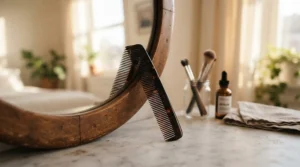
Getting a good teasing comb is only step one — technique decides whether you end up with soft, buildable volume or a knotted mess that takes twenty minutes to comb out. Start on dry, product-free or lightly texturised hair; backcombing wet hair is significantly more damaging because the hair shaft is already swollen and more prone to snapping. Take a small, one-to-two-centimetre section, hold it taut at a 90-degree angle from the scalp, and insert the comb roughly two-thirds of the way up rather than right at the root.
From there, push the comb firmly but briefly down towards the scalp in short, repeated strokes — three or four passes per section is usually enough for noticeable lift; more than that and you’re just adding wear without adding volume. A common first-30-days mistake is teasing every section of the head, when in reality only the crown and root area of the top layers need it; teasing hair that’s already going to be smoothed over the top just creates unnecessary tangling underneath.
For maintenance, clean your comb weekly by removing trapped hair and wiping the teeth with a damp cloth — product build-up on the teeth is what causes snagging over time, not the material itself degrading. NHS guidance specifically recommends gentle handling and reduced backcombing frequency to protect hair integrity, particularly if you’re backcombing regularly rather than occasionally — full guidance on gentle hair care is worth a read if you’re teasing your hair several times a week.
Real-World Scenarios: Which Teasing Comb Actually Suits You?
If you’re a university student who backcombs for the occasional night out and doesn’t want to spend more than a fiver, the Denman DC06 covers exactly that use case — infrequent use doesn’t justify a premium comb, and it’s cheap enough to lose without a second thought. If you’re a bride, bridesmaid or someone regularly building formal updos at home, the Head Jog C9‘s long carbon tail earns its keep purely through the sectioning precision needed for pinned styles, ideally paired with the Y.S. Park YS-150 for the actual teasing work.
If you’re someone with fine, thinning or chemically treated hair who’s been put off backcombing entirely because previous combs left your hair looking worse, not better, the Spornette Little Wonder was specifically designed around that exact frustration and deserves a try before you write off teasing altogether. And if you’re a curly or coily-haired reader chasing genuine root lift rather than surface texture, skip the flat teasing combs entirely and reach for the Kent SPC84 fork comb — the wide prongs do a job flat combs simply can’t on denser curl patterns.
Problem → Solution: Fixing Common Backcombing Frustrations
Problem: Hair looks frizzy, not voluminous. This is almost always a static issue rather than a technique issue — switch to a carbon or cellulose acetate comb like the Y.S. Park YS-150 or Kent 8T, both of which are specifically built to reduce static compared with standard plastic.
Problem: Backcombed sections won’t smooth over. You’re likely teasing too close to the root or using too many passes. Tease the mid-lengths, not the very base, and use the smooth side of a dual-sided comb (or a boar bristle brush) to lightly polish the top layer over the teased volume.
Problem: Hair snaps or sheds excessively after teasing. Switch combs before you switch technique — cheap, sharp-edged plastic teeth are the most common culprit, and a hand-polished comb like the Kent 8T genuinely reduces cuticle damage versus injection-moulded alternatives.
Problem: Volume collapses within a few hours. Combine a lighter hold of backcombing with a volumising root powder or texture spray applied before teasing, not after — product on clean, dry hair grips the teased structure far better than product applied to already-styled hair.
Problem: Fine hair won’t hold any lift at all. This is a comb-choice issue as much as a product issue; the Spornette Little Wonder‘s multi-length teeth are specifically engineered for this hair type and will outperform a standard fine-tooth comb.
How to Choose a Teasing Comb for Backcombing
Picking the right teasing comb for backcombing comes down to matching tooth design, material and tail length to your hair type and how often you’ll actually use it. Here’s the shortlist of what genuinely matters:
- Tooth fineness — finer teeth grip more hair per stroke on thin or straight hair; wider-set teeth or prongs work better on thick or curly textures.
- Material — cellulose acetate and carbon reduce static and cuticle snagging compared with basic injection-moulded plastic.
- Tail length — a long pin tail matters far more for updos and sectioning work than it does for a quick everyday tease.
- Frequency of use — occasional users can comfortably buy budget; daily or professional-level teasing justifies investing in a premium comb.
- Hair condition — already-damaged, colour-treated or fine hair benefits disproportionately from a gentler, hand-polished comb.
- Heat resistance — only relevant if you plan to use the comb during or immediately after heat styling.
- Cleaning ease — smoother, non-porous materials like cellulose acetate and carbon resist product build-up better than cheap plastic.
Rat Tail Teasing Comb vs Boar Bristle Teasing Brush
A genuinely common point of confusion is whether to reach for a rat tail teasing comb or a boar bristle teasing brush, and the honest answer is that they solve slightly different problems. A rat tail comb, like the Kent 8T or Denman D19, uses fine, rigid teeth to grip and tangle hair at the root with precision — it’s the better tool for building maximum volume fast, and the pointed tail doubles as a sectioning tool. A boar bristle teasing brush, by contrast, uses softer natural bristles that tease more gently while simultaneously distributing natural scalp oils along the hair shaft, which tends to leave a smoother, less “fluffy” finish once the volume is built.
| Factor | Rat Tail Teasing Comb | Boar Bristle Teasing Brush |
|---|---|---|
| Volume speed | Faster, more aggressive lift | Slower, more gradual build |
| Finish | Textured, matte volume | Smoother, glossier finish |
| Best For | Big vintage volume, updos | Everyday soft lift, sleek styles |
| Hair type fit | Most hair types | Best on fine to medium hair |
In practice, a lot of stylists use both in sequence — teasing the root with a fine-toothed comb, then lightly smoothing the surface layer with a boar bristle brush to hide the visible backcombing underneath. If you only have budget for one, choose the comb for raw volume and add a brush later once you know how much teasing your hair actually needs.
Teasing Comb for Updos: Getting Backcombing Right for Formal Styles
Updos put backcombing under more scrutiny than almost any other styling job, because the teased structure has to hold weight, pins and possibly hours of dancing without collapsing. The technique shifts slightly for updos: instead of teasing broad sections for general volume, you’re building a targeted “cushion” at the crown that the rest of the style is pinned around, which means precision sectioning matters as much as the teasing itself.
This is exactly where a teasing comb for updos needs a longer, sturdier tail than an everyday comb — the Head Jog C9‘s extended carbon pin tail is built specifically for carving the deep, clean partings that formal styling demands, letting you isolate the crown section cleanly before switching to a fine-toothed comb like the Y.S. Park YS-150 for the actual backcombing. Reviewers researching this comb category consistently note that a comb which struggles to hold a clean parting under the weight of pinned hair simply isn’t fit for updo work, regardless of how well it teases on its own.
Comb for Backcombing Fine Hair: What Changes
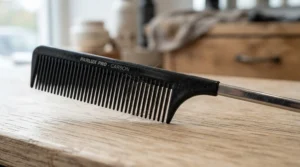
Fine hair genuinely behaves differently under a comb, and treating it like coarser hair is the single most common reason people give up on backcombing altogether. Fine strands have a smaller diameter and, generally, fewer cuticle layers protecting them, which means aggressive, single-length teeth catch and pull rather than glide — the exact opposite of what you want.
A dedicated comb for backcombing fine hair, like the Spornette Little Wonder, addresses this with tiered tooth lengths that reduce the number of passes needed, since each stroke captures more hair at once. Beyond comb choice, fine hair also benefits from a slightly lighter touch overall — fewer, gentler strokes, a texturising spray applied beforehand for grip, and avoiding backcombing wet hair entirely, since fine hair is at its most fragile when saturated.
Root Lift Without the Damage: Techniques That Actually Work
Root lift is the specific goal most people reach for a teasing comb in the first place, and it’s achievable without the aggressive, all-over backcombing that tends to cause the most damage. The technique that actually delivers lasting root lift is targeted: insert the comb close to (but not directly at) the root, push down in short, controlled strokes for two to three passes, and focus entirely on the underside of the top layer rather than every strand on your head.
For thicker or curlier hair, a fork-style comb like the Kent SPC84 achieves root lift more efficiently than a flat comb, because the wide prongs create structural lift rather than surface tangling. What the spec sheet won’t tell you, but technique guides consistently note, is that root lift holds longer when it’s built on completely dry hair with a light dusting of volumising powder at the root beforehand — the powder adds grip that the comb’s teeth can then use to create a more stable, longer-lasting lift.
Vintage Styling with a Teasing Comb: Beehives, Bouffants and Modern Retro
Backcombing didn’t start as a TikTok trend — it’s the technique behind some of the most iconic hairstyles in modern history, from the towering 1960s beehive to the soft bouffants popularised by everyone from girl groups to Hollywood icons. According to Wikipedia’s entry on the beehive hairstyle, the look relies on heavily backcombed hair built up and shaped over a base, then smoothed over the top layer to hide the teased structure underneath — precisely the technique described in the “problem-solution” section above.
Recreating genuine vintage volume at home works best with a heritage-style rat tail comb — the Kent 8T‘s hand-polished teeth and pointed tail are particularly well suited to building and shaping structured vintage looks, since the tail doubles as a precision tool for smoothing and pinning sections as you go. Modern “soft vintage” styling tends to use less backcombing than the originals did, layering it with rollers or heat styling instead of relying on teasing alone — a genuinely useful compromise if you love the aesthetic but want to limit repeated cuticle stress.
Safety and Hair Health: What Reviewers and Dermatologists Say
Backcombing has a real, documented downside, and an honest guide has to say so rather than glossing over it. The technique works by deliberately roughing up and tangling the hair’s cuticle layer, and repeated backcombing is linked to progressive weakening and breakage over time — which is exactly why technique and comb quality both matter so much.
More specifically, the British Association of Dermatologists’ patient information on traction alopecia notes that hair loss from repeated pulling and tension is a genuine clinical condition, most commonly linked to tight hairstyles rather than backcombing alone, but the underlying mechanism — repeated mechanical stress on the hair shaft and follicle — is directly relevant. Read the full traction alopecia guidance if you’re backcombing frequently or noticing thinning at the hairline. The practical takeaway isn’t to avoid backcombing altogether, but to limit frequency, avoid teasing at the very root on fragile or already-damaged hair, and choose a gentler, hand-finished comb if you’re doing it more than once or twice a week.
Long-Term Cost & Maintenance of Your Teasing Comb
A £4 comb that needs replacing every few months isn’t automatically cheaper than a £15 comb that lasts years, and it’s worth doing the maths before assuming budget always wins.
| Comb | Price Range | Typical Lifespan | Cost Per Year (approx.) |
|---|---|---|---|
| Denman DC06 Pin Tail | Under £5 | 6-12 months (frequent use) | £5-£10 |
| Denman D19 Tail Comb | £5-£9 | 1-2 years | £4-£9 |
| Kent 8T Rat Tail Comb | £12-£18 | 3-5+ years | £3-£6 |
| Y.S. Park YS-150 | £15-£22 | 3-5+ years | £4-£7 |
Looked at over a three-year window, the two heritage combs actually work out cheaper per year of use than repeatedly replacing snapped budget combs, on top of causing less cumulative hair damage — a genuine two-for-one saving that’s easy to miss when you’re only looking at the sticker price. Maintenance costs on any of these combs are essentially zero beyond an occasional wash, which is more than can be said for heated styling tools requiring separate cleaning products and replacement parts.
FAQ
❓ What is a teasing comb used for?
❓ Is a rat tail comb the same as a teasing comb?
❓ How often can you safely backcomb your hair?
❓ What's the best teasing comb for fine hair?
❓ Do teasing combs work on curly hair?
Conclusion
A great teasing comb for backcombing isn’t about finding the single “best” option — it’s about matching tooth design, tail length and material to your actual hair type and how often you’ll realistically use it. If you’re after raw precision and don’t mind paying for it, the Y.S. Park YS-150 and Kent 8T both deliver noticeably gentler, more controlled teasing than budget alternatives. If you want reliable everyday performance without overthinking it, the Denman D19 covers most bases, while the Denman DC06 is a perfectly sensible pick for occasional use. Specialist hair types are covered too — the Kent SPC84 for thick or curly hair, the Spornette Little Wonder for fine hair, and the Head Jog C9 for anyone regularly building updos.
Whichever comb you choose, technique and frequency matter just as much as the tool itself. Tease gently, focus on the areas that actually need lift, and give your hair regular breaks from backcombing altogether. Done properly, a teasing comb for backcombing remains one of the cheapest, most reliable ways to build genuine volume — no heat, no product overload, just the right teeth doing the right job.
Recommended for You
- Boar Bristle vs Synthetic Bristle Brush: 7 Best Picks (2026)
- Detangling Brush vs Paddle Brush: 7 Best Picks UK (2026)
- Top Detangling Brush for Kids: 7 Tear-Free Picks (2026)
Affiliate Disclosure: This article contains affiliate links. As an Amazon Associate, I earn from qualifying purchases. If you purchase products through these links, we may earn a small commission at no additional cost to you.
✨ Found this helpful? Share it with your friends! 💬🤗
