In This Article
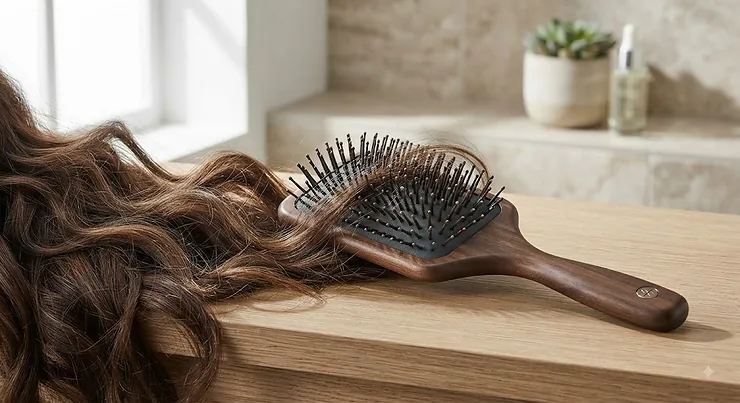
If you’ve ever stood in the bathroom at 7am, arm aching, watching a cheap brush bend backwards under the weight of your own hair, you already know why this matters. A paddle hair brush for thick hair isn’t a luxury — it’s damage control. The wrong tool snags, tugs, and leaves you with a fistful of strands in the plughole; the right one glides through in three strokes and gets you out the door on time.
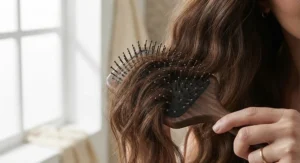
So, what is a paddle hair brush for thick hair? It’s a flat, wide-headed brush with a broad bristle field and (usually) a cushioned base, designed to cover more hair per stroke, distribute tension evenly, and detangle or smooth dense, heavy hair without concentrating pull on any single section.
Thick hair behaves differently under a brush than fine hair does — there’s more mass to move, more friction between strands, and often more resistance from natural texture. A brush built for lighter hair simply can’t keep up. Below, we’ve researched seven real, currently available options — from budget cluster-bristle picks to premium salon tools — and broken down exactly which type of large paddle brush for long thick hair, cushioned paddle brush for smoothing, or dedicated paddle brush for detangling thick hair actually earns its keep. We’ll also dig into the bristle spacing, scalp comfort, and hair breakage angles that most listings skate straight past.
Quick Comparison Table
| Brush | Best For | Bristle Type | Price Range |
|---|---|---|---|
| Denman D38 Detangling & Styling Paddle Brush | Everyday detangling of thick, long hair | Flexible nylon, air-cushioned | Around £10–£15 |
| Tangle Teezer Large Ultimate Detangler | Wet, shower-based detangling | Two-tier flexible teeth | £13–£20 range |
| ghd The All-Rounder Paddle Brush | Fast blow-drying, salon finish | Soft rounded nylon | £20–£30 range |
| Kent PF17 Large Cushion Paddle Brush | Scalp comfort, gentle daily use | Fine cushioned nylon pins | £15–£25 range |
| WetBrush Thick Hair Detangler | Budget-friendly stubborn knots | Cluster IntelliFlex bristles | Under £12 |
Looking at this shortlist, the split is really about where your hair struggles most. If shower-time knots are the enemy, the Tangle Teezer Large Ultimate Detangler earns its keep on wet strands, while anyone chasing a sleek, salon-style blow-dry will get more mileage from the ghd The All-Rounder Paddle Brush‘s broad, smoothing head. Budget shoppers shouldn’t feel short-changed either — the WetBrush Thick Hair Detangler punches well above its price point specifically because its bristle clusters were designed with dense hair in mind, not just borrowed from a fine-hair model.
💬 Just one click — help others make better buying decisions too!😊
Top 7 Paddle Hair Brushes for Thick Hair: Expert Analysis
Picking a paddle brush for thick hair isn’t just about grabbing the biggest paddle on the shelf. Bristle flexibility, cushioning, and spacing all change how a brush behaves once it meets genuinely dense hair — so here’s an honest, spec-by-spec look at seven real options, spanning budget to premium.
1. Denman D38 Detangling & Styling Paddle Brush — cushioned pins built for tangled length
The staggered nylon pins on this brush are the standout feature: unlike a flat bristle grid, staggering means each row catches hair at a slightly different angle, which spreads tension across more strands per stroke instead of yanking one clump straight through. The air-cushioned pad contours to the head, and the pins are rated for use with heat, so it doubles as a blow-drying tool. Based on the spec comparison with simpler wooden paddles, the flex-and-cushion combination is specifically what makes this a strong pick for thick, long hair rather than just a rebranded generic paddle. Reviewers repeatedly describe it coping well with “thick and wiry” hair that other brushes struggled with, and several long-term owners note it holds up after years of daily use — a meaningful signal given how quickly cheaper pins can splay. What most buyers overlook is that the same pins used here are shared with Denman’s famous curl-defining brush, so it’s genuinely built for texture, not just marketed at it.
Pros:
- ✅ Staggered pins reduce single-section pulling on thick hair
- ✅ Air-cushioned pad follows the head’s natural shape
- ✅ Heat-safe pins double as a blow-dry styling tool
Cons:
- ❌ Handle feels bulky for travel or handbags
- ❌ Firmer pin flex than very fine-hair brushes prefer
Sitting around £10–£15, the Denman D38 Detangling & Styling Paddle Brush is one of the strongest value picks here — check current price before buying, as retailers vary.
2. Tangle Teezer Large Ultimate Detangler — two-tier teeth for shower-safe detangling
This brush’s patented two-tiered teeth are the headline act: long, flexible teeth work through the bulk of a knot while shorter teeth smooth the surface layer, which is a genuinely different mechanism from a standard single-length bristle. The paddle here is 20% larger than Tangle Teezer’s original design, aimed squarely at longer, denser hair that the smaller version struggles to clear quickly. On paper this means less repeated brushing over the same section, which matters because repeated strokes are exactly what causes cuticle wear over time. Reviewers consistently note it’s gentle enough for wet, product-laden hair — a real advantage for anyone applying a mask or leave-in treatment, since the brush distributes product evenly rather than just detangling. The compact, handle-free shape that made the original famous carries through here too, which some find liberating and others find awkward on very long lengths.
Pros:
- ✅ Two-tier teeth ease tension through thick knots gradually
- ✅ 20% larger paddle covers more hair per pass
- ✅ Ideal for distributing conditioner or hair masks evenly
Cons:
- ❌ No handle, which some find harder to grip
- ❌ Smaller than dedicated paddle brushes on very long hair
Priced in the £13–£20 range, the Tangle Teezer Large Ultimate Detangler is best suited to shower routines and post-wash detangling rather than dry styling.
3. ghd The All-Rounder Paddle Brush — salon-grade broad paddle for fast blow-drying
The broad, flat head here is designed to grab large sections of hair at once, which is precisely what shortens blow-dry time on thick hair — fewer passes, less heat exposure overall. Reviewers highlight the soft-touch, non-slip handle as genuinely comfortable through a long styling session, and the rounded nylon bristles are gentle enough on the scalp that several long-term owners report using the same brush for over a decade. What the spec sheet won’t tell you, but reviewers note, is that this brush performs particularly well on very thick or curly hair for detangling too, not just drying — several customers specifically mention it handling “very thick, curly hair” without pulling. That said, honesty matters here: build quality feedback is genuinely mixed, with some customers reporting the brush falling apart within weeks while others get years of use, so this is a case where consistency, not raw performance, is the open question.
Pros:
- ✅ Broad paddle head speeds up blow-drying noticeably
- ✅ Soft-touch handle stays comfortable through long sessions
- ✅ Hand-finished, professional design used in salons
Cons:
- ❌ Durability feedback is inconsistent across reviewers
- ❌ Priced at a premium versus similar-sized rivals
Retailing in the £20–£30 range (and often discounted into the high teens during sales), the ghd The All-Rounder Paddle Brush suits anyone prioritising blow-dry speed and finish over budget.
4. Kent PF17 Large Cushion Paddle Brush — Made-in-England scalp comfort specialist
Kent has been manufacturing brushes since 1777, and the PF17’s fine cushioned pins are built around a different priority than most paddles on this list: scalp comfort during detangling rather than raw speed. The pins are described specifically as suited to long, thick, curly hair, doubling as a gentle scalp massager. Here’s what to weigh: unlike Kent’s boar-bristle models, which distribute natural oils and add shine, the PF17 leans on nylon pin flexibility rather than bristle stiffness, so it detangles rather than polishes. Based on the spec comparison with the firmer boar-mix Kent models, this makes it the gentler option of the brand’s range — a sensible pick for anyone whose scalp reacts badly to firmer brushes, which is a genuinely common complaint with cheap, rigid paddles on dense hair.
Pros:
- ✅ Made in England with heritage craftsmanship since 1777
- ✅ Fine pins prioritise scalp comfort over aggressive detangling
- ✅ Works wet or dry, doubling as a scalp massager
Cons:
- ❌ Doesn’t add the shine a boar-bristle Kent model would
- ❌ Costs more than mass-market nylon paddle brushes
At roughly £15–£25, the Kent PF17 Large Cushion Paddle Brush is a strong pick for anyone whose priority is scalp-friendly daily use rather than fastest possible detangling.
5. WetBrush Thick Hair Detangler — budget hero with cluster bristles for stubborn knots
The defining feature here is the bristle layout itself: rather than a uniform grid, this brush uses clustered patterns of IntelliFlex bristles specifically engineered to separate denser hair, plus an AquaVent design that drains water and product quickly. Brand testing cites up to 55% less breakage compared with a standard brush, and while that’s a manufacturer figure rather than an independent study, it lines up with what reviewers report — several specifically mention using it on long, thick hair with “no pulling a lot of hair out.” What most buyers overlook is that the AquaVent back isn’t just cosmetic; it genuinely speeds up the brush drying out between uses, which matters for hygiene given how often paddle brushes get used on wet hair. It’s an almost entirely plastic build, so it won’t feel as premium in hand as a wood-based paddle, but the bristle engineering is doing the real work here.
Pros:
- ✅ Cluster bristle pattern designed specifically for thick hair
- ✅ AquaVent back drains water fast for shower use
- ✅ Genuinely budget-friendly without cutting detangling performance
Cons:
- ❌ Feels less premium in hand than wood-based paddles
- ❌ Bristles can feel stiff before they’re broken in
Usually found under £12, the WetBrush Thick Hair Detangler is arguably the best value entry point on this list for anyone testing whether a dedicated thick-hair paddle actually makes a difference.
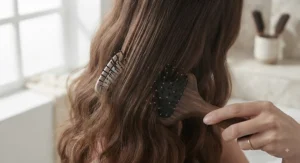
6. Lily England Professional Hair Paddle Brush — wide bristle spacing at a fair price
The gel handle is the immediate standout here — it’s noticeably softer to grip than the rigid plastic handles found on many budget paddles, which matters more than it sounds over a long detangling session. Reviewers specifically call out the wide bristle spacing as well-suited to long, thick hair, with one describing the spacing as working “the best for my long hair” compared with tighter-set alternatives that “make my hair worse.” Here’s what to weigh: this is a genuinely budget-positioned brush, and one reviewer directly compared it favourably against a premium salon brush at roughly half the price, reporting less hair loss during brushing. Honesty compels us to flag the flip side too — a minority of long-term reviews mention the small ball tips on the bristle ends detaching after several months of regular use, which is a durability trade-off worth knowing about upfront.
Pros:
- ✅ Gel handle reduces hand fatigue during long sessions
- ✅ Wide-set bristles suit longer, denser hair specifically
- ✅ Noticeably cheaper than comparable premium paddle brushes
Cons:
- ❌ Some reviewers report bristle ball-tips detaching over time
- ❌ Cushion pad feels less springy than pricier rivals
Sitting in the £8–£15 range depending on colourway, the Lily England Professional Hair Paddle Brush is a sensible pick for anyone wanting large paddle brush for long thick hair performance without the salon price tag.
7. Denman D83 Large Paddle Hairbrush — best for wiry, high-volume blow-dries
Marketed primarily around long and fine hair, this brush has quietly built a reputation among owners of thick, wiry hair instead — several long-term reviewers specifically praise its ability to cope with hair described as “very thick and wiry,” which is a more demanding texture than most paddle brushes are built for. The flexible nylon bristles and genuinely large surface area are the mechanism behind that: more bristle contact per stroke means less repeated dragging through the same section, which is exactly the kind of repetitive mechanical stress that damages hair over time. What the spec sheet won’t tell you, but reviewers note, is that this brush is particularly strong during blow-drying specifically — the increased surface area cuts drying time meaningfully compared with narrower paddles, even if it’s a slightly less aggressive detangler on very wet, knotted hair than the D38 above.
Pros:
- ✅ Large surface area noticeably cuts blow-drying time
- ✅ Flexible bristles cope well with wiry, thick texture
- ✅ Strong quality-to-price ratio reported by long-term owners
Cons:
- ❌ Softer cushioning gives less scalp-massage sensation than the D38
- ❌ Better suited to blow-drying than deep wet detangling
Typically priced around £10–£14, the Denman D83 Large Paddle Hairbrush rounds out this list as a genuinely underrated budget-to-mid option for anyone who blow-dries thick hair regularly.
Practical Usage Guide: Getting the Most From Your Paddle Brush
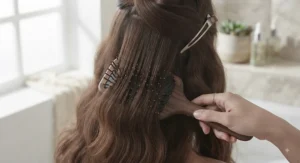
Buying the right brush is only half the job — how you use it determines whether your hair actually thanks you. Start by brushing dry or towel-dried hair rather than soaking wet strands wherever possible, since hair is significantly more elastic and vulnerable to mechanical stress when fully saturated. If you do need to detangle in the shower, apply conditioner first; slip reduces the friction your paddle brush for detangling thick hair has to fight through.
Work in sections, always starting at the ends and working upward toward the roots rather than dragging from scalp to tip. This “bottom-up” technique means you’re only ever pulling through the knot itself, not the entire length of hair above it — a small change that makes a genuinely large difference on thick hair, where a single tangle can involve dozens more strands than it would on fine hair.
In the first 30 days with a new brush, expect a short adjustment period: stiffer bristles on models like the WetBrush Thick Hair Detangler often soften slightly with use, and cushioned pads on brushes like the Denman D38 Detangling & Styling Paddle Brush need the odd wipe-down as they pick up product residue. A common early mistake is over-brushing — once or twice daily is generally sufficient, and the old “100 strokes” advice isn’t supported by modern trichological guidance. For maintenance, remove loose hair after every use and give the bristles a proper clean with a toothbrush and mild shampoo roughly every one to two weeks, more often if you use styling products daily.
Real-World Scenarios: Which Brush Fits Your Routine
The busy commuter with long, thick hair. If you’re drying and styling in under fifteen minutes before catching a train, speed matters more than anything else. The ghd The All-Rounder Paddle Brush or the Denman D83 Large Paddle Hairbrush both prioritise large-surface-area strokes that visibly cut blow-dry time, making either a sensible daily-use pick for this routine.
The shower-first detangler. For anyone who conditions heavily and detangles while product is still in the hair, a wet-focused brush wins out. The Tangle Teezer Large Ultimate Detangler‘s two-tier teeth and the WetBrush Thick Hair Detangler‘s AquaVent drainage are both built specifically for this scenario, rather than being dry-styling tools pressed into wet-hair service.
The budget-conscious student or family buyer. If you’re kitting out more than one head of thick hair in the household, price per brush matters. The Lily England Professional Hair Paddle Brush and the WetBrush Thick Hair Detangler both deliver genuinely thick-hair-specific engineering — wide bristle spacing and cluster bristles respectively — without the salon mark-up, making either a practical multi-buy option.
How to Choose a Paddle Hair Brush for Thick Hair
- Check the bristle material first. Nylon and synthetic pins tend to glide through thick, textured hair more easily than natural boar bristle alone, which is better suited to distributing oil and adding shine on finer hair.
- Look for a cushioned base. A cushioned paddle brush for smoothing follows the natural contour of your head, spreading pressure evenly rather than concentrating it on a few pins.
- Prioritise bristle spacing over bristle count. Wider-set bristles move through dense hair with less resistance; tightly packed pins can actually snag more on very thick hair.
- Match the brush to wet or dry use. Brushes designed for shower use, like the Tangle Teezer Large Ultimate Detangler, use flexible teeth suited to fragile wet hair, while blow-dry paddles favour firmer, heat-safe pins.
- Consider paddle size relative to your hair length. A large paddle brush for long thick hair genuinely does cut styling time, but can feel unwieldy on shoulder-length or shorter cuts.
- Weigh handle comfort for your session length. If you’re brushing for several minutes at a time, a gel or soft-touch handle noticeably reduces hand fatigue over a rigid plastic grip.
- Read reviews for your specific texture. “Thick hair” spans straight, wavy, curly and coily textures, and reviewer feedback on any given brush often varies meaningfully by texture type — so look for mentions that match your own hair.
Common Mistakes When Buying a Paddle Brush for Thick Hair
The single biggest mistake is buying based on paddle size alone, assuming bigger automatically means better. A large paddle brush for long thick hair only performs well if the bristle spacing and flex are also suited to your texture — a huge paddle with tightly packed, rigid pins can actually snag more than a smaller, well-designed one.
The second common error is ignoring bristle material for the sake of price. The cheaper the product, generally, the poorer the bristle technology, and that’s a genuine risk to hair condition over time rather than just a comfort issue. A third mistake is choosing a boar-bristle brush specifically because it’s “natural,” without accounting for the fact that boar bristles are better suited to fine or medium hair and to adding shine, not to detangling dense, coily, or heavily textured hair, where wide-tooth combs or flexible nylon pins genuinely perform better.
Finally, many buyers overlook maintenance entirely. A brush that isn’t cleaned regularly accumulates product build-up that reduces glide over time, making even a well-chosen brush feel worse than it should within a few months.
Paddle Brush vs Detangling Brush: What’s the Real Difference?
On paper, both tools exist to remove knots, but the mechanism differs meaningfully. A traditional paddle brush uses a flat, wide head with bristles set at a uniform or lightly staggered pattern, designed to smooth as much as it detangles — which is why models like the ghd The All-Rounder Paddle Brush double so effectively as blow-drying tools. A dedicated detangling brush, by contrast, typically uses a compact head with two-tier or variable-length teeth specifically engineered to work through a single knot with minimal drag, as seen on the Tangle Teezer Large Ultimate Detangler.
For thick hair specifically, the practical distinction matters: detangling brushes tend to win on freshly washed, heavily knotted hair where gentleness is the priority, while paddle brushes win once hair is mostly smooth and you’re focused on styling, drying, or daily maintenance brushing. Many people with genuinely thick hair end up owning both — a detangler for the shower, a paddle for everything after.
What to Expect: Real-World Performance on Thick Hair
Specs on a packaging box rarely translate directly into how a brush feels mid-blow-dry, so here’s the practical picture. A well-cushioned paddle, like the Denman D38 Detangling & Styling Paddle Brush, should follow your scalp’s shape closely enough that you don’t feel individual pin pressure points, even after several minutes of continuous brushing. Flexible nylon bristles, rather than rigid ones, should bend slightly under resistance instead of catching and holding a knot in place — that give is what prevents the sharp, localised tugging that causes visible breakage.
On genuinely thick hair, expect a noticeably different sensation from brushing fine hair: more resistance, more audible “give” as bristles flex, and — with a well-matched brush — no sharp snagging even through dense sections. If a brush feels like it’s catching rather than gliding after the first few uses, that’s a genuine signal of a texture mismatch worth acting on rather than pushing through.
Bristle Spacing, Scalp Comfort and Hair Breakage: What Actually Matters
Bristle Spacing Explained
Bristle spacing is arguably the most underrated spec on any paddle brush listing, and it’s rarely mentioned prominently despite being one of the biggest factors in how a brush performs on thick hair. Tightly packed bristles increase the odds that multiple strands get caught between adjacent pins simultaneously, which is precisely what causes a brush to “grab” rather than glide. Wider bristle spacing, like reviewers describe on the Lily England Professional Hair Paddle Brush, allows more hair to pass between rows before catching, which reduces the number of strands under tension at any given moment during a single stroke.
Scalp Comfort: Why It Matters
Scalp comfort isn’t just about a pleasant brushing experience — it affects how likely you are to brush gently versus forcefully. A brush with a firm, unpadded base, dragged through thick, resistant hair, tends to encourage more forceful strokes simply because the resistance is uncomfortable to sit with. Cushioned designs, such as the Kent PF17 Large Cushion Paddle Brush, distribute pressure across the pad rather than concentrating it at the base of individual bristles, which is part of why brushes marketed as scalp massagers tend to also double as gentler detanglers.
Hair Breakage: What the Evidence Shows
Hair breakage from brushing is a genuinely well-documented mechanical issue rather than a marketing talking point. Research into hair’s structural properties shows that the outer cuticle layer — the surface that a brush’s bristles actually contact — becomes more prone to snagging as its protective lipid coating wears down through repeated mechanical stress such as brushing and combing. In practice, that means brushing technique and brush choice compound over time rather than causing damage in a single session. The NHS’s guidance on hair loss and hair care reinforces this, noting that gentle handling and avoiding excessive tugging are meaningful factors in reducing avoidable breakage, alongside the normal, unavoidable daily shedding everyone experiences.
Long-Term Cost & Maintenance
A £10 paddle brush that needs replacing every few months isn’t necessarily cheaper than a £25 brush that lasts five years — the real comparison is cost-per-year of use, not sticker price. Reviewers of the Denman D38 Detangling & Styling Paddle Brush and the ghd The All-Rounder Paddle Brush both report multi-year lifespans with proper care, which meaningfully changes the value equation once you factor in replacement frequency. Budget picks like the WetBrush Thick Hair Detangler and Lily England Professional Hair Paddle Brush remain excellent value even with a shorter expected lifespan, simply because the upfront cost is low enough that even annual replacement stays inexpensive.
Maintenance itself is minimal but meaningful: remove trapped hair after each use, wash the bristles every one to two weeks with mild shampoo and warm water, and let the brush air-dry bristle-side down rather than leaving it stood on its base, which can warp cushioned pads over time.
Buyer’s Decision Framework
If your priority is fastest possible blow-dry, choose a broad, firm paddle like the ghd The All-Rounder Paddle Brush or Denman D83 Large Paddle Hairbrush, because surface area directly reduces drying passes.
If your priority is gentle wet-hair detangling, choose a two-tier or cluster-bristle design like the Tangle Teezer Large Ultimate Detangler or WetBrush Thick Hair Detangler, because flexible, variable-length bristles work through knots with less tension.
If your priority is scalp comfort above all else, choose a heavily cushioned, fine-pin brush like the Kent PF17 Large Cushion Paddle Brush, because pressure distribution matters more than raw detangling speed for sensitive scalps.
If your priority is value for money, choose the Lily England Professional Hair Paddle Brush or Denman D83 Large Paddle Hairbrush, both of which deliver genuinely thick-hair-appropriate engineering well below premium pricing.
Frequently Asked Questions
❓ Are paddle brushes good for thick hair?
❓ What's the difference between a paddle brush and a detangling brush?
❓ How often should I clean my paddle hair brush?
❓ Can a paddle brush cause hair breakage?
❓ Should I use a paddle brush on wet or dry thick hair?
Conclusion
Thick hair deserves a brush that’s actually built for it, not a downsized version of a tool designed for finer strands. Across this list, the standouts each earn their place for a genuinely different reason: the Denman D38 Detangling & Styling Paddle Brush for everyday cushioned detangling, the Tangle Teezer Large Ultimate Detangler for gentle wet-hair work, the ghd The All-Rounder Paddle Brush for salon-speed blow-drying, and the budget-friendly WetBrush Thick Hair Detangler and Lily England Professional Hair Paddle Brush for anyone who wants thick-hair-specific engineering without the premium price tag.
The right choice ultimately comes down to your routine — how you wash, how you dry, and how much time you realistically have most mornings. Whichever you choose from this list, prioritising bristle spacing, cushioning, and gentle technique over raw brush size will do more for your hair’s long-term health than any single spec on a box.
✨ Don’t Miss These Exclusive Deals!
🔍 Take your thick hair care to the next level with these carefully selected brushes. Click on any highlighted item to check current pricing and availability. These tools will help you create smooth, healthy, tangle-free hair every single day!
Recommended for You
- Round Brush for Volume: 7 Best Picks for Bouncy Hair 2026
- Hot Air Brush For Fine Hair: 7 Gentle 2026 Picks That Protect
- Best Hot Air Brush 2026: 7 Genuinely Brilliant Picks Tested
Disclaimer: This article contains affiliate links. As an Amazon Associate, I earn from qualifying purchases. If you purchase products through these links, we may earn a small commission at no additional cost to you.
✨ Found this helpful? Share it with your friends! 💬🤗
