In This Article
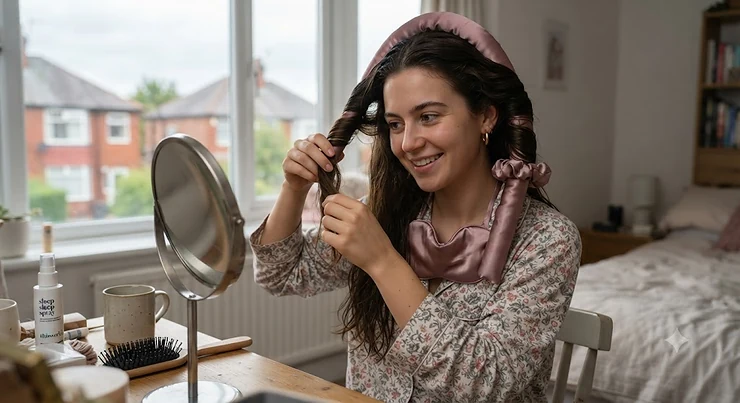
There’s a particular kind of betrayal that only a curling iron can deliver: you section off a piece of hair, wrap it, hold it, release it — and watch it fall flat within the hour, slightly crispier than before. Heatless curling methods are the quiet rebellion against that cycle. In short, heatless curling methods are techniques and tools — ribbons, rods, rollers and headbands — that shape damp hair into curls or waves using only fabric, foam and time, with zero heat applied at any point. No barrel, no plates, no burnt-finger incidents at 7am.
The appeal isn’t just about avoiding the odd singed strand, either. It’s about what happens beneath the surface, strand by strand, every single time a hot tool touches your hair. This guide walks through seven real, buyable heatless curling rods, ribbons and rollers — budget, mid-range and premium — alongside the honest analysis you need to actually pick one, not just admire it on a “get ready with me” video. We’ll cover how to curl hair without heat properly (technique matters more than the tool, always), how flexi rods stack up against ribbon-style curlers, and where the genuine trade-offs lie between comfort, curl definition and overnight practicality.
A quick note before we dive in: none of this is about pretending heat styling is evil. It’s about giving your hair — and your bank balance, given what a good pair of straighteners costs these days — a break, using tools that are genuinely built for the job rather than whatever’s cheapest on a marketplace search. Let’s get into it.
Quick Comparison Table
| Method | Typical Price Range | Curl Type | Best For |
|---|---|---|---|
| Silke London Heatless Curler Headband | around £15-£25 | Loose, bouncy waves | Fine or colour-treated hair |
| Kitsch Satin Heatless Curling Set | around £15-£20 | Defined beach waves | First-time heatless curlers |
| Lily England Heatless Curlers Gift Set | under £15 | Soft, tousled waves | Budget buyers and gifting |
| Kitsch Rosewood Jumbo Satin Flexi Rods | around £15-£20 | Tight, springy ringlets | Curl definition and volume |
Even from this snapshot, the pattern is clear: single-rod ribbon and headband styles (like the Silke London Heatless Curler Headband and Kitsch Satin Heatless Curling Set) tend to produce looser, more “undone” waves, while multi-rod flexi sets like the Kitsch Rosewood Jumbo Satin Flexi Rods deliver tighter, more uniform curls because each section gets its own barrel rather than sharing one long tube. Price doesn’t map neatly onto quality here, either — the Lily England Heatless Curlers Gift Set undercuts the premium options by roughly half while still using genuine satin construction. We’ll unpack all seven contenders, including three not shown above, in the full breakdown next.
💬 Bookmark this one — you’ll want to compare products again before you check out.😊
Top 7 Heatless Curling Methods: Expert Analysis
Below are seven real, currently available products spanning the full spectrum of heatless curling methods — from silk headbands to flexi rods to old-school foam rollers. Each one has genuinely different mechanics, so “best” depends heavily on your hair length, texture and how much fiddling you’re willing to do before bed.
1. Silke London Heatless Curler Headband — pure mulberry silk construction
The standout here is the fabric: this is a genuine 100% mulberry silk curler, not satin dressed up to look like it. That distinction matters more than it sounds. Silk has a smoother, lower-friction surface than polyester satin, which is the whole reason silk pillowcases get recommended for frizz-prone hair — less friction means less cuticle-lifting overnight. The headband-style rod sits at the crown and hair wraps around it in sections, secured with an acetate clip rather than pins, which reduces the risk of dents or kinks near the roots. Based on the spec comparison with the satin alternatives on this list, the silk surface is the meaningful upgrade you’re paying for, not the shape of the rod itself.
This is best suited to people with fine, coloured or chemically treated hair, where every bit of reduced friction counts, and worse suited to very thick or coarse hair, where a single rod may struggle to hold larger sections securely through a full night’s movement. Aggregated customer sentiment on the brand’s own product pages and Amazon UK listings consistently highlights comfort for side-sleepers and praises the “no dent” wrap point at the crown; a recurring theme in less favourable reviews is that very long, heavy hair can slip loose before morning without a firmer wrap technique.
Pros:
- ✅ Genuine mulberry silk reduces overnight frizz and friction
- ✅ Acetate clip avoids root dents unlike bobby-pin methods
- ✅ Comfortable for side and back sleepers alike
Cons:
- ❌ Single rod can slip on very thick or heavy hair
- ❌ Pricier than satin-based alternatives for similar mechanics
Typically priced around the £15-£25 range depending on colourway, it sits at the premium end of this list — reasonable if silk’s frizz-reducing properties genuinely matter for your hair type, less essential if you’re simply hair-curious.
2. Kitsch Satin Heatless Curling Set — the TikTok-viral original
What put this one on the map is the bundle itself: a 34-inch satin curling rod plus two matching satin scrunchies, sold as a complete overnight system rather than a rod on its own. The 34-inch length is genuinely longer than most competitors, which in practice means fewer awkward short-section wraps for anyone with hair past shoulder length. The satin covering a foam-and-fabric core gives it enough grip to hold a wrap without pins, while staying soft enough to sleep on without the seams digging in.
Here’s what most buyers overlook about this particular set: the two scrunchies aren’t just spares, they’re what let you split hair into a front and back section for a more layered, less uniform curl pattern — a trick the single-headband designs on this list can’t replicate as easily. It’s a strong all-rounder for anyone attempting heatless curling methods for the first time, since the longer rod is genuinely more forgiving of imperfect sectioning than shorter designs. Reviewers frequently mention that the curl holds well through a full working day, with a recurring complaint being that very fine hair can look slightly too “crimped” near the root if wrapped too tightly.
Pros:
- ✅ Extra-long 34-inch rod suits medium to long hair
- ✅ Two scrunchies allow front/back sectioning for varied curls
- ✅ Widely regarded as the most beginner-friendly heatless option
Cons:
- ❌ Root crimping possible if wrapped too tight on fine hair
- ❌ Bulkier to sleep in than slimmer headband styles
Expect to pay somewhere in the £15-£20 range for the core set, making it solid mid-range value for a genuinely multi-use kit rather than a single accessory.
3. Lily England Heatless Curlers Gift Set — most complete budget bundle
The standout feature is sheer completeness for the price: a satin rod, a claw clip, a wide-tooth comb and two scrunchies, all in one box. That comb matters more than it looks — brushing curls out with a wide-tooth comb rather than fingers is one of the most overlooked steps in getting a soft, separated finish rather than a stiff “ringlet” look, and having it bundled removes an easy excuse to skip it. The satin rod itself is a fairly standard single-tube design, comparable in construction to the pricier options on this list, just without the silk upgrade.
On paper, this is the set to recommend to someone testing whether heatless curling methods even suit their routine before committing to a pricier silk version — the lower buy-in reduces the risk of an unused drawer item. It’s a sensible pick for shorter hair too, since the brand explicitly designs it to work down to a bob length, unlike some longer flexi-rod sets that need more hair to wrap around. Aggregated feedback on Amazon UK repeatedly flags it as good value for teenagers and first-timers, with the most common criticism being that the single scrunchie-secured wrap loosens slightly faster on silky or freshly-washed hair than on textured hair.
Pros:
- ✅ Complete 5-piece kit including comb and clip
- ✅ Genuinely usable on shorter, bob-length hair
- ✅ Lowest price point of the ribbon-style options here
Cons:
- ❌ Wrap can loosen faster on freshly washed, silky hair
- ❌ No silk upgrade, so more friction than premium picks
At under £15 for the full set, this is comfortably the best value entry point on this list for anyone unsure whether heatless curling rods will fit their routine long-term.
4. Conair Loose Waves Satin Tube Rollers — multi-roller definition without pins
Unlike the single-rod designs above, this is an eight-roller satin tube system, and that’s the entire point of it: instead of one large wrap, hair is split into eight separate sections, each rolled onto its own soft, self-fastening tube. That structural difference translates directly into more even, salon-style wave definition across the whole head rather than one dominant wave pattern near the crown. Each tube fastens on itself, Velcro-free, so there’s nothing to catch or tangle overnight — a genuine improvement over old-fashioned foam rollers with separate clips.
Based on the spec comparison with the single-rod ribbon designs, multi-roller sets like this one suit people chasing a more retro, “set” look rather than loose beachy waves, and reward a bit more patience during application since eight sections take longer to wrap than one continuous rod. It’s a strong pick for anyone who’s found ribbon-style curlers give an uneven, “flat on top” result, since distributing the hair across multiple rollers avoids that specific problem. Customer sentiment tends to split by hair type: those with layered or medium-length hair report the most even curls, while people with very long, single-length hair note it takes more rollers than the pack includes to fully cover their head.
Pros:
- ✅ Eight rollers give more even curl distribution than single rods
- ✅ Self-fastening satin tubes need no pins or clips
- ✅ Produces a classic, defined “set” style wave
Cons:
- ❌ Longer application time than one-rod ribbon designs
- ❌ Very long hair may need a second pack for full coverage
Priced in the region of £10-£15, it undercuts most silk single-rod sets while offering genuinely different mechanics, making it a smart pairing with — rather than a straight replacement for — a ribbon-style curler.
5. Kitsch Rosewood Jumbo Satin Flexi Rods (4-Piece Set) — tightest curl definition on this list
The standout feature is the flexi rod format itself: four bendable, jumbo-sized rods that hair wraps around individually, then bend at both ends to lock in place without clips, pins or scrunchies. That locking mechanism is the real advantage over ribbon-style curlers — because each rod holds its own section independently, the resulting curl is noticeably tighter, springier and more uniform, closer to what you’d get from a proper curling wand than the loose waves other heatless curling methods tend to produce.
What most buyers overlook about flexi rods generally is that they demand smaller, more careful sectioning than ribbon curlers — cramming too much hair onto one rod is the single biggest reason people get disappointing, half-formed curls from their first attempt. For anyone specifically chasing defined ringlets rather than loose waves, this is genuinely the most effective heatless option on this list, and it works particularly well on hair that already has some natural texture to grip the rod. Aggregated reviews consistently praise the curl payoff for the effort involved, while a recurring criticism is that four rods simply isn’t enough for a full head of long, thick hair without doing multiple rounds.
Pros:
- ✅ Tightest, most defined curl of any product on this list
- ✅ No clips or pins needed thanks to the bendable lock
- ✅ Reusable and durable rosewood-toned satin covering
Cons:
- ❌ Only four rods — insufficient for a full long, thick head
- ❌ Steeper learning curve than single-rod ribbon designs
Sitting around the £15-£20 mark for four rods, it’s priced comparably to the satin ribbon sets but delivers a genuinely different curl pattern, so the “value” comparison really comes down to which curl shape you actually want.
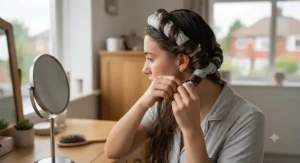
6. Laura Ashley Flexi Rods Foam Hair Rollers (18-Piece Set) — best budget multi-size flexi set
The headline feature is sheer volume and size variety: eighteen rubber-and-foam flexi rods across four diameters, from tight half-inch curls to looser one-inch waves, all in a single set. That size range is the practical advantage over the Kitsch flexi rods above — instead of one uniform curl size across the whole head, you can mix diameters to create a more natural, salon-blowout-style finish with looser curls at the crown and tighter ones underneath, which is genuinely how professional stylists vary a curl set.
In practice, this suits anyone with enough hair volume to actually use all eighteen rods usefully — thin, fine hair may only need half the set, leaving the rest as spares. It’s a sound pick for people who’ve tried a single-rod ribbon curler and found the result too uniform or “one wave” looking, since the multiple sizes solve that specific complaint directly. Reviewers commonly note that the rubber core holds shape better over repeated washes than pure foam alternatives, while some flag that the assorted colours make it fiddly to keep track of which size you’ve used where without labelling them first.
Pros:
- ✅ Four rod diameters allow genuinely varied curl sizes
- ✅ Eighteen rods cover a full head in one application
- ✅ Rubber core holds shape better than pure foam over time
Cons:
- ❌ Colour-coding by size takes a session or two to learn
- ❌ Excess rods for thin or short hair go unused
At roughly £8-£12 for eighteen pieces, this is the strongest value-per-rod on this list, and a sensible starting point if you want to experiment with flexi rods before committing to a smaller, pricier premium set.
7. Conair Foam Hair Rollers (48-Piece Set) — the classic bulk option for thick or long hair
The defining feature is quantity: forty-eight foam rollers across four sizes, in a resealable storage bag, which solves the single biggest complaint about smaller heatless curling sets — running out of rollers halfway through a thick head of hair. Foam rollers work on a simpler principle than flexi rods or ribbons: hair wraps around a soft cylindrical core and snaps shut with a built-in fastener, no clips or scrunchies required, which makes application noticeably faster once you’ve got the technique down.
The trade-off, and it’s worth being upfront about it, is comfort: foam rollers are bulkier to sleep in than flat satin rods or slim flexi rods, and the snap-fastener can occasionally leave a faint crease if positioned directly against the scalp. That said, for anyone with genuinely thick, long or coarse hair who’s found every ribbon-style curler on this list runs out of rod before they run out of hair, this is the pragmatic answer — sheer numbers solve the coverage problem the pricier single-rod sets can’t. Aggregated review sentiment consistently praises the value-for-money of the 48-piece count and the nostalgia factor for anyone who grew up with a mum or gran using similar rollers, with the most common criticism being reduced overnight comfort compared with satin alternatives.
Pros:
- ✅ Forty-eight rollers comfortably cover thick or long hair
- ✅ Snap-fastener design needs no pins, clips or ties
- ✅ Best raw value per roller of any product here
Cons:
- ❌ Bulkier and less comfortable to sleep in than satin rods
- ❌ Snap fastener can leave a faint scalp-level crease
Usually found in the £8-£15 range for the full 48-piece bag, it’s the most budget-friendly way to guarantee full head coverage, even if overnight comfort takes a back seat to sheer practicality.
How to Curl Hair Without Heat: Your Step-by-Step Overnight Routine
Learning how to curl hair without heat properly is less about the tool and almost entirely about hair condition going in. Start with clean, roughly 70-80% dry hair — fully wet hair takes too long to set and often leaves you with damp patches by morning, while bone-dry hair won’t hold a wrap shape at all. Apply a lightweight curl cream or mousse through mid-lengths and ends before sectioning; this is what actually helps the curl hold once you unwrap it, far more than the tool itself does.
Section hair into two to four even parts depending on thickness, then wrap each section around your chosen rod, ribbon or roller starting from the ends and rolling up toward the roots — wrapping away from your face keeps the finished curl framing your features rather than pointing the wrong way. Secure firmly but not painfully tight; too much tension at the root is the single most common first-30-days mistake, and it’s what causes the “crimped” look several products above were flagged for in reviews. Leave the set in for a minimum of six to eight hours, ideally overnight, then unwrap slowly and finger-comb or use a wide-tooth comb rather than a brush, which can pull curls into frizz rather than defined waves. A light finishing spray locks the shape in without weighing curls down.
Real-World Scenarios: Matching the Right Heatless Curler to Your Life
If you’re a university student with a 9am lecture and hair past your shoulders, the Kitsch Satin Heatless Curling Set‘s longer rod and two scrunchies mean you can wrap in under ten minutes before bed and still get an even result without careful sectioning — forgiving enough for a half-asleep 11pm routine. If you’re commuting into an office five days a week and want a genuinely tight, defined curl that survives a packed train, the Kitsch Rosewood Jumbo Satin Flexi Rods are worth the extra ten minutes of careful sectioning; the locked-in curl pattern holds shape better through physical movement than a looser wrap style.
For a parent trying to sort a teenager’s first heatless set on a tight budget, the Lily England Heatless Curlers Gift Set removes the guesswork — the bundled comb and clip mean there’s nothing extra to buy, and the lower price tolerates a few learning-curve mistakes without feeling wasteful. And for anyone with thick, waist-length hair who has already tried and been frustrated by a single-rod design running out of length, the Conair Foam Hair Rollers 48-piece set is the honest answer: more rollers, more coverage, less elegance, genuinely better results for that specific hair type.
Troubleshooting: Common Heatless Curling Problems (And Fixes)
Curls fall flat by lunchtime. This is almost always a product application issue rather than a tool failure — hair was likely too wet when wrapped, or no curl cream was used beforehand. Reapply a texturising spray at the roots and re-wrap slightly damp sections for a top-up rather than starting fully from scratch.
One side curls better than the other. Uneven wrapping tension is the usual culprit; try wrapping both sides in front of a mirror rather than relying on feel, particularly with single-rod ribbon designs where consistency matters more than with multi-roller sets.
Curls look crimped rather than smooth near the roots. This points to wrapping too tightly at the root section — loosen the first wrap slightly and finish the tension further down the length instead.
Hair slips out of the wrap overnight. Very fine or freshly washed hair holds less friction; a light dust of dry shampoo or texturising powder before wrapping gives the rod, ribbon or roller more to grip onto.
The set feels uncomfortable to sleep in. Bulkier options like foam rollers are the usual cause; switching to a satin ribbon or flexi rod set, or wrapping the set with a soft headscarf, tends to solve this without sacrificing the curl.
How to Choose Heatless Curling Rods: 6 Criteria That Actually Matter
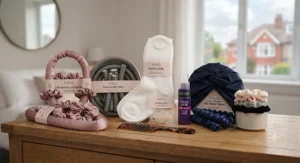
- Hair length compatibility. Shorter, bob-length hair needs a shorter rod or a set explicitly designed for it, like the Lily England Heatless Curlers Gift Set, or the wrap simply won’t hold.
- Fabric type. Genuine silk, as in the Silke London Heatless Curler Headband, reduces friction and frizz more effectively than standard satin, but at a higher price point.
- Number of rods or rollers included. Thicker or longer hair benefits from higher counts, like the 48-piece Conair Foam Hair Rollers set, rather than a single long tube.
- Curl type desired. Loose waves call for single-rod ribbon designs; tight ringlets call for flexi rods like the Kitsch Rosewood Jumbo Satin Flexi Rods.
- Overnight comfort. Slimmer satin or flexi rods sit flatter against the head than bulkier foam rollers, which matters if you’re a restless sleeper.
- Included accessories. Bundled combs, clips and scrunchies, as in the Lily England Heatless Curlers Gift Set, remove the need for separate purchases and often improve the finished result.
Weighing these six factors against your actual hair — not the hair in the promotional photos — is what separates a heatless curling rod you’ll use weekly from one that ends up in a drawer after two attempts.
What Makes the Best Heatless Curler? Features That Matter (And Those That Don’t)
Marketing copy for heatless curling methods leans heavily on words like “luxurious” and “salon-worthy,” which tell you almost nothing useful. What actually matters is rod diameter relative to your desired curl size, fabric friction (silk genuinely outperforms polyester satin here, which itself outperforms bare foam), and whether the fastening method — clip, scrunchie or self-locking bend — suits how much you move in your sleep. According to reviewers testing multiple sets side by side for outlets like NBC Select, length and fastening comfort tend to matter more in practice than the marketed fabric grade alone.
What doesn’t matter nearly as much as packaging suggests: colour options, “gift set” branding, and claimed hour counts for how long the curl lasts, since that depends far more on your hair’s natural texture and the products used beforehand than on the rod itself. A £10 set with the right diameter for your hair will consistently outperform a £25 set with the wrong one — best heatless curler really is a relative term, not an absolute product.
✨ Don’t Miss These Exclusive Deals!
🔍 Ready to ditch the curling iron? Take your heatless curling routine to the next level with the picks above. Click through to check current pricing and availability on Amazon, and start building genuinely damage-free curls your hair will thank you for.
Flexi Rods vs Heatless Curling Ribbon: Which Wins for Your Hair?
This is the comparison most beginners get stuck on, and honestly, it’s not a competition with one universal winner — the two mechanics solve different problems. Heatless curling ribbon, as used in the Silke London Heatless Curler Headband and Kitsch Satin Heatless Curling Set, wraps a large section of hair around one continuous rod, which is faster to apply and produces a soft, undone wave pattern that mimics natural beach hair. Flexi rods, like the Kitsch Rosewood Jumbo Satin Flexi Rods and Laura Ashley Flexi Rods Foam Hair Rollers, split hair into many smaller sections, each independently curled, producing a tighter, more uniform and noticeably more defined result closer to a proper curling wand’s output.
| Factor | Heatless Curling Ribbon | Flexi Rods |
|---|---|---|
| Application time | 5-10 minutes | 15-25 minutes |
| Curl definition | Loose, soft waves | Tight, defined ringlets |
| Best hair length | Shoulder-length to long | Any length with enough hair to grip |
| Sleep comfort | Generally higher | Moderate, depends on rod size |
Looking at this comparison, the ribbon method wins decisively on speed and comfort, making it the sensible default for anyone new to heatless curling methods or short on time before bed. Flexi rods win on definition and consistency, particularly for hair that’s naturally straight and resistant to holding a loose wrap shape. If you genuinely can’t decide, the pragmatic answer many stylists give is to keep both on hand — ribbon for weekday convenience, flexi rods for occasions where curl definition needs to survive a full evening out.
Common Mistakes When Buying Heat-Free Styling Tools
The most frequent mistake is buying based on curl photos alone rather than checking rod diameter or count against your actual hair length and thickness — a beautifully photographed single-rod ribbon simply won’t produce the same result on waist-length hair that it does on shoulder-length hair in the listing photo. A close second is assuming all heat-free styling tools are interchangeable; a set of foam rollers and a satin ribbon curler produce genuinely different curl shapes, so buying the wrong one for the look you actually want is a common source of disappointment that has nothing to do with product quality.
It’s also worth being cautious about unbranded, ultra-cheap listings with no verifiable manufacturer information, particularly given how independent testing has repeatedly found serious safety and quality shortfalls in low-cost, unregulated hair tools sold through online marketplaces — while that testing focused on heated tools specifically, the same “too cheap to be properly made” logic applies to fabric and foam quality in heatless sets too. Finally, skipping the accompanying accessories (scrunchies, clips, combs) to save a few pounds often costs more in frustration than it saves in money, since these small extras are frequently what makes the difference between a good and a mediocre finished curl.
What to Expect: The Real-World Performance of No-Heat Overnight Curls
No-heat overnight curls behave differently from heat-styled curls in ways worth setting expectations for upfront. They generally take longer to form — six to eight hours minimum versus the near-instant result of a heated wand — and the payoff is a softer, more “your hair but better” texture rather than the crisp, salon-blowout uniformity heat tools produce. Humidity and hair porosity both play a bigger role here than with heat styling, since the whole mechanism relies on hair drying into shape rather than heat forcibly reshaping the protein bonds within each strand.
That protein-bond distinction isn’t just marketing language, either. Laboratory analysis of heat-damaged hair has documented measurable protein loss and cuticle disruption from thermal styling tools, which is precisely the mechanism heatless curling methods sidestep entirely by never raising the hair’s temperature in the first place. In practical terms, that means no-heat overnight curls tend to look slightly less “done” the first day but noticeably better by the third or fourth wear, since there’s no cumulative dryness or frizz building up the way there is with daily heat exposure — the curl softens gracefully into a wave rather than degrading into frizz.
Damage-Free Curling Method for Every Hair Type
A genuinely damage-free curling method still needs adapting to hair type, because “no heat” doesn’t automatically mean “no risk.” Fine hair benefits most from silk-covered rods like the Silke London Heatless Curler Headband, since reduced friction matters disproportionately on delicate strands prone to breakage. Thick or coarse hair does better with higher rod or roller counts, such as the Conair Foam Hair Rollers 48-piece set or the multi-size Laura Ashley Flexi Rods Foam Hair Rollers, since a single rod simply can’t grip enough hair securely.
Curly and coily hair types generally see the best results from flexi rods rather than ribbon-style curlers, since the independent locking sections work with, rather than against, natural curl pattern rather than trying to smooth it into one uniform wave. Colour-treated or chemically processed hair — already more porous and prone to protein loss — benefits most from the gentlest fabric available and the loosest workable tension, prioritising hair health over maximum curl tightness. It’s also worth noting that the UK’s product safety regulator has issued repeated recalls of substandard imported heated styling tools over electric shock and fire risks, a risk category heatless methods eliminate entirely simply by containing no electrical components at all — a genuine, if underrated, safety advantage worth factoring into the damage-free framing.

Frequently Asked Questions
❓ How long do heatless curls actually last?
❓ Can you use heatless curling ribbon on short hair?
❓ Do flexi rods work better than a curling wand?
❓ How wet should hair be for heatless curling methods to work?
❓ Is heatless curling actually damage-free?
Conclusion
Heatless curling methods aren’t a single trick, they’re a genuine category of tools with real, meaningful differences — a silk headband and a set of forty-eight foam rollers solve completely different problems, even though both sit under the same TikTok hashtag. The Silke London Heatless Curler Headband rewards anyone prioritising hair health and comfort; the Kitsch Satin Heatless Curling Set remains the most forgiving all-rounder for beginners; the Lily England Heatless Curlers Gift Set removes financial risk from a first attempt; and flexi rod options like the Kitsch Rosewood Jumbo Satin Flexi Rods and Laura Ashley Flexi Rods Foam Hair Rollers deliver a genuinely tighter curl that ribbon styles simply can’t match.
There’s no single “best” pick across the board, and any article claiming otherwise is skipping the honest analysis your hair actually deserves. What matters is matching hair length, thickness and desired curl shape to the mechanics each product uses — do that correctly, and the payoff is curls that look better by the third day rather than worse, with none of the cumulative thermal damage a curling iron leaves behind strand by strand.
Recommended for You
- 7 Best Flexi Rods UK 2026: No-Heat Curls That Actually Hold
- Best Spiral Curling Iron 2026: 7 Tools for Perfect Ringlets
- Automatic Curler vs Curling Wand: 7 Honest UK Picks (2026)
Disclaimer: This article contains affiliate links. As an Amazon Associate, I earn from qualifying purchases. If you purchase products through these links, we may earn a small commission at no additional cost to you.
✨ Found this helpful? Share it with your friends! 💬🤗
