In This Article
Stand in the hair appliance aisle for more than thirty seconds and you’ll start to feel a bit like you’re choosing a wand from Ollivanders — except instead of unicorn hair and phoenix feathers, you’re squinting at barrel diameters and wondering what “ultra-zone technology” actually means for your Tuesday morning routine. The curling tongs vs wand debate isn’t just marketing noise, though. The two tools genuinely behave differently, and picking the wrong one for your hair type, patience level, or bathroom-cabinet space can mean the difference between salon-worthy waves and a barrel-shaped kink that refuses to budge by lunchtime.
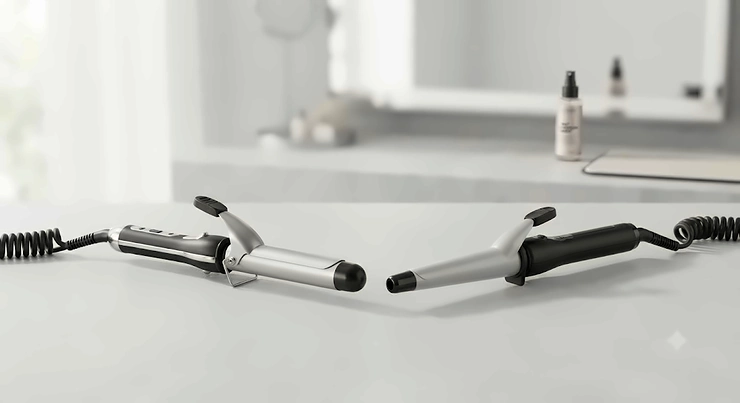
Here’s the short version before we get into the weeds: curling tongs use a spring-loaded clip to clamp your hair against the barrel, which is friendlier for shaky-handed mornings and produces neat, uniform curls. A curling wand has no clip at all — you wrap the hair around a bare heated barrel with your fingers, which takes a bit more nerve but rewards you with those loose, lived-in waves that don’t look like they came from an appliance at all. Neither is objectively “better.” One suits your hair, budget and patience more than the other, and that’s what we’re here to work out.
Below, we’ve researched seven real curling tongs and wands actually sold in the UK — spanning budget, mid-range and downright indulgent — plus the technique, safety and buying advice that Amazon listings conveniently leave out.
What Is the Difference Between Curling Tongs and a Wand?
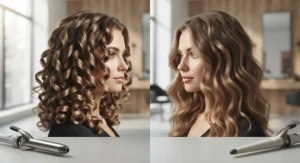
Curling tongs vs wand comes down to one mechanical detail: the clip. Tongs have a spring-hinged clamp that pins hair against a heated barrel, giving structured, even curls. A wand has no clamp — hair is wrapped by hand around an exposed, often tapered, barrel, producing softer, more textured waves with a slightly undone finish.
That single hinge changes almost everything else downstream of it. A clip does the gripping for you, which is why tongs tend to feel more forgiving for a first attempt — you’re not simultaneously managing heat, timing and grip with your fingertips. Worth noting: a curling tong is built around a barrel shape specifically for creating curls, whereas a straightener (or flat iron) works with two flat plates instead — and a wand sits somewhere adjacent to both, borrowing the barrel from a tong but ditching the clamp entirely. The general category of heated barrel styling tools has been around, in various forms, for well over a century — you can read more on the history of the curling iron on Wikipedia if you fancy a rabbit hole. What’s changed since your gran’s ceramic tong is the barrel shape (tapered, oval, cylindrical), the coatings (titanium, ceramic, tourmaline-infused), and, increasingly, whether there’s even direct barrel contact at all.
Quick Comparison: Curling Tongs vs Wand at a Glance
| Feature | Curling Tongs (Clip) | Curling Wand (Clipless) |
|---|---|---|
| How hair is held | Spring clip clamps the section | Fingers wrap hair around the bare barrel |
| Learning curve | Gentler — the clip grips for you | Steeper — takes a few attempts to avoid kinks |
| Typical curl finish | Neat, uniform ringlets or curls | Loose, “undone” beachy waves |
| Kink/crease risk | Small clip-line possible at the root | None from a clip, but higher fingertip heat exposure |
| Best for | Beginners, structured styles, short-to-medium hair | Confident stylers, textured waves, long hair |
Looking at the table above, tongs win on forgiveness — that spring clip is doing half the work, which matters enormously if you’re rushing before the school run. Wands win on texture; without a hard clamp line, the curl transitions more gradually into a wave, which is exactly why influencer-style beach waves are almost always wand-made. Budget shouldn’t be the deciding factor here either, since both camps stretch from under £20 right up to premium multi-hundred-pound territory, as you’ll see in the product round-up below.
💬 Already lean one way? Jump straight to our top 7 picks below and find the exact model worth your money.
Top 7 Curling Tongs and Wands: Expert Analysis
We’ve picked seven genuinely available UK products spanning entry-level to premium, covering both clip tongs and clipless wands, plus one multi-styler that blurs the line entirely.
1. GHD Classic Curl Tong — glossy Hollywood-style curls with almost no guesswork
The Classic Curl’s whole personality is built around removing decisions, and honestly, that’s the point. It runs a fixed optimum styling temperature of 185°C via ghd’s ultra-zone technology, which senses each section of hair and adjusts to keep that heat consistent across the whole 26mm barrel — no cold spots, no scorch spots. In practice, that means less of the uneven, patchy curl you sometimes get from cheaper tongs where the tip runs hotter than the base. The spring-activated lever clamps hair in securely, which is exactly why this sits at the “structured curl” end of the spectrum rather than the loose-wave camp. Based on the spec sheet, this is a tool built for reliability rather than versatility — there’s no manual temperature dial to fiddle with, because ghd has decided 185°C is the number that balances curl hold against hair damage, full stop. Reviewers consistently report that the fixed heat and cool-tip design make it genuinely comfortable to hold for a full head of hair, and the swivel cord gets specific praise for reducing arm strain during longer sessions. A recurring theme in aggregated feedback is that curls “drop” faster on very fine or freshly washed hair unless a styling product is used first — not a flaw exactly, just a management issue.
Pros:
- ✅ Fixed 185°C removes guesswork and reduces user error
- ✅ Ultra-zone tech keeps heat even across the whole barrel
- ✅ Spring clip makes sectioning fast for less confident stylers
Cons:
- ❌ No manual temperature adjustment for coarse or resistant hair
- ❌ Premium price for what is essentially one heat setting
At around the £115-£135 range, this isn’t an impulse buy, but for anyone who wants gorgeous, glossy ringlets without babysitting a temperature dial, it earns its keep.
2. GHD Curve Classic Wave Wand — best clipless wand for effortless, graduated waves
Where the Classic Curl clamps, the Curve wand lets go entirely. Its oval, tapered barrel — roughly 38mm at the base narrowing to 26mm — is the whole trick here: wrap hair around the wide end and the taper naturally grades the curl from tight near the root to looser at the tip, mimicking old-Hollywood set waves without a single clip line anywhere. It shares the same ultra-zone technology and fixed 185°C heat as its tong sibling, plus a cool tip and a genuinely useful built-in safety stand so you’re not hunting for a heatproof surface mid-style. What most buyers overlook about tapered wands generally is that the shape does a lot of the “professional” work for you — you don’t need salon-level wrist technique to get a graduated wave, the barrel geometry handles it. Aggregated reviewer sentiment is broadly positive on longevity of hold, with several noting waves lasting comfortably into a second day with a light hairspray. The recurring gripe, unsurprisingly, is the clipless learning curve — first-time users report a few frizzy or kinked attempts before their fingers learn the wrap-and-hold rhythm.
Pros:
- ✅ Tapered barrel creates naturally graduated waves, not uniform curls
- ✅ No clip means zero crease lines at the root
- ✅ Auto sleep mode and safety stand add real day-to-day convenience
Cons:
- ❌ Clipless design has a genuine learning curve for first-timers
- ❌ Single fixed temperature limits flexibility for very fine or very coarse hair
Priced in the £115-£140 range, it’s a direct sibling-purchase decision against the Classic Curl above — and the deciding factor really is just clip versus no clip.
3. Dyson Airwrap (Origin / Co-anda2x) — best premium multi-styler for lower-heat curling
The Airwrap doesn’t quite play by curling tong or wand rules, which is exactly why it deserves its own category here. Instead of a hot metal barrel, it uses Coanda airflow to physically wrap hair around the attachment using fast-moving air rather than pure heat contact, with the attachments themselves running at notably lower surface temperatures than a typical tong or wand. On paper, this means less direct thermal damage per curl — Dyson’s own testing keeps the airflow-assisted barrels well below the 200°C-plus territory that clip tongs and wands routinely reach. The newest Co-anda2x version adds a more powerful motor and RFID-enabled attachments that auto-adjust heat and airflow depending on which barrel is fitted, removing yet another manual decision from the process. Here’s what the spec sheet won’t tell you, but reviewer experience does: the wrap technique is a genuinely different skill from tong or wand curling, and even confident wand-users report needing several attempts before the coanda effect “clicks.” Aggregated feedback is largely glowing on curl volume and reduced frizz, with a recurring caveat that very short or very fine hair can struggle to catch the airflow reliably at first.
Pros:
- ✅ Notably lower operating heat than most tongs or wands
- ✅ Multi-attachment system replaces dryer, wand and smoother in one tool
- ✅ Intelligent heat settings remove manual temperature guesswork
Cons:
- ❌ Steep entry price compared with any dedicated tong or wand
- ❌ Wrap technique has its own learning curve, separate from wand skills
At an eye-watering £400-£480 range for the entry-level set, this is squarely for buyers who see it as a multi-tool investment rather than a single-purpose curler.
4. Remington PROluxe Curling Wand CI91X1 — best mid-range wand for adjustable, all-day hold
The PROluxe sits in the sensible middle ground: a clipless 25-38mm conical wand with a proper digital temperature range from 120°C right up to 210°C, rather than the single fixed heat you get on the premium ghd wands above. Its headline feature, OPTIheat technology, actively channels more heat toward the thicker mid-lengths of hair and pulls back from the ends — the bit most prone to damage — which is a genuinely useful bit of engineering rather than marketing fluff. The dedicated PRO+ setting locks the wand to a moderate 185°C for anyone nervous about heat damage but not sure which of the ten-plus settings to actually pick. Based on the spec comparison with the fixed-heat GHD wand above, the PROluxe trades a little bit of “premium feel” for genuinely useful adjustability, which matters if more than one person in the household uses it on different hair types. Reviewer sentiment consistently praises the grip-tech coating for holding hair against the bare barrel without a clip, addressing one of the classic wand complaints. A recurring criticism, though a minor one, is that the swivel cord feels less premium than on the ghd equivalents.
Pros:
- ✅ Full digital heat range suits multiple hair types in one household
- ✅ OPTIheat directs heat away from already-fragile ends
- ✅ Grip-tech coating helps compensate for the lack of a clip
Cons:
- ❌ Conical taper produces a curl that narrows noticeably top to bottom
- ❌ Cord and housing feel a step below premium-brand build quality
Sitting in the £40-£55 range, this is arguably the smartest “first proper wand” purchase if you want adjustability without GHD-level spend.
5. BaByliss Titanium Brilliance Curls Tong — best budget clip tong for loose, everyday waves
This is where “budget” stops meaning “basic.” The Titanium Brilliance Curls tong pairs a 32mm barrel with a genuine titanium coating and six heat settings running up to 210°C — a proper adjustable range that fixed-temperature premium tongs simply don’t offer. In practical terms, six settings means someone with fine, colour-treated hair can sit around 160-170°C while a housemate with thick, resistant hair can push closer to 210°C on the same tool. The spring clip and larger barrel combination is squarely aimed at looser, bouncier waves rather than tight ringlets, and the titanium coating heats and recovers temperature noticeably faster between sections than basic ceramic-only barrels. What most reviewers overlook about titanium tools generally is that faster heat recovery translates directly into less time spent per section, which adds up across a full head. Aggregated customer sentiment repeatedly praises the lightweight handle for reducing arm fatigue during longer styling sessions, though a genuine minority note the spring mechanism feeling slightly less snug after several months of daily use.
Pros:
- ✅ Six heat settings genuinely suit multiple hair types
- ✅ Titanium coating heats and recovers temperature quickly between sections
- ✅ Lightweight design reduces arm fatigue on a full head of hair
Cons:
- ❌ 32mm barrel is limited to looser waves rather than tight curls
- ❌ Some long-term users report the clip spring loosening with heavy use
At a genuinely accessible £30-£45 range, this is the tong to recommend to anyone testing the waters before committing to a premium model.
6. BaByliss Curling Wand Pro — best budget wand for long hair
Long hair is the great unsung challenge in curling tool design — most budget wands simply run out of barrel before your hair runs out of length. The Curling Wand Pro solves this with an extra-long conical barrel (roughly 13-25mm) alongside five digital heat settings from 150°C to 210°C, giving genuine flexibility that budget wands rarely bother with. BaByliss’s Wrap Control technology is the standout claim here, designed to help hair grip the bare barrel more securely than a plain ceramic surface would — a direct answer to the classic wand complaint of hair sliding rather than curling. On paper this means fewer re-do attempts, which matters more on a clipless tool where every re-wrap is another few seconds of direct heat exposure to the same section. Reviewer feedback backs this up reasonably consistently, with several noting it as a rare budget wand that actually copes with waist-length hair without the ends slipping loose mid-curl. The recurring theme in aggregated complaints, as with most conical wands, is that the taper produces a curl size that visibly narrows from root to tip within a single wrap.
Pros:
- ✅ Extra-long barrel genuinely suits long hair, not just shoulder-length
- ✅ Wrap Control coating measurably reduces hair slipping off the barrel
- ✅ Five heat settings at a properly budget-friendly price point
Cons:
- ❌ Conical taper means curl size varies noticeably within one wrap
- ❌ No clip means more fingertip heat exposure for nervous first-timers
Typically found in the £35-£45 range, it’s a smart pick specifically for long-haired buyers that other budget wands quietly fail.
7. Wahl Ceramic Curling Tong (ZX910-ZX914 range) — best budget beginner clip tong
Sometimes the simplest option is the right one, and the Wahl range is about as simple as heated styling gets: a single ceramic-coated barrel, offered across five separate barrel-size models (13mm through to 32mm), a cool-touch tip, and a spring clip, with a maximum operating temperature around 200°C. There’s no digital display and no multiple heat settings — you plug it in, it heats to its set point, and that’s the entire interface. Here’s what the spec sheet won’t tell you: for an absolute beginner, fewer decisions is often a feature rather than a limitation, and the five distinct barrel-size models let a buyer match the tool precisely to their hair length and desired curl tightness without paying for adjustability they don’t yet know how to use. Aggregated reviews are strikingly consistent for a budget product, repeatedly praising fast heat-up and describing the results as “salon-quality” for the price, alongside repeated warnings that the barrel gets properly hot and inexperienced users should handle it carefully.
Pros:
- ✅ Five separate barrel sizes let you match the tool to your hair exactly
- ✅ Rock-bottom price makes it a low-risk first tong purchase
- ✅ Spring clip keeps sectioning genuinely beginner-friendly
Cons:
- ❌ Single fixed temperature offers no adjustability for sensitive hair
- ❌ No auto shut-off, unlike most mid-range and premium alternatives
At roughly £15-£20 range depending on barrel size, this is about as low-risk as heated styling tools get, and a perfectly sensible starting point before upgrading.
Curling Tong vs Wand for Beginners: Which Is Easier to Use?
If we’re being honest, and the whole point of this article is to be honest, tongs win the beginner argument fairly comfortably. The spring clip does the single hardest part of curling for you — holding the hair firmly and consistently against the barrel — which means a first-timer only has to manage timing and section size, not grip as well. A wand asks you to do all three simultaneously with your fingertips millimetres from a barrel that can exceed 200°C, and that’s simply a bigger ask on attempt number one.
That said, “easier” doesn’t automatically mean “better for you.” Beginners with long or very thick hair sometimes find a tong’s smaller clip awkward to close over a full section, whereas a wand’s open barrel accepts big sections without a fight. A sensible beginner rule: start with a clip tong around the 25mm mark if your hair is shoulder-length or shorter, and consider a longer-barrelled wand like the BaByliss Curling Wand Pro above if your hair extends well past your shoulder blades. Either way, practice on dry, unstyled hair first — heat product residue makes hair slippery and considerably harder to manage on a first attempt.
Clip vs Clipless Barrels: What Actually Changes Your Curl
The clip-versus-clipless question is really a question about pressure and contact time. A clip applies even, constant pressure along the whole section for the entire heating period, which is exactly why tong-curls tend to look uniform and defined — every strand in that section gets identical treatment. A clipless wand relies on your grip, which naturally varies slightly section to section, and that inconsistency is precisely what produces the more relaxed, “undone” texture people associate with beachy waves.
There’s a durability trade-off too. Reviewers across both categories mention that clip tongs can occasionally leave a faint crease line where the spring meets the hair, particularly with finer strands, while clipless wands avoid that crease entirely but expose slightly more finger surface to direct heat. Based on the spec comparison across our seven picks, tapered clipless barrels (like the GHD Curve or the Remington PROluxe) also naturally vary the curl diameter along a single wrap, which a uniform-diameter clip tong barrel simply cannot replicate. Neither approach is “healthier” for hair overall — the real damage variable is temperature and hold time, not the presence or absence of a clip.
The Heat Wrapping Technique: Getting Salon-Level Curls at Home
The single biggest gap between a home curl and a salon curl usually isn’t the tool — it’s the wrapping technique. Here’s the method most consistently recommended across aggregated stylist commentary and reviewer tips:
Start with fully dry hair sectioned into pieces roughly one to two inches wide — thinner sections curl more tightly and hold longer, thicker sections give looser, faster waves. Hold the tool vertically rather than horizontally for a more natural fall, and always wrap hair away from your face for a flattering frame. On a clip tong, open the clamp, place the mid-length of the section against the barrel, then rotate the tool while feeding the hair in, holding for roughly eight to twelve seconds depending on hair thickness and the tool’s temperature. On a clipless wand, wrap the section around the barrel starting near the root and spiralling downward, tucking the very end under the last wrap so it doesn’t poke out as a stray straight piece — this single detail is the most common thing first-timers get wrong.
Release each curl into your palm rather than letting it drop, and let it cool fully in that shape before brushing or running fingers through — pulling a curl apart while it’s still hot is the single fastest way to lose your hold. Alternate the direction you curl (away from your face on one side, toward it on alternating sections) for a more natural, less “identical ringlet” finish. A light heat protectant beforehand and a flexible-hold hairspray afterward do more for longevity than almost any tool upgrade.
Real-World Scenarios: Matching the Tool to Your Life
If you’re a student rushing between 9am lectures and don’t trust your hands before coffee, a fixed-temperature clip tong like the Wahl or a GHD Classic Curl removes decisions exactly when you have the least patience for them — clamp, hold, release, done.
If you’re commuting into an office with a strict morning routine but longer hair, the BaByliss Curling Wand Pro’s extra-long barrel and Wrap Control coating are built precisely for getting a full head of long hair done without the ends slipping loose halfway through.
If you’re someone who styles multiple times a week and cares about long-term hair condition — colour-treated, fine, or previously damaged hair — the adjustable digital range on the Remington PROluxe, or the notably lower operating heat of the Dyson Airwrap, both let you dial back the thermal load without giving up the finished look entirely.
And if budget is genuinely the deciding factor rather than a nice-to-have, the Wahl tong or BaByliss Titanium Brilliance Curls both deliver believable, everyday results without asking you to remortgage your bathroom cabinet.
✨ Not sure which category fits your hair type? Explore current curling tong and wand options and check today’s price before you commit — availability and offers shift regularly.
GHD Curl Tong Review: Is the Premium Price Worth It?
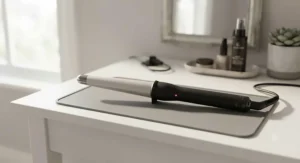
Taking a closer look specifically at the GHD Classic Curl tong, because “is it worth it” deserves more than a one-line verdict. The core value proposition isn’t really the barrel or the clip — it’s the ultra-zone heat-sensing technology maintaining a genuinely consistent 185°C across the barrel’s full length, something budget ceramic tongs frequently fail to do, particularly toward the tip. That consistency is what produces the noticeably even curl definition GHD is known for, section after section, without the gradual heat drop-off that makes the last few curls of a session look different from the first few.
Where the value argument gets murkier is the fixed single temperature. You’re paying a premium price for a tool that, spec-for-spec, offers less flexibility than a £40 Remington with a full digital range. The honest answer is that the GHD price buys consistency and build quality — a genuinely long product lifespan and a proper two-year manufacturer guarantee — rather than raw feature count. For someone styling daily who values reliability over adjustability, that trade genuinely holds up. For someone with wildly varying hair needs across a household, it arguably doesn’t.
Common Mistakes When Buying Curling Tongs or a Wand
The single most common mistake is buying based on barrel size alone without checking barrel shape. A cylindrical barrel gives uniform curls top to bottom; a conical or oval tapered barrel gives graduated waves — buying the wrong shape for the look you actually want is the most frequent source of disappointment in aggregated reviews.
A close second is ignoring temperature range entirely. Fine, colour-treated or previously damaged hair typically needs somewhere around 160-180°C, while thick, virgin hair can tolerate closer to 200-210°C — buying a fixed single-temperature tool without checking what that fixed temperature actually is can mean either damage on the delicate end or disappointing hold on the resistant end.
Buyers also routinely underestimate barrel length relative to hair length, ending up with a wand that’s simply too short to wrap a full section of long hair without running out of barrel. And finally, plenty of shoppers skip checking for basic safety features — auto shut-off, a heatproof stand, a cool-touch tip — treating them as nice-to-haves rather than the genuinely important protections they are, particularly in households with children or pets around.
What to Expect: Real-World Performance Day to Day
Specs on a box rarely translate directly into lived experience, so here’s the honest everyday picture. Heat-up time across our seven picks ranges from roughly 25 to 60 seconds — genuinely fast enough that it isn’t a meaningful factor in your morning routine, contrary to how heavily it’s marketed. Curl longevity is far more dependent on hair-washing frequency and product use than on the tool itself; freshly washed, product-free hair drops a curl noticeably faster regardless of which of our seven picks you’re using.
Arm fatigue is a real, under-discussed factor — lighter tools with swivel cords are genuinely more comfortable across a full head of thick or long hair, which is part of why titanium and lightweight-barrel models consistently score well in aggregated long-term reviews. And barrel size versus hair length matters more day-to-day than almost any other spec: a 32mm barrel on shoulder-length hair gives soft, wide waves in a handful of sections, while the same barrel on very short hair may struggle to wrap a full 360 degrees at all.
Long-Term Cost & Maintenance: Tongs vs Wands
| Consideration | Budget Tool (£15-£45) | Premium Tool (£115-£480) |
|---|---|---|
| Typical lifespan | 1-3 years with daily use | 3-7+ years, backed by longer guarantees |
| Heat consistency over time | Can drift as components wear | Generally maintained by dedicated heat-sensing tech |
| Repair/warranty support | Limited, often replace-not-repair | Manufacturer guarantees, sometimes 2+ years |
| Cost per use (rough, over 3 years) | Very low even with a replacement | Still low once amortised, if genuinely used daily |
The analysis here is straightforward: a £20 Wahl tong replaced twice over three years actually costs roughly the same, or slightly more, per year of ownership as a single £120 GHD tong backed by a two-year guarantee — provided you’re actually using it several times a week. Occasional or seasonal stylers, by contrast, get much better value staying in budget territory, since the premium tool’s cost-per-use only truly pays off with frequent, sustained use. Maintenance-wise, wiping the barrel clean of product residue after each use and never coiling the cord tightly around a hot barrel both meaningfully extend any tool’s working life, regardless of price bracket.
Safety First: Heat Settings, Gloves and Burns Prevention
This is the section Amazon listings genuinely don’t cover properly, and it matters. All mains-powered curling tongs and wands sold in the UK fall under electrical safety regulation, and you can check exactly what that entails via the official guidance on placing UKCA or CE marked products on the market in Great Britain — worth a glance if you’re ever unsure whether a suspiciously cheap import tool is genuinely compliant.
Beyond the regulatory side, practical safety habits matter enormously. Look for automatic shut-off, a cool-touch handle, and a heat-indicator light — these features exist specifically to prevent burns and fires, and it’s genuinely worth prioritising them over a slightly cheaper model without them. Several of our budget picks above, notably the Wahl range, lack auto shut-off entirely — not a dealbreaker, but something to actively compensate for by developing a habit of unplugging immediately after use rather than assuming the tool will switch itself off. A wand curling safety glove, included with several mid-range and premium models like the Remington and GHD picks above, is worth using every single time rather than only when you remember — clipless wands in particular put fingertips within millimetres of a barrel that can exceed 200°C for the entire styling session. For full guidance on the electrical side, Electrical Safety First’s advice on hair tongs and straighteners is worth ten minutes of anyone’s time, particularly around cable checks and heatproof storage.
Households with young children deserve a specific note here, since curling tools stay dangerously hot for a surprising length of time after switching off — the Children’s Burns Trust guidance on hair straightener and tong safety is a genuinely sobering, worthwhile read if there are little hands around your bathroom counter.
🔥 Ready to Curl Safer and Smarter?
✨ Whichever camp you land in — tong or wand — make heatproof storage and a genuine glove part of your routine, not an afterthought. Check current pricing and availability on any of the seven picks above before you commit, since stock and offers shift often.
Features That Actually Matter (And Those That Don’t)
Genuinely worth paying for: a properly adjustable temperature range if more than one hair type uses the tool, a cool-touch tip, an auto shut-off feature, and a barrel material (ceramic, titanium, or tourmaline-infused) that heats evenly rather than in patches. A swivel cord sounds like a minor add-on until you’ve used a tool without one for a full head of hair and felt the cable twist itself into knots.
Largely marketing dressing rather than genuine differentiators: elaborate colour-infused coatings claiming specific “shine” benefits beyond what any ceramic or titanium surface already provides, and headline maximum temperatures well above 210°C, since UK haircare guidance rarely recommends styling much beyond 180-190°C for anything other than very thick, resistant hair. Barrel length beyond what your actual hair length requires is also paid-for capacity you’ll simply never use.
Frequently Asked Questions
❓ Is a curling wand or tongs better for beginners?
❓ Which is easier to use, tong or wand, for long hair?
❓ What temperature should I use on fine or colour-treated hair?
❓ Do I really need a wand curling safety glove?
❓ Can curling tongs and a wand both work on the same head of hair?
Conclusion: Curling Tongs vs Wand — Our Verdict
There’s no single winner in the curling tongs vs wand debate, and honestly, anyone claiming otherwise is oversimplifying a genuinely nuanced choice. Tongs, like the GHD Classic Curl or the budget-friendly Wahl range, reward beginners and anyone chasing neat, structured curls with minimal fuss. Wands, from the tapered GHD Curve to the long-barrel BaByliss Curling Wand Pro, ask a little more patience but deliver that coveted, undone wave texture no clip tong can quite replicate. The Dyson Airwrap sits apart entirely, trading barrel contact for airflow and a genuinely lower heat profile, at a genuinely higher price.
If you’re buying your very first heated styler, start with a clip tong in the 25mm range and build confidence before graduating to a wand. If you already curl regularly and want more textured, natural-looking results, a clipless wand — paired with a proper heat glove — is worth the slightly steeper learning curve. And whichever camp you land in, prioritise genuine safety features and an appropriate temperature range for your hair type over headline barrel sizes or flashy coatings. Get that right, and the tool you choose becomes almost incidental to the good curls that follow.
✨ Ready to pick your tool? Compare the seven curling tongs and wands above, check current UK pricing, and find the one that actually fits your hair and your morning.
Recommended for You
- Best Curling Tongs 2026: 7 Genuinely Brilliant Picks
- 7 Best Curling Tools UK 2026: Wands, Tongs & Airwraps Rated
- GHD Platinum Plus: 7 Smart Straighteners Worth Buying in 2026
Disclaimer: This article contains affiliate links. As an Amazon Associate, I earn from qualifying purchases. If you purchase products through these links, we may earn a small commission at no additional cost to you.
✨ Found this helpful? Share it with your friends! 💬🤗
