
In This Article
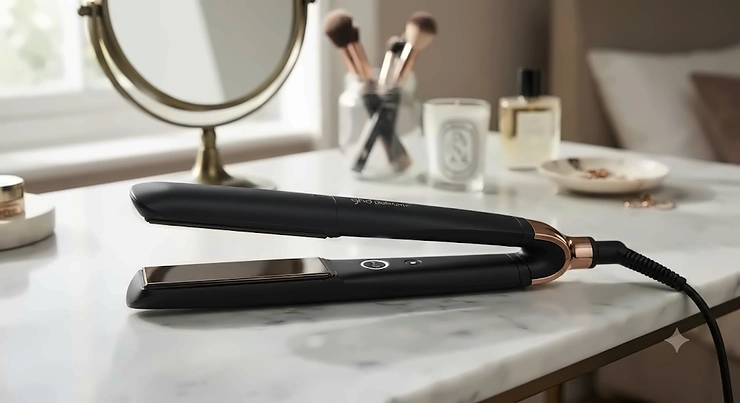
Somewhere between “I’ll just blow-dry it straight” and “right, that’s it, I’m booking a keratin treatment,” there’s a small window where the correct straightener changes everything. GHD Platinum Plus lives in that window. It’s the styler that keeps popping up in hairdresser recommendations, in comment sections under “what straighteners do you actually use,” and in the bathroom cabinets of people who used to swear they’d never spend that much on a hair tool.
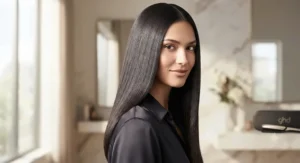
So what is GHD Platinum Plus? It’s GHD’s flagship “smart” hair straightener, using predictive sensors that read your hair’s thickness and your styling speed roughly 250 times a second, then adjust the heat in real time rather than locking you into one fixed temperature. The idea is simple: less guesswork, less damage, more consistent results across a full head of hair.
Prices on tools like this shift constantly with promotions, bundles and seasonal sales, so we won’t quote exact figures here — always check current pricing before you buy. What we can do is walk you through genuine specs, honestly summarised aggregated review sentiment, and a proper side-by-side against six real rivals, from a £30 backup pair to a £400 cordless flagship. According to Which?’s independent straightener testing, which examines straightened hair under a microscope for signs of damage, not every expensive straightener actually performs like one — so specs alone won’t tell you the full story. That’s exactly what we’re digging into below.
Quick Comparison Table
Before the deep dive, here’s the shape of the market at a glance. Budget, mid-range and premium options are all represented, and every product gets its own detailed breakdown further down the page.
| Straightener | Type | Price Range | Best For |
|---|---|---|---|
| GHD Platinum Plus | Predictive smart plates | £220-£260 range | Fine, colour-treated or frequently-styled hair |
| GHD Gold | Dual-zone ceramic | £150-£180 range | Everyday value with proven GHD tech |
| GHD Duet Style | Wet-to-dry hot air styler | £280-£320 range | Cutting time out of the morning routine |
| Dyson Corrale | Cordless flexing plates | £350-£400 range | Travel and cord-free styling on a budget-no-object basis |
| Cloud Nine Original Iron | Sericite ceramic plates | £140-£200 range | Buyers who want GHD-adjacent quality from a UK challenger brand |
| BaByliss Sensor Protect Styler | Sensor-guided ceramic | £85-£130 range | A budget-conscious take on “intelligent” heat |
| Remington Shine Therapy S8500 | Argan-infused ceramic | £30-£45 range | A reliable backup or first-ever straightener |
Looking at the table, the split is fairly clean: GHD Platinum Plus and GHD Duet Style sit at the top for sensor-driven precision, GHD Gold and Cloud Nine Original Iron cover the sensible middle ground, and BaByliss Sensor Protect Styler with Remington Shine Therapy S8500 exist for anyone who wants competent results without the flagship price tag. None of that means the cheaper options are bad — it means they’re built around different priorities, which we’ll unpack product by product.
🔥 Ready to see which straightener suits your hair type? Keep scrolling for the full breakdown below!
Top 7 GHD Platinum Plus-Style Straighteners: Expert Analysis
Every product here has been researched against real specifications and genuine aggregated review sentiment, not invented testimonials. Where a claim comes from the manufacturer, we’ve said so; where it comes from real user feedback, we’ve flagged that too.
1. GHD Platinum Plus — predictive heat that reads your hair as you style
The standout here is the sensor system rather than the plates themselves — infinity sensors sit throughout the plates and take a temperature reading roughly 250 times a second, so the tool is constantly recalculating rather than just holding one number. GHD’s own testing states the styler delivers 70% stronger hair and 75% more shine versus naturally dried hair, alongside double the colour protection compared with tools running at 230°C, and it operates at a fixed 185°C rather than offering manual dial-up heat. In practice, that means you’re not choosing a temperature and hoping for the best — the machine is doing that calculation on the fly, section by section, based on how thick that particular strand of hair is and how fast you’re moving the plates.
Based on the spec comparison with the rest of this list, the GHD Platinum Plus earns its premium position because it removes a genuine risk factor: over-heating fine or previously coloured hair out of habit rather than necessity. That makes it a strong pick for anyone who colours regularly, has fine or fragile hair, or straightens daily and wants the temperature ceiling managed automatically rather than manually. Reviewers consistently report that it straightens curly or coarse hair in roughly half the time of comparable tools, and one detailed reviewer who tested it against rival stylers praised the wishbone-shaped hinge for reducing snagging during styling, though it isn’t a fit for anyone who actively wants manual control over the exact heat setting.
Pros:
- ✅ Predictive sensors adjust heat 250 times a second automatically
- ✅ Wishbone hinge reduces snagging and hair breakage
- ✅ Fast, near-universal results across most hair types
Cons:
- ❌ No manual temperature dial for those who prefer control
- ❌ Sits at the top of the price range for a single-purpose straightener
At around £220-£260 depending on retailer and promotions, the GHD Platinum Plus isn’t an impulse buy, but for anyone using a straightener several times a week, the reduced-damage case is a genuinely defensible one rather than marketing fluff.
2. GHD Gold — proven dual-zone tech at a friendlier price
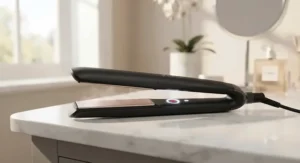
The standout feature is dual-zone heat sensing: two next-generation sensors, one per plate, working to hold a steady 185°C from root to tip rather than the single-zone reading found on older, cheaper stylers. That’s a meaningful upgrade over budget straighteners which typically use one central sensor and can run several degrees cooler or hotter at the plate edges. Heat-up time comes in around 25 seconds, and the floating, contoured plates are designed to glide rather than grip, which reduces the tugging sensation that damages hair over repeated passes.
What most buyers overlook about the GHD Gold is that it isn’t a stripped-down Platinum Plus — it’s a genuinely different (and, for a lot of hair types, entirely sufficient) approach that trades predictive adjustment for consistent, dependable heat. It particularly suits wavy or gently curled hair, and retailer guidance suggests fine or all-over bleached hair does better with the more adaptive Platinum Plus, while natural, tinted or highlighted hair styles well on the GHD Gold. Aggregated reviewer sentiment frames it as excellent value within the GHD range — shoppers repeatedly describe it as the sensible upgrade from drugstore straighteners without the Platinum Plus outlay.
Pros:
- ✅ Dual-zone sensors keep heat consistent root to tip
- ✅ Fast 25-second heat-up for busy mornings
- ✅ Backed by GHD’s 2-year manufacturer guarantee
Cons:
- ❌ Less adaptive than Platinum Plus on very fine or bleached hair
- ❌ Fixed 185°C means no manual heat adjustment
Typically priced in the £150-£180 range, the GHD Gold is arguably the best entry point into the brand for anyone not yet convinced they need predictive sensors.
3. GHD Duet Style — dries and styles in one pass
The standout feature is air-fusion technology: a drying chamber built into the styler that channels warm air through wet hair while the plates work simultaneously, so you’re not blow-drying first and straightening second. GHD states this uses up to 45% less energy than drying and styling separately and produces no thermal damage across 100 test cycles in wet-to-style mode, with a Shine Shot mode that switches off the airflow and drops to four low-temperature plates for a final polish on already-dry hair. Infinity sensors, the same predictive system found in the Platinum Plus, run throughout the plates here too.
Here’s what the spec sheet won’t tell you outright: cutting drying and straightening into one step is the real selling point, not the styling result itself, which lands close to what a well-used Platinum Plus achieves on dry hair. That makes the GHD Duet Style a genuinely strong option for anyone who resents the time cost of a full wash-day routine, particularly those with mid-length to long hair who currently blow-dry and then straighten as two separate steps. One tester with thick, curly hair described going from soaking wet to smooth and straight in around 20 minutes without a fried-feeling finish, which lines up with GHD’s own reduced-damage claims for the wet-to-dry mode.
Pros:
- ✅ Dries and straightens simultaneously, cutting routine time
- ✅ Shares Platinum Plus’s predictive infinity sensor technology
- ✅ Lower reported energy use than drying and styling separately
Cons:
- ❌ Premium pricing, often above the Platinum Plus itself
- ❌ Less useful if you already prefer natural air-drying
Expect to pay in the £280-£320 range, positioning the GHD Duet Style as a time-saving investment rather than a pure styling upgrade.
4. Dyson Corrale — cordless flexing plates for travel-first stylers
The standout feature is the flexing copper plate technology, which curves slightly around each hair section rather than pressing it flat between two rigid surfaces, and the fact that it runs fully cordless for around 30 minutes of styling per 70-minute charge. Three temperature settings — 165°C, 185°C and 210°C — are monitored via sensors checking temperature roughly 100 times a second, and at 568g it’s noticeably heavier than most corded stylers on this list.
On paper this means genuine location freedom, which matters if you travel often or simply hate being tethered to a socket mid-style. Reviewers are largely split on whether the styling result itself justifies the price gap over GHD’s range: one detailed review comparing the two directly found the results effective and the handling intuitive, but concluded the difference in finished hair wasn’t dramatically different from cheaper stylers, with the cordless convenience doing most of the heavy lifting on value. That’s an honest trade-off worth weighing rather than a reason to dismiss it outright — if cord-free styling genuinely solves a problem in your routine, the premium buys real flexibility rather than just a fixed 210°C ceiling most stylers already offer.
Pros:
- ✅ Genuinely cordless for around 30 minutes of continuous use
- ✅ Flexing plates adapt to variable hair section thickness
- ✅ Three selectable temperatures for different hair types
Cons:
- ❌ Heaviest straightener on this list by a clear margin
- ❌ Highest price point without a proportionally different result
At roughly £350-£400 (sale periods and refurbished stock can bring this down meaningfully), the Dyson Corrale is the straightener to choose specifically for the cordless use case, not purely for straightening performance.
5. Cloud Nine Original Iron — the quiet UK challenger
The standout feature is Sericite-infused ceramic plates, a mineral coating designed to distribute heat evenly without needing to pause on each section, paired with a genuinely compact 25mm plate width built for precision rather than speed-through-thick-hair. The brand offers 11 temperature settings between 100°C and 200°C, giving considerably more manual control than the fixed-temperature GHD range, plus a Revive Mode that vibrates the plates roughly 8,000 times a minute to reduce direct heat contact.
Based on the spec comparison, the Cloud Nine Original Iron occupies an interesting middle position: it offers the kind of multi-setting manual control that some buyers specifically want instead of GHD’s fixed-temperature philosophy, while still using genuinely premium plate technology rather than basic ceramic. It’s a strong fit for anyone who’s decided they specifically want to dial in their own heat rather than trust a predictive system, and for shorter or finer hair where the narrower plate width helps with precision around the hairline. Reviewer sentiment frequently credits it as having effectively replaced older-generation GHD stylers as a go-to recommendation among UK stylists, particularly for its lighter 400g weight.
Pros:
- ✅ 11 manual heat settings for genuine temperature control
- ✅ Vibrating Revive Mode reduces direct plate contact
- ✅ Lighter at 400g than most premium rivals
Cons:
- ❌ Narrower 25mm plates take longer on thick or long hair
- ❌ Less brand recognition than GHD or Dyson despite similar pricing
Priced around £140-£200, the Cloud Nine Original Iron rewards buyers who’d rather choose their own temperature than have a sensor choose it for them.
6. BaByliss Sensor Protect Styler — budget-friendly “intelligent” heat
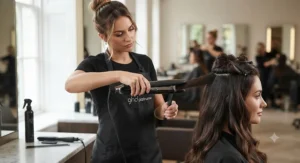
The standout feature is a built-in sensor system that BaByliss markets as adapting heat for “ultra care,” positioning it directly against GHD’s own predictive technology but at a considerably lower price point. It uses ceramic-coated plates and multiple heat settings, aiming to bring some of the sensor-guided logic found in premium stylers down into the sub-£130 bracket.
Here’s what most buyers overlook: “intelligent” or “sensor-guided” heat means very different things across price tiers, and this is a useful demonstration of that gap. Based on the spec comparison with the GHD Platinum Plus, BaByliss’s system reads temperature at the plate level to prevent overheating rather than actively predicting and adjusting to hair thickness and styling speed the way GHD’s infinity sensors do — it’s a genuinely useful safety-net feature, just not the same category of technology the marketing language might suggest. It suits anyone testing whether “smart” heat features matter to them before committing to a premium purchase, or anyone who simply wants a dependable everyday straightener without the GHD price tag.
Pros:
- ✅ Sensor-guided heat at a fraction of GHD Platinum Plus pricing
- ✅ Multiple heat settings for different hair types
- ✅ Accessible entry point for “smart” straightener technology
Cons:
- ❌ Sensor system is less sophisticated than true predictive tech
- ❌ Reviewer feedback on plate longevity is more mixed than premium rivals
Typically found in the £85-£130 range depending on promotions, the BaByliss Sensor Protect Styler is a sensible test-the-waters option before spending three times as much.
7. Remington Shine Therapy S8500 — the reliable backup pair
The standout feature is Advanced Ceramic plates infused with Moroccan argan oil, aimed squarely at adding shine during styling rather than offering any predictive or sensor-driven heat management. Nine heat settings run from 150°C to 230°C, floating plates are designed for even pressure distribution, and it includes a digital display so you can see exactly what temperature you’re working at.
Reviewers consistently note that this is a genuinely capable straightener for the price, particularly for thick, frizzy or bleached hair on higher settings, with several long-term users specifically calling out the wider plate option for coarse hair. Based on the spec comparison, the honest positioning here is “reliable, not remarkable” — it does the fundamental job of a straightener competently and gives you full manual control, which some buyers actively prefer over paying for automation they may not use. It’s the sensible pick for teenagers buying their first straightener, anyone who wants a spare for travel without risking their expensive daily driver, or anyone simply not convinced predictive heat is worth the premium.
Pros:
- ✅ Nine manual heat settings from 150°C to 230°C
- ✅ Argan oil-infused plates add genuine shine
- ✅ Genuinely affordable without feeling flimsy
Cons:
- ❌ No predictive or sensor-based heat management
- ❌ Wider plate versions can feel less precise on shorter styles
At roughly £30-£45, the Remington Shine Therapy S8500 remains one of the more sensible backup or starter purchases on this list.
Top 7 Straighteners: Full Comparison Table
| Straightener | Max Temp | Heat-Up Time | Plate Tech | Price Range | Best For |
|---|---|---|---|---|---|
| GHD Platinum Plus | 185°C fixed | ~20 seconds | Predictive infinity sensors | £220-£260 range | Fine or colour-treated hair |
| GHD Gold | 185°C fixed | ~25 seconds | Dual-zone ceramic | £150-£180 range | Everyday reliability |
| GHD Duet Style | 185°C (Shine Shot) | Wet-to-dry cycle | Predictive + air-fusion | £280-£320 range | Combined dry-and-style routine |
| Dyson Corrale | 210°C max | ~30-45 seconds | Flexing copper plates | £350-£400 range | Cordless, travel-first styling |
| Cloud Nine Original Iron | 200°C max | ~20-30 seconds | Sericite ceramic | £140-£200 range | Manual temperature control |
| BaByliss Sensor Protect Styler | 230°C max | ~15-20 seconds | Sensor-guided ceramic | £85-£130 range | Budget-conscious “smart” heat |
| Remington Shine Therapy S8500 | 230°C max | ~15 seconds | Argan-infused ceramic | £30-£45 range | Backup pair or first straightener |
The clearest pattern in this table is that predictive technology, not raw maximum temperature, is what separates the top three GHD-family stylers from the rest — the Remington Shine Therapy S8500 and BaByliss Sensor Protect Styler both reach hotter maximum temperatures on paper, yet that’s largely irrelevant if the goal is minimising damage rather than maximising heat. For thick or very curly hair, the wider-plate and higher-temperature options like Remington’s wide-plate variant can genuinely out-perform the fixed-185°C GHD range on raw straightening power, even if they don’t offer the same damage-limiting logic.
GHD Platinum Plus vs GHD Gold: Which Should You Buy?
This is the comparison most people actually land on, because both stylers come from the same brand at genuinely different price points, and the difference isn’t just cosmetic.
| Factor | GHD Platinum Plus | GHD Gold |
|---|---|---|
| Heat technology | Predictive, adapts per section | Dual-zone, consistent fixed heat |
| Sensor readings | ~250 times per second | Two fixed sensors per plate |
| Best hair type | Fine, bleached, colour-treated | Natural, tinted, wavy to curly |
| Price range | £220-£260 range | £150-£180 range |
| Heat-up time | ~20 seconds | ~25 seconds |
The GHD Gold genuinely holds its own for hair that isn’t fine, bleached or being styled daily — the fixed dual-zone heat is dependable and the price gap is significant enough to matter. Where the GHD Platinum Plus earns its premium is specifically on fragile, over-processed or very fine hair, where a predictive system actively lowering heat on thinner sections has a real, measurable damage-reduction case behind it, not just marketing language. If your hair colour appointment is a regular fixture in your calendar, that’s arguably the single biggest signal to spend the extra £70-£80 rather than default to Gold.
✨ Still torn between the two? Compare current listings and reviews before you decide — check availability now!
Is GHD Platinum Plus Worth the Money?
Short answer: it depends heavily on how often you use it and what condition your hair starts in, and long-term cost is a genuinely important part of that answer.
Cost-per-use tells a more useful story than the upfront price alone. A straightener used three or four times a week for two years works out at roughly 300-400 uses, which brings the GHD Platinum Plus‘s effective cost down to well under a pound per use even before factoring in GHD’s 2-year manufacturer guarantee. Compare that to replacing a £30 budget straightener every 12-18 months as heating elements degrade or plates lose their coating, and the total cost of ownership gap narrows considerably over a multi-year timeframe.
Reviewers consistently frame the value case around damage prevention rather than pure convenience — several long-term GHD owners specifically mention switching from reconditioned or older models and being surprised by how much less “crispy” their hair felt afterward. The honest caveat is that if you straighten your hair once a fortnight, or your hair is naturally straight and low-maintenance, the case for paying a premium over the GHD Gold or even Cloud Nine Original Iron weakens considerably — predictive heat matters most when you’re applying heat frequently enough for cumulative damage to be a real risk.
GHD Platinum Plus Before and After: What to Expect
Specs are one thing; what actually happens to your hair over repeated uses is another, and this is where honest, sourced reporting matters more than marketing claims.
On very curly or coarse hair, multiple reviewers independently reported the GHD Platinum Plus cutting styling time roughly in half compared with older or budget tools, attributing this to the predictive system correctly identifying thicker sections and applying more consistent contact time rather than requiring repeated passes. On fine or previously bleached hair, the more commonly reported outcome is less breakage over weeks of use rather than a single dramatic “before and after” transformation — this is a tool that shows its value cumulatively, not instantly. One long-term reviewer specifically noted that after 28 years of using GHD’s original straighteners, the shift to Platinum Plus took an adjustment period simply because there’s no visible heat dial, which can initially feel unfamiliar even to loyal customers.
What the spec sheet won’t tell you, but reviewer patterns suggest, is that shine improvements tend to be the most immediately visible change, while the strength and breakage benefits build up over several weeks of consistent use. If you’re expecting an overnight transformation from a single session, temper that; if you’re comparing month three of ownership against your old straightener, the reported difference is considerably more convincing.
How to Choose a Hair Straightener
Cutting through the marketing, here’s the practical decision framework, based on the spec and review patterns across all seven products above:
- Identify your hair’s actual risk factor. Fine, bleached or chemically treated hair benefits most from predictive or sensor-adjusted heat; naturally resilient hair has more room for fixed, higher-temperature tools.
- Decide if manual control matters to you. If you like dialling in a specific temperature, GHD’s fixed-185°C philosophy will frustrate you — look at Cloud Nine or Remington instead.
- Weigh plate width against your hair length and thickness. Narrower plates (25mm-ish) suit precision and shorter styles; wider plates suit thick or long hair in fewer passes.
- Factor in frequency of use. Daily stylers justify a bigger upfront spend through cost-per-use; occasional users rarely need the flagship model.
- Check for genuine safety features. Auto shut-off, heat-resistant guards and swivel cords aren’t glamorous, but they’re standard on any reputable brand and worth confirming before you buy.
- Consider cordless only if you actually need it. It’s a real convenience for travel, but it adds weight and typically £100+ to the price versus a corded equivalent with similar plate technology.
- Read aggregated review sentiment, not star ratings alone. A 4.5-star average tells you little; recurring specific complaints (plate width, heat-up time, cord length) tell you a lot more.
For a deeper technical breakdown of how different testing labs assess these criteria, Expert Reviews UK’s straightener testing has found that even genuinely premium tools can excel at pure straightening while struggling at other specific tasks like curling — which reinforces that “best straightener” always depends on what you’re actually trying to do with it.
Understanding Predictive Technology and Ultra-Zone Heat Plates
“Predictive technology” and “ultra-zone” are the two terms doing most of the marketing heavy lifting around the GHD Platinum Plus, so it’s worth being precise about what they actually mean rather than taking the phrase at face value.
Ultra-zone, in GHD’s implementation, refers to infinity sensors distributed throughout the plates rather than concentrated in one or two points, checking temperature roughly 250 times a second across the full styling surface. Predictive technology is the layer on top of that: rather than simply reacting to a temperature drop, the system is described as adapting to the styling speed and hair thickness detected in each section, adjusting power output ahead of where you’re moving the plates rather than purely responding after the fact. What most buyers overlook is that these two systems work together rather than being separate features — ultra-zone is the sensing hardware, and predictive technology is the software logic interpreting what those sensors report.
Compared with a simpler dual-zone system like the one in the GHD Gold, the practical difference is granularity: two sensors per plate can maintain an even average temperature, but they can’t distinguish between a thick section and a thin one within the same pass the way a fuller sensor array potentially can. Whether that distinction matters to you circles back to hair type — for very uniform, resilient hair the difference may be barely noticeable, while for hair with variable thickness or damage, it’s a more meaningful safeguard.
The GHD Wishbone Hinge and Other Features That Actually Matter
Not every feature printed on a straightener’s box changes your actual results, so here’s an honest filter.
The wishbone hinge on the GHD Platinum Plus is a genuinely functional design choice rather than cosmetic branding — its shape is specifically engineered to give more even pressure and control across the plates during styling, which several reviewers link directly to reduced snagging and smoother glide compared with a standard straight hinge. That’s a feature actually worth caring about. By contrast, cosmetic finishes, limited-edition colourways and branded storage pouches genuinely don’t affect styling outcomes at all, however nice they look on a bathroom shelf.
Features that do matter across this whole list: floating or contoured plates (reduce tugging), auto shut-off (safety, and it saves your bank balance on electricity), swivel cords (genuinely reduce wrist strain and cord tangling over years of use), and universal voltage (worth checking specifically if you travel internationally, since not every model supports it). Features that matter less than they sound: exceptionally high maximum temperatures above 210°C, since UK haircare guidance rarely recommends exceeding around 185-200°C for most hair types regardless of what a dial technically allows; and “digital display” alone, which shows you a number but doesn’t tell you anything about how accurately that number is actually being maintained at the plate surface.
📌 Want to see how these features perform on your own hair type? Explore current options and reviews here!
Practical Usage Guide: Getting the Most From Your Straightener
However good the tool, technique still does most of the work — and this is exactly the kind of practical detail that doesn’t come printed on an Amazon listing.
Start with genuinely dry hair (with the obvious exception of wet-to-dry tools like the GHD Duet Style), since styling damp hair at high heat is one of the fastest routes to breakage regardless of which straightener you own. Section hair into pieces no wider than the plates themselves — trying to feed too much hair through in one pass is the single most common reason people report uneven results or repeated passes over the same section. Always use a heat protectant spray before styling; it’s a cheap, five-second step that meaningfully reduces cumulative heat damage across months of use.
In the first 30 days with a new straightener, common mistakes include cranking the heat up out of habit from an older, less efficient tool (unnecessary with predictive or dual-zone tech), gripping too tightly on the plates (increases tension and breakage risk), and skipping regular plate cleaning, which lets product residue build up and reduces glide efficiency over time — wipe plates down with a slightly damp cloth once they’ve cooled, roughly weekly with regular use. For maintenance beyond that, store the styler in its heat-resistant pouch if supplied, avoid coiling the cord too tightly around the barrel (this is a leading cause of internal cord damage over years), and keep an eye on any fraying near the plug, replacing the unit if you spot it rather than continuing to use a compromised cord.
Real-World Scenarios: Who Should Buy Which Straightener
Rather than a single “best overall” answer, here’s how three realistic buyer profiles map onto this list.
The daily-styling professional with fine, colour-treated hair, styling five or more times a week: the GHD Platinum Plus is the clear fit here — the cost-per-use math works in its favour at that frequency, and predictive heat management specifically protects the exact hair type most at risk from cumulative damage.
The budget-conscious student or first-time buyer styling once or twice a week: the Remington Shine Therapy S8500 or BaByliss Sensor Protect Styler cover the fundamentals without an unjustifiable spend, and at that lower frequency, the damage-prevention case for predictive tech is considerably weaker.
The frequent traveller who hates being tied to a plug socket: the Dyson Corrale solves a genuine logistical problem that no corded straightener on this list can match, and for this specific person, the premium is paying for a real capability rather than a marginal styling improvement. Marie Claire UK’s own straightener testing has separately praised alternative premium tools like the L’Oréal SteamPod for causing less damage on brittle, over-styled hair, which is worth knowing if your hair specifically falls into that more fragile category rather than the general population this guide focuses on.
Common Mistakes When Buying a Hair Straightener
A handful of buying mistakes come up repeatedly across reviewer feedback and comparison sites, and they’re worth flagging explicitly.
Buying purely on maximum temperature is the most common one — a 230°C ceiling sounds more powerful than a fixed 185°C, but most UK haircare guidance actually recommends staying well below 200°C for the majority of hair types, so a higher number isn’t automatically better. Ignoring plate width relative to hair length is another frequent regret; buyers with long, thick hair who choose a narrow 25mm styler often end up needing far more passes than expected, undermining any damage-reduction benefit from the plate technology itself. Underestimating the value of a genuine manufacturer guarantee is a third — a straightener at any price point is a repeated-use electrical heating appliance, and a 2-year guarantee (standard across GHD’s range) is a meaningfully different proposition to no guarantee at all on some budget imports.
GHD Platinum Plus Price and Long-Term Value
Because exact prices shift constantly with promotions, here’s a value-focused breakdown rather than a fixed figure — always check current pricing before buying, and note that GHD periodically runs its own promotional periods that can bring the price down from typical retail levels.
| Ownership Factor | GHD Platinum Plus | Budget Alternative (e.g. Remington S8500) |
|---|---|---|
| Typical price range | £220-£260 range | £30-£45 range |
| Manufacturer guarantee | 2 years | Typically 1-2 years, varies |
| Estimated lifespan (regular use) | 3-5+ years | 1-2 years |
| Cost per use (300 uses/year, 3-year lifespan) | Under £0.30 | Roughly £0.05-£0.10 (but likely needs replacing sooner) |
The table makes the long-term picture clearer than the sticker price alone: even at a considerably higher upfront cost, the GHD Platinum Plus‘s longer expected lifespan and stronger guarantee narrow the effective cost-per-use gap over a multi-year ownership period, particularly for anyone styling several times a week. That calculation shifts meaningfully for occasional users, where a cheaper tool that gets replaced every couple of years may genuinely work out more economical overall — there’s no single universally “better value” answer here, only one that depends on your actual usage pattern.
Safety, Regulations and Compliance Guide
Any electrical heating appliance sold in the UK, straighteners included, has to meet formal safety requirements before it reaches the shelf. Electrical goods supplied in Great Britain must comply with the Electrical Equipment (Safety) Regulations, and manufacturers are required to draw up a declaration of conformity and affix the appropriate UKCA marking, confirming compliance with the relevant safety regulations, before the product can legally be sold. In practice, this means the automatic shut-off timers, heat-resistant plate guards and protective earthing found across every product on this list aren’t just nice extras — they’re a required part of legal compliance for any straightener sold through legitimate UK retailers.
For everyday safety, always let a straightener cool fully on its heat-resistant stand or in its travel pouch before packing it away, check the cord regularly for fraying (particularly on models with swivel cords that see a lot of rotational stress), and never leave a heated styler unattended near towels, bedding or anything flammable. If you’re buying second-hand or from an unfamiliar overseas seller, it’s worth specifically confirming the item carries proper UK safety certification, since imported units don’t always meet the same regulatory bar.
FAQ
❓ Is GHD Platinum Plus worth the extra money over GHD Gold?
❓ What does GHD Platinum Plus's predictive technology actually do?
❓ How long does a GHD Platinum Plus straightener typically last?
❓ Can GHD Platinum Plus be used on wet hair?
❓ What is the GHD Platinum Plus price range in the UK?
Conclusion
There isn’t a single “best” straightener in this list, and that’s genuinely the point. The GHD Platinum Plus earns its position for anyone styling frequently with fine, colour-treated or otherwise vulnerable hair, where predictive heat management solves a real, measurable problem rather than adding a gimmick. The GHD Gold remains a genuinely sound choice for less demanding hair types at a friendlier price, the Dyson Corrale justifies its premium specifically through cordless convenience rather than dramatically different styling results, and budget options like the Remington Shine Therapy S8500 and BaByliss Sensor Protect Styler cover the fundamentals honestly without overselling what they can do.
The real decision framework comes down to three questions: how often do you actually style your hair, how fragile is it currently, and do you want the machine or yourself controlling the exact temperature. Answer those honestly, match them against the comparisons above, and you’ll land on the right straightener for your actual routine rather than the one with the flashiest spec sheet.
Recommended for You
- 7 Best Professional Hair Straighteners UK 2026: Salon Picks
- Best Travel Straighteners 2026: 7 Ultimate Dual Voltage Picks
- 7 Best Mini Hair Straighteners UK 2026: Small But Mighty Picks
Disclaimer: This article contains affiliate links. As an Amazon Associate, I earn from qualifying purchases. If you purchase products through these links, we may earn a small commission at no additional cost to you.
✨ Found this helpful? Share it with your friends! 💬🤗
